The Islamic perspective on justice, accountability and citizenship
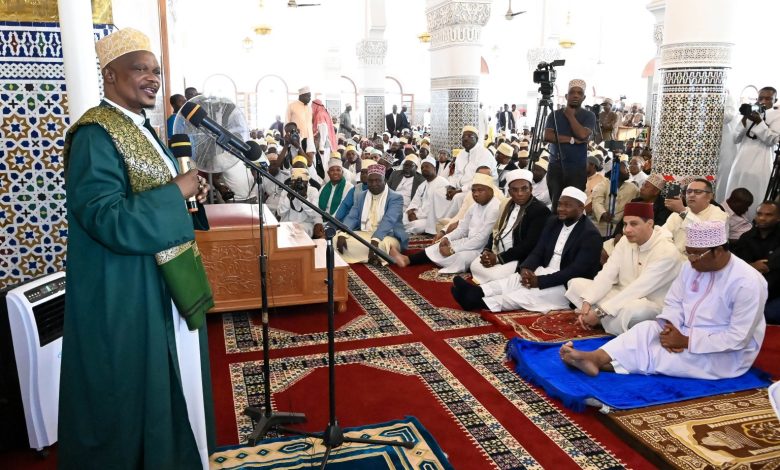
DAR ES SALAAM: JUSTICE, accountability and responsible citizenship are fundamental pillars of a peaceful, stable and prosperous society.
They determine how power is exercised, public resources are managed, disputes are resolved and individuals relate to one another.
In Islam, these principles are more than social or political ideals; they are moral obligations rooted in faith, integrity and respect for human dignity.
Islamic teachings provide a strong framework for addressing challenges such as corruption, abuse of authority, discrimination, dishonesty and declining public trust in institutions.
They call upon individuals, leaders and communities to uphold truth, fulfil their responsibilities and recognise that the well-being of society depends on the conduct of its members.
At the heart of this teaching is the understanding that faith must be reflected in everyday behaviour.
Religious commitment is demonstrated not only through prayer, fasting and other acts of worship but also through honesty in business, fairness in dealing with others, responsible leadership and respect for fellow citizens. The Holy Qur’an places justice at the centre of human relationships and public affairs.
In Surah An-Nahl, verse 90, Allah commands justice, excellence and generosity, establishing fairness as a fundamental principle for both personal conduct and the organisation of society.
Justice extends beyond the courtroom. It begins within families, where children should be treated fairly, and continues into schools, workplaces, markets and public institutions.
It requires individuals to reject favouritism, exploitation and discrimination, regardless of wealth, social position or personal relationships. Surah An-Nisa, verse 135, offers one of the clearest instructions on this responsibility, calling upon believers to stand firmly for justice and bear truthful witness, even when doing so goes against their own interests or those of their relatives.
This challenges the tendency to protect friends and family members at the expense of fairness.
In Tanzania, the principle is particularly relevant to public administration, business and community relations.
Public officials should make decisions based on evidence, established procedures and the public interest rather than personal connections.
Employers must treat workers fairly, while businesspeople should honour agreements and avoid exploiting customers.
Citizens, too, should resist defending wrongdoing simply because those responsible belong to their families, political groups or social circles.
Islam further teaches that justice must not be abandoned because of hostility. Surah AlMa’idah, verse 8, warns against allowing hatred towards others to influence fairness.
This is an important message for a diverse country such as Tanzania, where people of different ethnic, religious and cultural backgrounds share national responsibilities.
Peaceful coexistence depends on respecting differences and recognising the equal dignity of others. Closely connected to justice is accountability.
Islam teaches that every individual is answerable to Allah for their actions. Although someone may escape public scrutiny or avoid immediate consequences for wrongdoing, nothing remains beyond divine knowledge. This understanding encourages people to act honestly even when nobody is watching.
In Surah An-Nisa, verse 58, the Qur’an commands believers to return trusts to their rightful owners and judge between people with justice.
This provides a strong foundation for understanding leadership and authority as responsibilities entrusted to individuals rather than opportunities for personal enrichment.
Public office, therefore, should not be viewed as a privilege that places an individual above others.
It is a responsibility to serve the public, protect people’s rights and exercise authority fairly. Public resources must similarly be managed transparently and directed towards their intended purposes.
Misusing public funds, favouring associates in contracts or exploiting official positions for personal gain violates the principle of amanah, meaning trust or an entrusted responsibility.
ALSO READ: Tanzania grants citizenship to 64 foreigners between July 2025 and April 2026
Such misconduct can undermine public services, weaken confidence in institutions and deprive communities of opportunities for development. Islamic ethics consequently require leaders to exercise authority with honesty, competence and responsibility.
They should account for decisions and resources under their control while accepting legitimate scrutiny. Institutions must also establish fair procedures for investigating wrongdoing and addressing misconduct without discrimination.
Accountability, however, is not restricted to political leaders and public officials. Traders must use accurate measurements, employees should fulfil their duties, and professionals must conduct themselves honestly.
Parents, educators and community leaders also have responsibilities that influence the welfare of others. Every position carries obligations and fulfilling them contributes to the wider good.
Citizenship adds another important dimension to this moral framework. In modern societies, it involves legal membership of a country and the rights and responsibilities that accompany it.
Islamic teachings complement this understanding by emphasising good conduct, mutual respect, social responsibility and contributions to the common good.
Surah Al-Hujurat, verse 13, teaches that humanity was created from a male and a female and divided into peoples and tribes so that people may know one another.
The verse places human diversity within a framework of mutual recognition rather than superiority based on ancestry or group identity. For Tanzania, with its rich ethnic, linguistic and religious diversity, this teaching carries particular significance.
Differences should not become grounds for hostility, discrimination or the denial of another person’s dignity.
Responsible citizenship requires cooperation, tolerance and a shared commitment to national development. Citizens can demonstrate these values by respecting legitimate laws, protecting public property, participating constructively in community affairs and raising concerns through appropriate channels.
They should also avoid spreading false information, making unsupported accusations or allowing disagreements to develop into hostility. Citizenship is not measured solely by national identity documents or the enjoyment of rights.
It is also reflected in everyday actions, including keeping public spaces clean, honouring agreements, helping neighbours and showing compassion towards people experiencing hardship.
The Prophet Muhammad’s teachings and example further reinforce honesty, fulfilment of trusts, compassion and good treatment of neighbours.
These values demonstrate that moral responsibility extends beyond personal interests and helps strengthen the relationships upon which communities depend. Islam also promotes social solidarity through practices such as zakat and voluntary charity.
These encourage Muslims to support vulnerable members of society and recognise that prosperity carries responsibilities towards others.
However, charity should complement rather than replace justice, effective institutions and responsible public administration.
Ultimately, justice, accountability and responsible citizenship are interconnected. Justice protects people’s rights, accountability ensures that individuals and institutions answer for their responsibilities, while citizenship provides a framework through which people contribute to society.
When one is weakened, the others are also affected. Families can nurture these values through example, educational institutions can promote integrity and civic responsibility, religious leaders can encourage fairness and peaceful coexistence, while public institutions must strengthen transparency and equal treatment.
The Islamic perspective presents a vision of society in which authority is exercised as a trust, rights are protected without favouritism, responsibilities are fulfilled with integrity and human dignity is respected across social boundaries.
Its message is both spiritual and practical: Faith should inspire fairness, leadership must be accompanied by accountability, and citizenship should be expressed through actions that advance the common good.
A society moves closer to justice when its people refuse to tolerate dishonesty, leaders recognise the limits of their authority and citizens understand that the rights they demand must be matched by respect for the rights of others.
Justice, accountability and responsible citizenship are therefore not separate ideals but mutually reinforcing obligations essential to building a fairer, more peaceful and humane Tanzania.