El Niño strengthens as more rains expected
THE Tanzania Meteorological Authority (TMA) has warned that the El Niño weather phenomenon is gaining strength, with rainfall already recorded in several parts of the country and more expected this month and December.
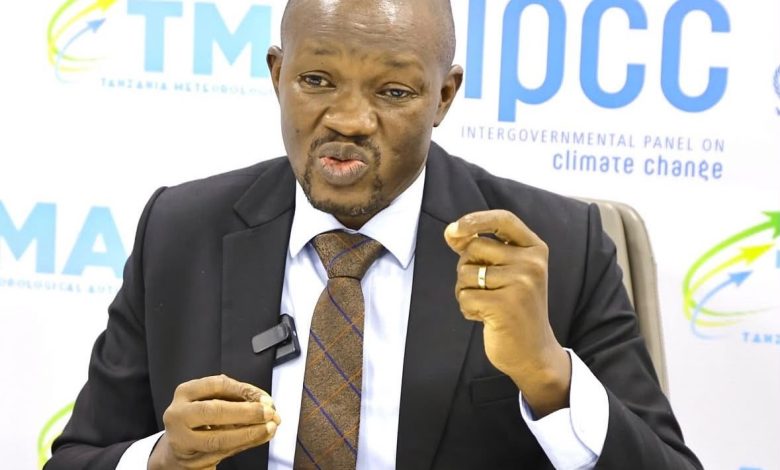
TMA Director General, Dr Ladislaus Chang’a, made the remarks yesterday while briefing journalists on the Intergovernmental Panel on Climate Change (IPCC) meeting, which is expected to be officially opened by Prime Minister Dr Mwigulu Nchemba in Arusha today.
Dr Chang’a urged the public to continue following weather updates and observing precautionary measures to protect themselves against possible impacts of the expected rainfall.
He said forecasts issued on August 18 and October 23 this year indicated that various parts of the country would receive normal to above-normal rainfall, a trend that has already started to emerge.
He cited the Lake Victoria Zone, comprising Kagera, Geita, Shinyanga, Mwanza and Mara regions, as among the areas that have started receiving rainfall.
Data from the Bukoba weather station showed that October rainfall exceeded the average. He added that rainfall had also started in the Northeastern Highlands and Northern Coast, covering Tanga, Dar es Salaam, Pwani, Mafia, Unguja, Pemba and northern Morogoro.
“Rainfall is expected to continue strengthening this month and in December, while areas that experience one rainy season annually, including the Western Zone and Southwestern Highlands, are also expected to receive rainfall during the periods indicated in our forecast,” he said.
Dr Chang’a said data recorded yesterday morning showed that Tanga weather station had measured 57 millimetres of rainfall, Dar es Salaam 24 millimetres and Mlingano 52 millimetres.
“The accuracy of our forecasts is above 88 per cent. I therefore urge the public to continue following and observing them,” he said.
On the IPCC meeting, Dr Chang’a said it was expected to bring together approximately 300 experts from Tanzania and 75 other countries to assess progress in scientific research on climate change, its impacts and measures needed to address the challenge.
He said Tanzania’s opportunity to host the meeting was an important milestone that would enable the country to participate actively in international discussions on climate change science.
The meeting is also expected to be attended by the Minister for Transport, Professor Makame Mbarawa, alongside experts and other delegates from within and outside the country.
“We expect approximately 300 scientists from Tanzania and 75 other countries. These are leading scientists in climate change science from across the world,” he said.
ALSO READ: TMA forecasts prolonged cold season, warns of possible El Niño
Dr Chang’a, who is also IPCC Vice-Chair, explained that the meeting was part of the process of preparing the panel’s Seventh Assessment Report (AR7), which aims to provide scientific evidence on climate change trends and their impacts.
He said the IPCC was established in 1988 by the World Meteorological Organisation (WMO), in collaboration with the United Nations Environment Programme (UNEP), to assess scientific evidence on the causes of climate change, its current and future impacts and possible response measures.
He noted that IPCC assessments had played a significant role in shaping international climate change decisions, including the establishment of the United Nations Framework Convention on Climate Change (UNFCCC), the Kyoto Protocol and the Paris Agreement.
He said the Fourth Assessment Report, released in 2007, contributed to the panel being awarded the Nobel Peace Prize in recognition of its role in raising awareness and promoting efforts to address climate change.
Dr Chang’a said the IPCC has three working groups, with Working Group I focusing on the scientific basis of climate change, including global warming, rainfall patterns, greenhouse gas emissions and extreme weather events.
He added that the current assessment will also examine trends in extreme weather events such as droughts, floods, heatwaves, strong winds and heavy rainfall, as well as the extent to which such events could increase.
The findings of the IPCC Seventh Assessment Report are expected to be released before the end of 2029.
Dr Chang’a said another meeting will be held on November 4 at the Julius Nyerere International Convention Centre (JNICC), bringing together stakeholders from various sectors, including health, agriculture and nongovernmental organisations.
He said the gathering will provide an opportunity for Tanzanian and African experts to exchange knowledge with international scientists, establish professional networks and benefit from economic opportunities arising from the meeting.