How early learning opportunities pave way for future success
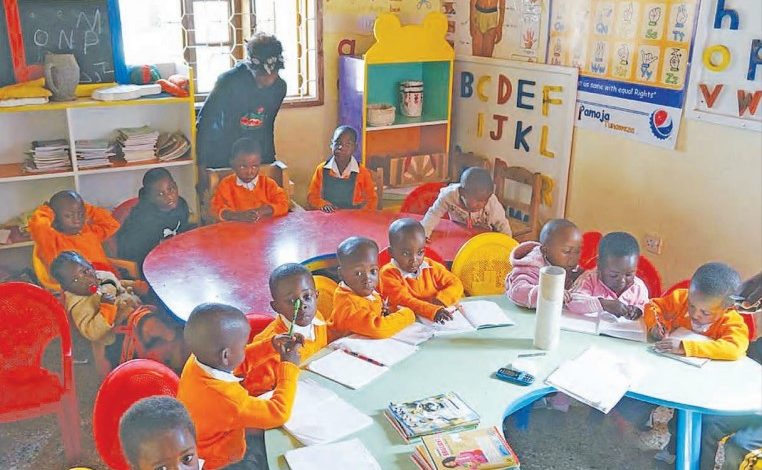
DAR ES SALAAM: IN communities across the world, from bustling cities to quiet villages, a silent revolution is unfolding.
It is happening in classrooms where children are not just learning their ABCs and 123s but are gaining the critical foundation they need to thrive in life.
This is the transformative power of early learning opportunities and in places like Mpwapwa, Dodoma, this shift is shaping the future of an entire generation.
The early years of a child’s life are more important than many realise. Studies show that the first eight years of life are the most significant for brain development, with 90 per cent of brain growth occurring during this period.
The experiences children have in these early years, whether they are playing, interacting with caregivers, or attending early education programmes have lasting effects on their ability to learn, socialise and even succeed later in life.
“Early childhood education lays the foundation for everything that comes after…When children are engaged in structured, nurturing environments at an early age, they develop the cognitive, emotional and social skills they need to succeed in school and beyond” the Mazae Ward Education Officer in Mpwapwa district , Honoratha Vianey said.
In Mpwapwa, a district in Dodoma Region, the importance of early childhood education is starting to gain traction.
For years, rural communities like those in Mpwapwa have faced barriers to quality education, with many children arriving at primary school without the foundational skills they need.
But things are changing. Local schools, supported by government and nongovernmental organisations (NGOs), are offering more early learning programmes aimed at children ages 3 to 6.
These programmes focus on more than just academics; they promote social skills, creativity, emotional wellbeing and basic numeracy and literacy. In promoting early learning for the children aged 0-8.
Tanzania is executing the National Multi sector Early Childhood Development Programme (NMECDP) 2021/22 – 2025/26.
NMECDP objectives particularly in early learning are in line with the Law of the Child Act 2009 (revised in 2019) which emphasises the importance of providing children with a nurturing environment that supports their development and wellbeing.
ALSO READ: Dar to host e-learning Africa symposium
During monitoring conducted by education stakeholders to assess community accountability in the early childhood development especially early learning opportunities in Mpwapwa District ,it was observed that enrolment in pre-primary education varies significantly across different areas.
For instance, in this year, the target for enrolment in Mazae Ward was 350 children.
However, only 265 children were enrolled, representing 75.7 per cent of the target. In contrast, in Mpwapwa Urban Ward, the target was to enrol 515 children, but the actual enrolment reached 518 children, which is equivalent to 100.5 per cent of the target.
Expounding the landscape of the early learning opportunities in the district, the Mazae Ward Education Officer , Honoratha Vianey says early childhood education is now gaining attention from parents, educators and local leaders who see it as a key to unlocking lifelong potential.
“In terms of pre-primary education in Mazae Ward, we are making good progress. The learning classrooms are in good condition and children are learning through seeing, touching and doing. Every primary school in Mazae Ward offers pre-primary education,” she told Daily News.
Adding: “I’m grateful that all the teachers in my ward have received training in early childhood education and some of them even hold certificates in early childhood education at various levels, such as diplomas.”
Despite significant progress made in strengthening the provision of early childhood education in the district, Ms Vianey says that some parents still tend to delay enrolling their children in pre-primary education, an issue that negatively affects the child’s development.
“In Mazae Ward, parental response to bringing children for early education has been fairly positive. However, some parents still bring their children after they have already surpassed the appropriate age for pre-primary education. This presents challenges in teaching, as many of these children come in speaking only their mother tongue (Kigogo), which makes the learning process more difficult,” she points out.
Additionally, she highlights the shortage of Day Care Centres as the challenge related to the appropriate age for children to access early childhood education.
“In my ward there is only one Day Care Centre that provides care for children aged 2 to 4 years and that centre belongs to the private sector,” she adds.
In line with news, Ms Vianey encourages the stakeholders to collaborate with the government to engage more efforts in raising awareness on the significance of ECD.
“Awareness campaigns can help shift mindsets and encourage more families to prioritise early learning, even if they are struggling financially. When communities see the long-term benefits, they will be more likely to invest in their children’s future,” she unƒderlines.
Despite community support for early childhood education in the district, Mpwapwa District Acting Social Welfare Officer, Ms Lucy George, says that infrastructure for pre-primary children particularly sanitation facilities is still not child-friendly.
She emphasises that deliberate efforts are needed to ensure these children are protected from health risks and diseases.
“Local and national governments, as well as NGOs, should collaborate to ensure that every ECD centre in Mpwapwa is equipped with child-friendly infrastrucure,” she stresses.