Training highlights safety gaps and cost burdens in mining
SINGIDA: Artisanal and small-scale miners (ASMs) in Singida Region have called for the deployment of environmental specialists within mineral offices, arguing that such a move would significantly reduce the cost of preparing mandatory Environmental Assessment Plans and improve access to essential services.
Their concern centres on the high fees charged for preparing these plans, which they say vary widely but rarely fall below 2m/-. While miners acknowledge the importance of environmental compliance, they argue that the current system places an excessive financial burden on operators who already work with limited capital.
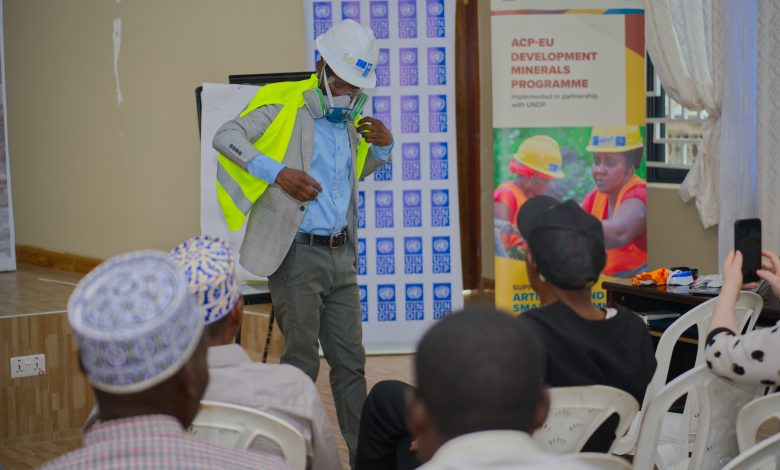
The issue was raised during a recent workshop titled “Building Skills for Safe Profitable Mining,” organised by the United Nations Development Programme in collaboration with the Mining Commission and the Singida Resident Mining Office. The workshop focused on strengthening capacity among women and youth engaged in artisanal and small-scale mining.
The training forms part of the Development Minerals Programme, a three-year initiative running from 2025 to 2027 and supported by the European Union, UNDP, and the African, Caribbean and Pacific Group of States. The programme aims to improve productivity, safety, and sustainability within the sector while promoting inclusive participation.
Speaking at the workshop, Singida Regional Mining Association (SIREMA) Chairperson Robert Malando explained that obtaining a mining licence is only the first step for ASMs.
A legally approved environmental plan is also required before operations can proceed, yet the process of acquiring one remains costly and, in their view, insufficiently regulated.
“Meeting the cost ourselves is not the issue,” he said.
“The challenge arises when environmental officers charge fees as private consultants rather than as public officials, arguing that the service falls outside their formal duties.”
He added that the requirement for plans to be prepared and endorsed by registered environmental experts leaves miners with little choice but to accept the prevailing rates. Without such certification, applications are unlikely to be approved, effectively halting operations before they begin. Malando stressed that ASMs are not opposed to paying for environmental services but are seeking affordability and accessibility.
He proposed a more manageable fee of around 500,000 shillings and emphasised the need to integrate environmental services into mining offices to streamline the process.
“Having these services available within mining offices would simplify access and reduce unnecessary delays,” he said, reflecting a broader sentiment among participants.
The concern over environmental plan costs emerged during discussions on mine safety, occupational health, and environmental management—topics presented by the workshop organisers as central to responsible mining practices. Participants also raised concerns about the limited use of safety gear among ASMs.
Malando acknowledged that while some negligence exists, particularly in surface mining where conditions are more conducive to wearing protective equipment, challenges remain for those working underground. He explained that underground mining often involves confined spaces and physically demanding tasks that can lead to breathing difficulties. In such conditions, some miners find it uncomfortable to wear protective masks, especially where oxygen supply is limited.
“We need safety gear that matches the underground environment,” he said, suggesting that more suitable equipment could improve compliance without compromising productivity. However, this claim was challenged by Lameck Maduhu, a Mineral Engineer at the Regional Resident Mining Office, who maintained that a wide range of safety equipment is already available, including specialised gear designed for underground conditions.
During the session, he presented various samples, including respiratory equipment suitable for low-oxygen environments. He emphasised that most protective gear is relatively affordable, with prices ranging from 1,000/- to 20,000/-, while more advanced equipment rarely exceeds 50,000/-.
“Mining generates income,” he said.
“It is important to prioritise safety by allocating part of that income to protective equipment. Health comes first.” Maduhu also demonstrated the proper use of safety gear, underscoring the importance of correct application in reducing risks. His presentation extended beyond equipment to include broader safety practices, particularly the need for miners to identify and address potential hazards before commencing operations.
He explained that risk management in mining involves a series of steps, including hazard identification, elimination, substitution, and control measures. These principles, while technical, can be applied even in low-resource settings with appropriate guidance.
Mine design, he added, plays a critical role in ensuring safety. Contrary to common perceptions, effective design does not necessarily require advanced technology or significant financial investment. Basic methods, including manual contouring using simple tools such as hand hoes, can significantly reduce the risk of accidents, particularly those caused by falling debris.
“Even simple designs can prevent serious incidents,” he noted.
“What matters is planning and adherence to safety principles.” For miners with greater financial capacity, computerised design offers additional precision, but Maduhu emphasised that both approaches can yield positive results when properly implemented.
An artisanal miner from Itigi District, Eva Ngoma, shared practical insights from her experience in gypsum mining. She acknowledged that some accidents occur due to negligence, particularly when miners prioritise immediate extraction over safety considerations.
“In many cases, once a mineral is discovered, the focus shifts entirely to extracting it,” she said. “Safety measures are sometimes overlooked, especially when the mineral is embedded within rock formations that pose a risk of collapse.” Her remarks highlighted a recurring challenge in the sector: balancing the urgency of income generation with the discipline required for safe operations. Providing a broader perspective, UNDP Project Manager Godfrey Nyamrunda noted that artisanal mining in Singida offers significant economic opportunities, particularly for women and youth.
ALSO READ: Rage: Why Commission of Inquiry signals new era for Tanzania
However, he pointed out that these groups often face multiple challenges, including hazardous working conditions, inadequate pit preparation, limited legal knowledge, and difficulty identifying valuable ores. As a result, many miners operate below their potential, exposing themselves to avoidable risks while selling unprocessed materials at lower market value. To address these issues, the programme seeks to build capacity by connecting miners with local experts.
Training covers a range of areas, including occupational health and safety, proper use of personal protective equipment, basic first aid, and improved mining techniques. Additional components include pit preparation, drainage systems, environmental compliance, and legal awareness, all aimed at enhancing both safety and productivity.
“By strengthening local capacity and promoting compliance, we aim to support mining communities in building sustainable and profitable livelihoods,” Nyamrunda said, reaffirming the organisation’s commitment to inclusive economic growth. He also emphasised the programme’s focus on gender equality, noting that it addresses barriers faced by women in mining, promotes safe and respectful working environments, and encourages women to take on leadership roles within cooperatives.
Men, he added, are also engaged as partners in fostering positive change. Opening the training, Regional Mineral Officer Engineer Sabai Nyansiri reiterated the government’s commitment to creating a supportive environment for ASMs. He encouraged miners to take advantage of available opportunities, including training programmes and institutional support mechanisms.
The discussions in Singida reflect a sector in transition—one that holds significant economic promise but continues to grapple with structural challenges. The call for more accessible environmental services highlights the need for policy adjustments that align regulatory requirements with the realities faced by small-scale operators. At the same time, the emphasis on safety and capacity building underscores the importance of sustainable practices.
As stakeholders work to address these issues, the balance between regulation, affordability, and productivity will remain central to the sector’s long-term development. For many ASMs, the goal is straightforward: to operate legally, safely, and profitably.
Achieving this will require continued collaboration between government institutions, development partners, and the miners themselves—an effort that, much like mining, demands both precision and persistence.