High-profile fundraiser boosts Musati village development agenda
MARA: AT a glance in many rural communities, the presence of a dispensary can mark the difference between vulnerability and stability. It is often the first point of contact for medical care, offering essential services such as maternal health support, childhood immunisations, treatment of common illnesses, and emergency response. For expectant mothers, it reduces the risks associated with long-distance travel during labour.
For children, it provides timely interventions that can prevent minor conditions from becoming life-threatening. Beyond treatment, a dispensary becomes a centre for health education, disease prevention, and community awareness, quietly strengthening the resilience of an entire population. It is within this broader context that Musati village in Serengeti District, Mara Region, is poised for transformation.
Here, a major fundraising initiative was recently held over the weekend and raised 1.4bn/- to support the construction of a dispensary and a school or simply two institutions that together form the backbone of social development.
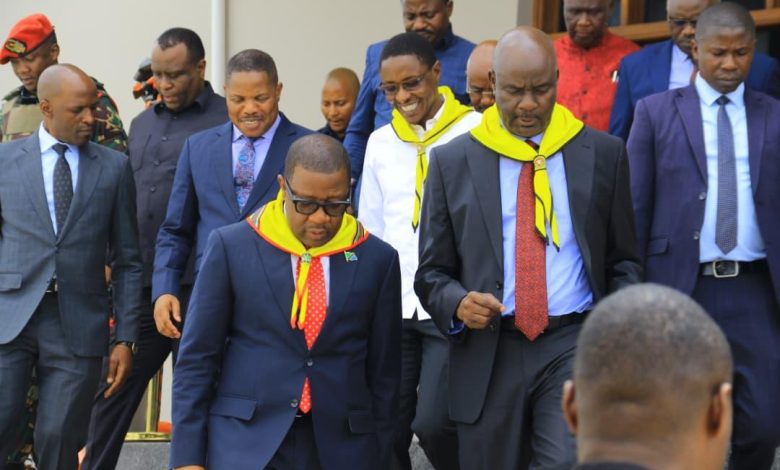
The event, organised by the Nyansaho Foundation, brought together government leaders, members of the business community, and local residents in a collective effort to accelerate development in an underserved rural setting.
The initiative reflects a growing recognition that access to healthcare and education is not merely a policy goal but a practical necessity that shapes everyday life. In villages like Musati, where residents may travel long distances to reach the nearest health facility or school, such projects can significantly alter life trajectories.
The fundraising event, therefore, was not simply about mobilising resources—it was about laying the groundwork for sustained progress. Presiding over the event was the Minister for Works, Abdallah Ulega, whose presence underscored the importance of aligning national leadership with grassroots initiatives. He was joined by Rhimo Nyansaho, the founder and chairperson of the foundation spearheading the project.
Their participation highlighted the increasing role of partnerships between public officials and community-driven organisations in addressing development challenges. In his remarks, Ulega commended Dr Nyansaho for sustained efforts to uplift communities in Mara Region, noting that his commitment to development predates his ministerial appointment under Samia Suluhu Hassan.
He emphasised that leadership is most impactful when it translates into visible improvements in people’s lives, particularly in areas where needs are most acute. He further observed that access to quality education and healthcare remains uneven across the country, with rural areas bearing a disproportionate share of the challenges.
Initiatives like the Musati project, he said, are essential in narrowing this gap, ensuring that development is not confined to urban centres. His remarks, while measured, conveyed a clear message: meaningful progress often begins with targeted interventions at the community level.
The fundraising event drew a diverse group of attendees, reflecting a broad coalition of support. Among those present were George Masaju and Jacob Mkunda, alongside religious leaders including the Bishop of the Seventh-day Adventist Church’s North Mara Diocese.
Their participation illustrated how stakeholders from different sectors—judiciary, military, and faith-based institutions—can converge around a shared vision of development. This diversity of support is increasingly characteristic of successful community initiatives. While government provides policy direction and oversight, other actors bring additional resources, expertise, and networks.
The result is a more comprehensive approach to development, one that is both inclusive and responsive to local needs. Financial contributions during the event reflected this collective commitment.
Ulega and his associates contributed 100m/-, setting a pace that others quickly followed. Business leaders, financial institutions, invited guests, and local residents all added their support, bringing the total to 1.4bn/-.
The scale of contributions not only underscored the urgency of the project but also indicated a strong level of confidence in the foundation’s capacity to implement it effectively. The fundraising followed the inauguration of a Seventh-day Adventist church in Musati village, a project valued at 500m/- and supported by the same foundation. In rural communities, such institutions often extend beyond their primary function.
They serve as gathering points, venues for social engagement, and platforms for community initiatives, reinforcing social cohesion alongside spiritual life. Speaking at the event, Dr Nyansaho outlined the broader vision guiding the foundation’s work.
He emphasised a commitment to improving access to education and healthcare across Mara Region, noting that these sectors are fundamental to long-term development.
The funds raised, he said, would directly support infrastructure that addresses these priorities, particularly for children and families who currently face significant barriers in accessing essential services. He explained that the foundation’s ambitions extend beyond the immediate project, with plans to establish a continuum of educational institutions from nursery through advanced secondary levels.
This approach recognises that education is not a single milestone but a sustained journey. Without accessible facilities at each stage, many students are forced to discontinue their studies prematurely, limiting both personal and community advancement. Healthcare, he added, remains equally critical.
The planned dispensary is expected to reduce travel time for medical care, improve maternal and child health outcomes, and provide timely treatment for common illnesses. In many rural areas, the absence of nearby healthcare facilities can turn manageable conditions into serious threats.
By bringing services closer to the community, the dispensary aims to address this challenge directly. While the amount raised is substantial, its significance lies in what it represents: a shared commitment to progress.
The initiative demonstrates how collective action can mobilise resources at a scale that might otherwise seem unattainable. It also reflects a growing awareness that development is most effective when it is locally driven and broadly supported.
Events of this nature also highlight the influence of leadership in shaping public participation. When respected figures take the lead—both in presence and contribution—it often encourages wider involvement. In Musati, the willingness of attendees from different walks of life to contribute suggests a strong sense of ownership over the project, an essential ingredient for its long-term success.
At a national level, the initiative aligns with broader development priorities focused on improving social services and reducing disparities between regions. By investing in education and healthcare, the project addresses two pillars that underpin sustainable growth. These sectors not only improve quality of life but also enhance productivity and resilience within communities.
The impact of such investments tends to extend beyond their immediate objectives. A school can stimulate local economic activity, create employment opportunities, and attract skilled professionals. A dispensary can serve as a hub for public health initiatives, from vaccination campaigns to health education programmes. Together, they form an integrated approach to community development.
There is also an element of accountability embedded in publicly supported initiatives. When funds are raised through collective effort, expectations for transparency and effective implementation naturally increase. This dynamic can strengthen trust between communities and the organisations leading development projects, ensuring that commitments translate into tangible outcomes.
Despite the formal tone of the event, there was a discernible sense of optimism among participants. It was not expressed in grand declarations but in the steady confidence that progress, while gradual, is achievable.
Such moments serve as reminders that development is often the result of consistent effort rather than dramatic change. As plans for construction move forward, attention will turn to execution—timelines, resource management, and delivery of promised outcomes. For residents of Musati village, the true measure of success will not be the funds raised but the facilities built and the services provided.
It will be seen in shorter journeys to seek medical care, in children attending school closer to home, and in the gradual improvement of daily life. In this sense, the fundraising event represents a beginning rather than a conclusion. It sets in motion a process aimed at transforming a community through targeted investment and collective effort.
By bringing together leadership, resources, and local participation, it offers a model of development that is both practical and replicable. If sustained, such an approach could extend beyond Musati, informing similar initiatives across the country. It demonstrates that while challenges in rural development are significant, they are not insurmountable when addressed through coordinated action and shared responsibility.
Pic: Ulega Caption: