Stakeholders join forces to strengthen Dar food system
DAR ES SALAAM: DAR ES SALAAM is facing a widening food-system challenge as its rapidly growing population continues to increase demand for food while the city remains heavily dependent on supplies from outside the region.
The region currently produces only about 10,901 metric tonnes of food against an estimated demand of 1,304,280 metric tonnes, leaving a gap of approximately 1.293 million tonnes.
With a Food Self-Sufficiency Ratio of only about one percent, nearly 99 percent of Dar es Salaam’s food requirements must be met through supplies from other regions.
The challenge is becoming more significant as the city’s population continues to grow. Dar es Salaam has a population of more than 5.3 million people and is projected to reach approximately 13 million by 2030, increasing pressure on the systems responsible for producing, transporting, storing, processing, marketing and distributing food.
For residents, the issue is not simply about whether food is available. The movement of food from producing areas to the city is affected by transportation and market costs, supply-chain disruptions and other challenges that can contribute to fluctuations in food prices.
These pressures can make safe and nutritious diets increasingly difficult to afford, particularly for low-income households.
At the same time, the city is experiencing different forms of malnutrition, ranging from undernutrition and micronutrient deficiencies to overweight and obesity. Changing lifestyles and the increasing availability of highly processed and energy-dense foods are also contributing to changing dietary patterns and creating new nutrition-related health concerns.
ALSO READ: Growing Together: One city, one food system, a shared future
Food safety and hygiene remain another important part of the challenge. Large volumes of food pass through formal and informal markets, street vendors and small-scale food businesses, where access to adequate water, sanitation, waste-management facilities, cold storage and other essential infrastructure can be limited.
These challenges are closely connected. How food is produced affects its availability, while transportation, storage and markets influence its price and quality.
Nutrition is also linked to the types of food people can access and afford, while food safety is affected by the conditions under which food is handled from production to consumption.
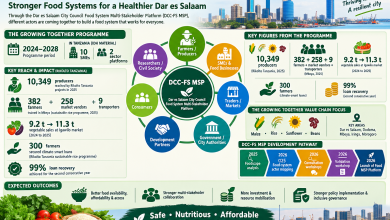
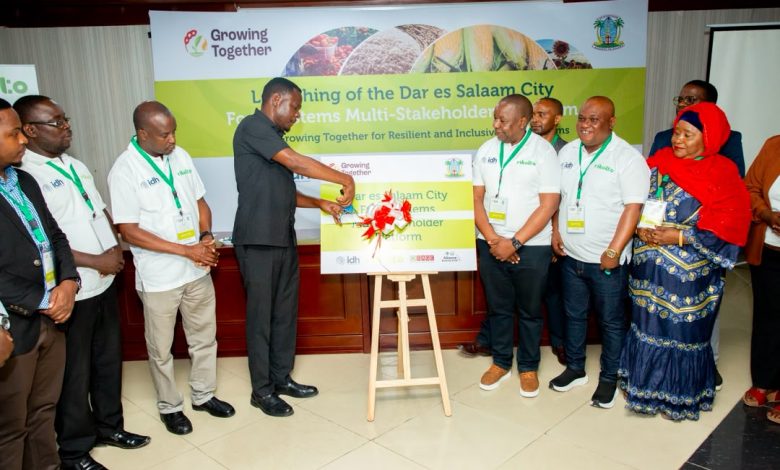
It is against this background that the Dar es Salaam City Council has launched the Dar es Salaam City Council Food System Multi-Stakeholder Platform, known as DCC-FS MSP, bringing together different actors to work collectively towards strengthening the city’s food system.
The platform is intended to create a common space for stakeholders across the food chain, including government institutions, farmer and producer organisations, private-sector players, food businesses, civil society organisations, academia, development partners and actors working in health, nutrition, environment, trade, transport, markets, waste management and urban planning.
Rather than addressing food production, markets, nutrition, health and environmental concerns separately, the platform seeks to encourage stakeholders to identify how these areas are connected and develop coordinated responses to the challenges facing the city.
Through the platform, stakeholders will have an opportunity to engage in dialogue, joint planning, evidence generation and knowledge sharing, as well as policy engagement, innovation and investment mobilisation.
The initiative also seeks to strengthen links between food-producing areas and urban consumers, improve food markets and supply chains, enhance food safety and quality, reduce food loss and waste, and expand access to safe, affordable and nutritious food.
The launch of the platform therefore marks an effort to move towards a more coordinated approach to managing Dar es Salaam’s increasingly complex food system.
ALSO READ: Rwanda’s RURA visits TCRA to learn how it regulates and manages the communications sector
The programme is led by IDH (The Sustainable Trade Initiative) in partnership with Rikolto, the Alliance of Bioversity International and CIAT, and the East Africa Grain Council.
It supports collaboration between public institutions, private-sector actors, civil society organizations and other stakeholders to strengthen inclusive, resilient and sustainable urban food systems.
Speaking during the launch, Dar es Salaam City Deputy Mayor John Mrema said the rapid growth of the city was increasing demand for food and making it necessary to establish a food system that is sustainable, inclusive and capable of withstanding different challenges.
He said the city’s food supply depends heavily on production from different regions of the country, making it important to strengthen the systems through which food is produced, transported, stored, processed, marketed and eventually consumed.
According to Mrema, the new platform will provide an opportunity for different stakeholders to work together rather than addressing food-related challenges independently.
He said, “The platform would strengthen coordination and collaboration among stakeholders while encouraging the use of data and evidence in decision-making,”
Mrema also highlighted the importance of food safety and nutrition, saying the platform would contribute to efforts to improve the quality and safety of food available to residents while supporting investment and innovation within the food sector.
He further said, “The platform would contribute to building a food system capable of responding to the effects of climate change and the continued growth of the urban population,”
“The establishment of the DCC-FS MSP is being led by the Dar es Salaam City Council with support from Rikolto through the Growing Together Programme, which runs from 2024 to 2028,” he added
Mrema added that, “For Dar es Salaam, the success of the new platform will depend on how effectively these different actors translate dialogue and planning into practical action,”
He explained that, “With the city continuing to expand, ensuring that residents can access food that is safe, affordable and nutritious will require stronger connections between food producers, markets, businesses, government institutions and consumers,”
Mrema highlighted that, their contribution is expected to include expertise, evidence, networks, innovations, resources and investment aimed at addressing challenges across the food system.
Growing Together Project Coordinator Ronald Mtana said the project, implemented by Rikolto with funding from NORAD through IDH, began in 2024 and is expected to run until 2028.
He said that in Tanzania, the project is being implemented in Dar es Salaam, Dodoma, Iringa, Morogoro and Mbeya regions, working with farmers, the private sector, and small and medium-sized entrepreneurs.
Mtana said that, “Through food systems platforms, the project will collaborate with the Dar es Salaam and Dodoma city authorities to strengthen stakeholder cooperation in improving urban food systems,”
“As Dar es Salaam moves towards a much larger urban population, the question is no longer only how much food the city can access, but also how efficiently and safely that food can move from producers to consumers and whether residents can afford and benefit from nutritious diets,” he mentioned
“The multi-stakeholder platform is intended to provide a mechanism through which those questions can be addressed collectively, with the broader goal of building a food system that is more resilient, inclusive, sustainable and responsive to the needs of Dar es Salaam’s growing population,” he added
One of the traders at Buguruni Market, Hussein Mkumba, said that The Growing Together project is important because it brings together farmers, local authorities, private-sector actors and small and medium-sized enterprises to address challenges within urban food systems.
Mkumba narrated that, “By strengthening cooperation among these stakeholders, the project can help improve the availability, accessibility and sustainability of food in growing cities such as Dar es Salaam,”
“One of the major benefits of the project is its support for farmers and small-scale businesses. By connecting farmers with markets, private-sector companies and other actors in the food value chain, the project can create better opportunities for producers to sell their products and improve their incomes,” he indicated.
ALSO READ: CCM vows to uphold democracy
“Small and medium-sized entrepreneurs can also benefit from stronger links with suppliers, customers and other businesses involved in food production and distribution,” he concluded