Why Tanzania–Mozambique need to turn brotherhood into business
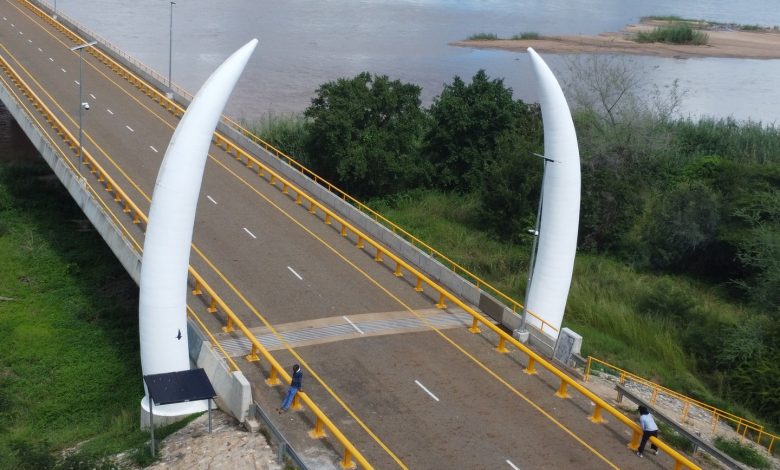
DAR ES SALAAM: FEW countries in Africa share a bond as deep and enduring as that between Tanzania and Mozambique. Our peoples fought side by side for freedom.
Our leaders built a friendship that has withstood the test of time for more than half a century.
We share the Ruvuma River, the Indian Ocean coastline and the rich Swahili heritage that stretches along it. Yet, an important question must be asked: Has this extraordinary political relationship been matched by an equally strong economic partnership?
The honest answer is: Not. Trade between our two countries remains modest compared with the strength of our historical ties, while numerous economic opportunities on both sides of the border remain untapped.
This is where economic diplomacy comes in. Economic diplomacy is the strategic use of diplomatic relations and instruments to advance trade, investment, tourism and economic cooperation in the national interest.
Tanzania has made it a central pillar of its foreign policy. Its purpose is clear: To translate political goodwill into investment, businesses, jobs, expanded markets and shared prosperity for our people.
The Embassy’s toolbox
The modern embassy is no longer merely a political and administrative office. It is also a commercial bridge between nations, equipped with practical tools to facilitate economic cooperation and deliver tangible results.
The first tool is economic intelligence: Monitoring the host country’s policies, budgets, development priorities and major projects, and keeping the Government and business community at home informed about emerging opportunities. The second is networking and relationship-building.
Many doors open through trusted relationships with ministers, governors, business associations, chambers of commerce and investors. Such relationships require patience, consistency and sustained engagement. The third is coordination, or what may be described as “Team Tanzania”.
When the Embassy, relevant ministries and institutions such as Tanzania Investment and Special Economic Zones Authority (TISEZA) , Zanzibar Investment Promotion Authority (ZIPA), Tanzania Trade Development Authority (TanTrade), Tanzania Tourist Board (TTB) and Tanzania Petroleum Development Corporation (TPDC) speak with one voice abroad, Tanzania’s message becomes stronger, its engagement more coordinated and its follow-up more effective.
The fourth is nation branding. Through speeches, articles, media engagement and digital platforms, the Embassy can project Tanzania as a peaceful, stable and attractive destination for investment and business.
Finally, our diaspora represents an important economic asset. Tanzanians living abroad can serve as ambassadors of business, connecting markets, facilitating partnerships and linking investors in both directions.
Trade and investment: From waiting to targeting
Economic diplomacy delivers results when it moves from passive promotion to strategic targeting. Rather than simply hoping that investors will come, an embassy must identify priority sectors, target prospective companies and investors, and proactively engage them.
It must also serve as a matchmaker, connecting Mozambican investors with TISEZA and other relevant authorities in Tanzania, while linking Tanzanian businesses with suitable partners and opportunities in Mozambique.
Recently, I visited a group of Mozambican industrialists in Nacala who are exploring investment opportunities in Tanzania. Such engagements demonstrate that investment between our two countries can and should flow in both directions.
A Tanzanian company investing in Mozambique, just as a Mozambican company investing in Tanzania, should not be viewed as a loss to either country.
Rather, such investments strengthen economic interdependence, create opportunities and deepen the bonds between our peoples.
However, attracting an investor is only the beginning. Equally important is investment aftercare: Supporting existing investors in resolving operational challenges, navigating regulatory processes and identifying opportunities for expansion.
A satisfied investor is often a country’s most effective ambassador. Diplomatic engagement must also help address the obstacles that frustrate cross-border traders, including customs delays, cumbersome permit procedures and non-tariff barriers.
At the same time, we must make fuller use of regional and continental frameworks, including SADC, the EAC and the African Continental Free Trade Area (AfCFTA), to expand market access and facilitate trade.
Tourism: One coast, one journey
Centuries ago, merchants from Kilwa and Sofala were connected through vibrant trading networks along the Indian Ocean coast. Today, that same historic coastline offers an exciting opportunity for tourism cooperation.
International visitors travelling from Europe, Asia and the Americas are increasingly attracted to multi-destination experiences. Imagine a journey that begins in Zanzibar, continues to Kilwa and Mafia, and extends to the islands of the Quirimbas, Ilha de Moçambique or Bazaruto.
Together, Tanzania and Mozambique can offer one of the world’s most compelling coastal tourism experiences, combining pristine beaches, marine parks, wildlife, historical attractions and a shared Swahili heritage.
Realising this vision requires deliberate diplomatic engagement to promote better air connectivity, facilitate cross border travel, encourage joint tourism packages and organise familiarisation visits for tour operators, travel agents and international journalists to showcase the attractions of both countries.
Next month, Mozambique will host its Tourism Summit and the FIKANI International Tourism Fair in Vilankulo.
Such platforms provide valuable opportunities to bring together tourism stakeholders, explore partnerships and translate shared interests into practical business arrangements.
Our two countries should seize these opportunities to promote a complementary tourism circuit that encourages visitors to experience both destinations as part of one memorable journey.
ALSO READ: Tanzania–Mozambique: Rethinking border security through a whole-of-society approach
Strategic cooperation: Gas, corridors and security
The Rovuma Basin does not end at the border. Both Tanzania and Mozambique are endowed with significant natural gas resources, presenting an opportunity to pursue a common development agenda.
We face a strategic choice: Compete for the same investors and opportunities, or build a regional partnership that generates greater benefits for both countries.
The wiser path is cooperation. Potential areas include power generation, the industrial utilisation of natural gas, technical skills development, local content, and cross-border electricity interconnection.
Tanzania’s participation in both the Southern African and Eastern African power markets places it in a strategic position to help strengthen energy connectivity between the two regions. Strategic cooperation must also extend to implementation.
Our Joint Permanent Commission and the various memoranda of understanding between the two countries should be translated into actionable programmes, with clearly defined responsibilities, implementation timelines and effective followup mechanisms.
Agreements that remain on paper cannot deliver meaningful benefits to our people. What matters is their practical implementation. Finally, there can be no sustainable economic dividend without peace and security.
Security and development must advance together, particularly in our shared border region. One promising idea worth exploring is the establishment of a Joint Strategic Economic and Security Corridor between Tanzania and Mozambique.
Such an approach would transform the border region from being viewed primarily as a security frontier into a zone of shared economic opportunity, where security cooperation goes hand in hand with investment, trade, infrastructure development and improved livelihoods for border communities.
When young people living along the Ruvuma River have access to jobs, skills, businesses and economic opportunities, they have more reasons to invest in peace and fewer incentives to become vulnerable to extremist recruitment.
Making it work
Economic diplomacy delivers meaningful results when guided by a few practical principles. First, we must prioritise a manageable number of strategic sectors rather than attempting to pursue everything at once.
Second, we must measure results. Success should be reflected in tangible outcomes: Investors connected, investments facilitated, trade volumes increased, tourists attracted and agreements implemented.
Third, every commitment must have a clearly designated responsible officer, an implementation timeline and a mechanism for reporting progress. Above all, we must work as one team.
The embassy, government ministries, public institutions, the private sector and our diaspora must coordinate their efforts towards shared national and bilateral objectives. Our forefathers fought together to liberate our lands. The responsibility of our generation is to build shared prosperity together.
The historic relationship between Tanzania and Mozambique is a priceless diplomatic asset. Through purposeful and results-oriented economic diplomacy, we must invest that asset wisely, transforming decades of political friendship into lasting economic opportunities.
The brotherhood that once united us in the struggle for freedom must now unite us in the pursuit of shared prosperity.
The author is the High Commissioner of the United Republic of Tanzania to the Republic of Mozambique, also accredited to the Kingdom of Eswatini and the Republic of Madagascar.