

World children’s Day: Why inclusion vital for every child
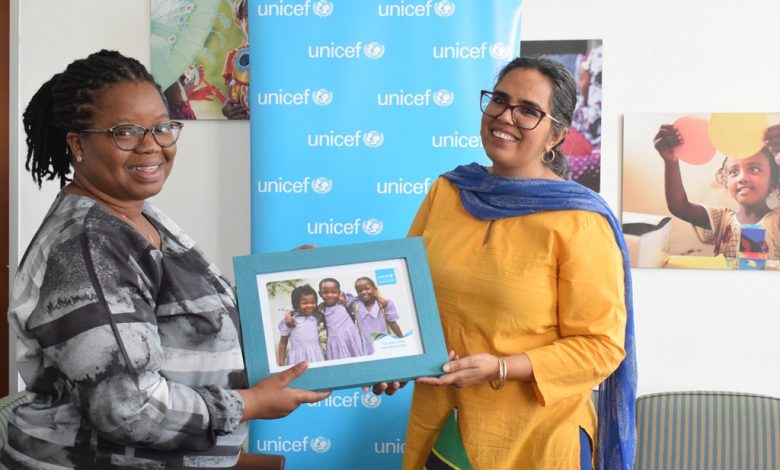
Today, as we celebrate World Children’s Day, we recognise the importance of children’s rights and ensuring adequate physical, mental, spiritual, and social development for all children around the world. Our reporter HILDA MHAGAMA spoke with Ms Shalini Bahuguna, the representative of the United Nations International Children’s Emergency Fund (UNICEF) in Tanzania, about the day and other issues affecting children in the country.
Question: Today is World Children’s Day; tell us about this day and what it means for the children of Tanzania.
Answer: First of all, Happy World Children’s Day! It’s wonderful to be here in Tanzania and celebrate this day.
World Children’s Day is UNICEF’s Global Day of Action for children, held every year on November 20th, which is also the anniversary of the adoption of the Convention on the Rights of the Child, and Tanzania was one of the first countries to sign it during the second President Ali Hassan Mwinyi’s administration.
This day is significant in Tanzania because population figures show that by 2020, the children’s population stood at 28 million, and population projections show that by 2050, they will reach around 59 million, reminding us why we must invest in our children because they are our future.
If we want to progress from a low middle-income country to higher levels, we have no choice but to invest in and listen to what our children have to say.
Q: UNICEF has been in Tanzania for over 56 years; what are the major challenges that children face in Tanzania, and how is UNICEF assisting the government in addressing them?
A: To begin, it is heartening to recognise that much progress has been made for children in Tanzania. More children are now enrolled in school, both pre-school and primary school; the under-five mortality rate has decreased by nearly half; malnutrition in children has decreased by nearly one-third; new HIV infections in children have decreased by 69 per cent; and birth certificate issuance for children under the age of five has increased to 65 per cent by December 2021, up from 17 per cent in 2017.
Despite progress, there is still work to be done. The first is health, where focus needs to be on addressing new born deaths.
Working with the government and UN sister organisations to strengthen the primary health system is one of our top priorities- so all children are immunised routinely and all, especially adolescent girls and women’s lives are not lost to preventable deaths. Supporting government in improving quality of services, by bringing in voices especially girls and women, is a key priority.
In terms of nutrition, President Samia Suluhu Hassan launched the annual nutrition compact with Local Government Authorities (LGAs) a few months ago and as part of the UN we are proud to support this. This is significant because the government wants to ensure that the progress on reducing the number of stunted children continues and it is clear about how it can be addressed.
We need to implement strategies for reaching children and addressing malnutrition from a variety of perspectives, not just food, but also water, sanitation, and behaviour. I believe, especially in sanitation and hygiene, we can meet our targets in these areas by 2025.
Both Tanzania mainland and Zanzibar are looking at transforming education, as we have seen the current move to revise the education policy and curriculum, including what children are taught and improving the quality of education, and this is extremely important if Tanzania is to reap its demographic dividend.
We commend government’s decision to ensure girls, especially pregnant girls are back in the classrooms. We know that government has rightly prioritised investing in education, especially girls transitioning from primary to secondary education and we want to continue to support this to break the intergenerational cycle of poverty created by children becoming mothers themselves.
We need to continue the prevention of violence against girls and boys and improve response services by continuing the investment in child protection systems at community and district levels in particular.
On increasing birth registration, we were able to support the simplified birth registration system which allows mothers and fathers to get their children’s birth certificates conveniently, at no cost and close to home. The government has already taken leadership on this area and I am proud to say that with our partners support the programme has been rolled out by the government in 23 of Tanzania’s regions -with last three to cover in 2023. This is the kind of system-based approach that we want to take to all of the challenges that we face.
UNICEF and other UN partners have been working to strengthen the government system so that it can provide quality services to all areas, whether they are in Dar es Salaam or the most remote parts of the country.
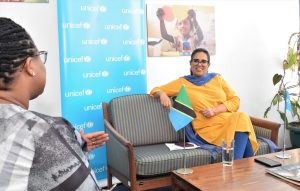
Representative, Ms Shalini Bahuguna responding to a question from Tanzania Standard
Newspapers (TSN) staff, Ms Hilda Mhagama during a special interview at her office in Dar
es Salaam recently in regard to today’s World Children Day Celebration.
Q: What are the main focus areas of your programming in Tanzania, and why did you select those areas?
A: Based on the progress and challenges mentioned above, UNICEF, as part of the UN system in Tanzania is informed by both what we know works in Tanzania and global knowledge and evidence.
There is a specific emphasis on two windows of opportunity for ensuring positive impact for children in Tanzania that UNICEF has prioritised- early childhood and adolescence, especially adolescence girls.
Complementing other UN agencies, we bring our expertise in multiple areas- health, nutrition, HIV, Water and Sanitation, Education and Child protection to help government implement some of its key policy frameworks in Ministries, and cross cutting ones such as the National Accelerated Investment Agenda for Adolescent Health and Wellbeing and its operational framework for early childhood.
Our strength is our presence on the ground, coupled with our ability to support government to strengthen its systems to meet children’s needs and help communities adopt behaviours that support well being of children.
For example, on nutrition, we are supporting the implementation of government’s national multisector nutrition plan and the compact with our UN partners to ensure that we tackle malnutrition in all its forms.
We are collaborating with government in the Mainland and Zanzibar to reduce the number of school dropouts, increase the number of girls studying sciences, and creating a system that allows us to keep all children in school.
And, last but not least, we are working to empower adolescents, especially girls helping them access services and articulate their voices as change-agents.
Q: What are your aspirations for the children of Tanzania?
A: That every child in Tanzania has ever right- whether a girl or a boy, whether in a remote rural area or in a dense urban setting, whether able bodied or disabled.
Q: What is your message to the children and parents of Tanzania as they commemorate this day?
A: To the children I would say; dear watoto, all you girls and boys, dream big, know you have a voice and fulfil your potential.
To the parents, I would say; let us work together so our girls and boys can enjoy all rights and achieve their full potential.

References:
Legiano Casino Codes calvaryofhope.org
References:
Kingmaker casino kryptowährung einzahlen http://toolbarqueries.google.at/
References:
KingMaker einzahlung crypto http://es.thefreedictionary.com/_/cite.aspx?url=http://tzu.to/TmEWS&word=apostata&sources=vox_manual,vox1,kdict,vox_thes,open_thes,hc_Es_En
References:
KingMaker 100 bonus einzahlung http://cse.google.com.af/
References:
Leggiano Casino cse.google.kz
References:
Legiano Casino Mindesteinzahlung http://cse.google.cz
References:
KingMaker Casino Ersteinzahlungsbonus https://cm-sg.wargaming.net/frame/?service=frm&project=wot&realm=sg&language=en&login_url=https://301.tv/dewittfitzhard
References:
KingMaker Casino Einzahlung mit Google Pay http://toolbarqueries.google.com.mm
References:
KingMaker Casino Einzahlung mit Neukundenbonus xxx-files.org
References:
Legiano Casino Login Deutschland http://cse.google.com.jm/
References:
Legiano Casino Freispiele http://www.webmath.ru
References:
Monro Casino wotspeak.org
References:
Hitnspin willkommensbonus http://clients1.google.com.jm/url?q=https://www.sjsu.edu/faculty/beyersdorf/ARPhysics/moduleInfo.php?source=https://de.trustpilot.com/review/der-wikinger-shop.de
References:
Hitnspin casino seriös https://backingtrackx.com/
References:
Monro Casino PayPal https://freerepublic.com/
References:
Hitnspin deutschland https://piratebooks.ru/
References:
Hitnspin casino test hamatata.com
References:
Hitnspin deutschland https://podnova.com/
References:
Hitnspin erfahrungen shopify.ixspy.com
References:
Hitnspin casino bonuscode https://jugem.jp/utf/?mode=gallery&act=list&domain=sub.elfejewelry.com:443/index.php?wheelerclausen777541
References:
Lollybet Aktionscode http://clients1.google.com.tw/url?sa=i&url=https://gaiaathome.eu/gaiaathome/show_user.php?userid=2022901
References:
Lollybet Casino App Download http://maps.google.com.qa/
References:
Lollybet Bonus Code https://redirect.camfrog.com
References:
Hitnspin casino bonus ohne einzahlung http://clients1.google.tl/url?q=https://www.holycrossconvent.edu.na/profile/adamsencnkovesen77359/profile
References:
Hitnspin casino betrug http://cse.google.mk/
References:
Lollybet Casino Auszahlungsdauer https://school238.ru/redirect?url=https://linkee.click/dektrinidad808
References:
Lollybet Casino DE https://9.pexeburay.com/index/d1?diff=0&utm_source=ogdd&utm_campaign=20924&utm_content=&utm_clickid=loo0g4ckw0cw0g0c&aurl=https://amazon.2fui.com/xhbchristoper
References:
Lollybet Casino App Download http://www.google.ba/url?q=https://sysclicks.com/brandonzadow96
References:
Lollybet Bewertung old.nl-club.ru
References:
Lollybet Casino Live Casino enwiki.uorpg.net
References:
Lollybet Casino App kartinki.net
References:
Lollybet Spiele dat.2chan.net
References:
Lollybet Casino 100 Freispiele https://24.cholteth.com
References:
Lollybet seriös www1.suzuki.co.jp
References:
Lollybet Meinung http://cse.google.cd/url?sa=t&url=https://getshort.in/kerrihiginboth
References:
Lollybet Casino Erfahrungen search.circl.lu
References:
Lollybet Casino Review wiki.zr.ru
References:
Lollybet Casino Bonusbedingungen https://old.lokobasket.com/bitrix/redirect.php?goto=https://1page.bio/faustinost
References:
Lollybet Support http://www.google.md/url?sa=f&rct=j&url=https://n28.it/kaseyknapp9092
References:
Casino hull https://www.jobindustrie.ma/companies/casino-ohne-download-die-besten-instant-play-casinos-2026/
References:
Lollybet Casino Betrug safe.zone
References:
Lollybet Casino Erfahrungen http://www.google.pl/url?q=https://talentlagoon.com/employer/lollybet-casino-bonus-30-freispiele-ohne-einzahlung-bonus-ohne-einzahlung-2026/
References:
Lollybet Casino Kundenservice http://prod-dbpedia.inria.fr/describe/?url=http://erpmark.com/employer/lollybet-casino-erfahrungen-2026-sicher-oder-ein-betrug/
References:
Lollybet Casino Login pcportal.org
References:
Lollybet Cashback https://sambent.dev/
References:
%random_anchor_text% http://ktmoli.com/
References:
Candy96 deposit methods https://jobs.maanas.in/institution/top-real-money-online-casino-2026
References:
Sol Casino Bonus ohne Einzahlung http://mebel59r.ru
References:
Candy96 bonuses https://healthjobslounge.com/employer/online-casino-structure-australia