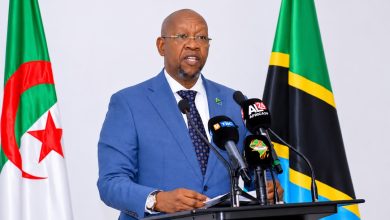
Unlocking Vision 2050: Zanzibar’s private sector at the heart of delivery

ZANZIBAR: ALI Suleiman Amour advocates joint planning, stronger business links across the Union and a change in mindset to translate Tanzania’s development ambitions into investment, jobs and higher incomes.
Tanzania’s Development Vision 2050 presents an opportunity to transform the economy, with the private sector expected to play a leading role in its implementation.
However, achieving its ambitious targets will require stronger cooperation between government and businesses.
For Ali Suleiman Amour, the newly appointed Vice-President of the Tanzania Private Sector Federation (TPSF) representing Zanzibar, success will depend on involving businesses in development planning, addressing investment barriers and creating opportunities across the United Republic.
In this interview, he discusses his new responsibility, the importance of public-private partnerships and how Zanzibar can benefit from the country’s long-term development ambitions.
Q: What does your appointment as TPSF Vice-President representing Zanzibar mean to you?
A: I consider it both an honour and a major responsibility. I am grateful to TPSF President Angelina Ngalula for her confidence and to the Annual General Meeting for confirming the appointment.
My priority is to ensure that Zanzibar’s business interests and economic potential receive meaningful attention within Tanzania’s wider development agenda. Businesses are responsible for investing capital, expanding production, creating employment and accessing markets.
Therefore, they must participate in shaping development plans, identifying challenges and proposing solutions rather than being involved only when implementation begins. Ultimately, I want this responsibility to translate into business growth, increased investment and better employment opportunities.
Q: How do you interpret President Samia Suluhu Hassan’s symbolic presentation of a key during the launch of Vision 2050’s implementation arrangements?
A: I found the symbolism very meaningful. As I recall President Samia’s explanation, public-sector representatives held the handle, signifying their responsibility to turn the key in the direction that enables implementation.
The government creates the enabling environment through policies, legislation, institutions and public services, while businesses transform those opportunities into investment, production and employment. However, both sides have responsibilities.
Government must remove unnecessary barriers and facilitate investment, while businesses must contribute capital, skills, innovation, integrity and sound management. The key can only fulfil its purpose when both sides work together.
Q: Why is joint planning important in implementing Vision 2050?
A: Joint planning is essential because business challenges are interconnected. For example, increasing production requires reliable electricity, transport infrastructure, access to finance, skilled workers, permits and available markets.
These requirements should be addressed together rather than separately. When government and businesses plan jointly, they can identify obstacles early, agree on solutions and assign responsibilities to relevant institutions.
Every challenge should have a proposed remedy, a responsible institution and a timeframe. This would move discussions beyond repeatedly identifying problems towards achieving practical solutions.
Q: What role should ZNCC and TPSF play in strengthening Zanzibar’s business interests?
A: I see considerable potential in strengthening cooperation between the Zanzibar National Chamber of Commerce (ZNCC) and TPSF, particularly on issues affecting businesses across the Union. Businesses should see tangible benefits from ZNCC’s representation within TPSF.
Their concerns need to be consolidated into evidence-based proposals and presented through appropriate platforms, including the Tanzania National Business Council.
Closer coordination among ZNCC, TPSF, business associations and public institutions would strengthen advocacy and ensure that issues raised lead to practical results.
Q: What immediate measures could improve business and trade between Zanzibar and Mainland Tanzania?
A: I would propose identifying five major barriers affecting businesses across the Union: administrative coordination, taxation and documentation requirements, permits and standards, transport costs and delays, and access to finance and reliable information.
We must begin with evidence, establishing the procedures involved, businesses affected, costs incurred and institutions responsible.
A jointly maintained list of challenges, proposed solutions and implementation timelines would help monitor progress.
Success should be measured by reduced business costs, clearer procedures and investments that can proceed without unnecessary delays.
Q: How can Zanzibar’s Development Vision 2050 complement Tanzania’s national vision?
A: There are significant opportunities for the two economies to complement each other. Zanzibar’s tourism industry, for example, can create markets for agricultural produce, processed foods, equipment and services supplied by businesses across Tanzania.
Within Zanzibar, opportunities exist in tourism supply chains, the blue economy, agricultural value addition and modern services.
ALSO READ: MPs push PPP investment for Vision 2050
We should look beyond tourist numbers and examine how tourism benefits local suppliers, including farmers, fishers, livestock producers, food processors and digital service providers. Pemba must also receive appropriate attention in investment, transport, skills development and market access to ensure opportunities extend across both islands.
Q: How can women, young people and small businesses benefit from Vision 2050?
A: Development must be inclusive. Women, young people and smaller enterprises need practical opportunities to participate in productive economic activities.
Access to markets, timely payments, relevant training and assistance in meeting quality standards can make a significant difference.
We must strengthen connections between small enterprises, established companies, investors and financial institutions. Young people should also be supported through skills development, innovation and entrepreneurship.
Q: What needs to change to improve access to finance and attract investment?
A: Businesses must prepare credible investment proposals supported by assessments of markets, costs, expected revenues, risks and management capacity.
There should be closer cooperation between businesses, financial institutions, investors and organisations that help entrepreneurs develop bankable projects.
Financing arrangements must also match the nature of investments, particularly longterm projects requiring suitable repayment periods. Public-private partnerships should be encouraged where they offer value and clearly distribute responsibilities and risks.
Government institutions should strengthen their facilitation role alongside regulation by listening to businesses, explaining requirements and helping resolve legitimate obstacles.
Businesses, meanwhile, must recognise that government has responsibilities to protect public interests and achieve development objectives.
Enterprises contribute by complying with laws, paying applicable taxes, improving productivity and operating responsibly.
Good corporate governance, fair working conditions, employee development and environmental protection are equally important. Trust will grow when both sides consistently fulfil their obligations.
Q: What would constitute success for Vision 2050?
A: Success should be measured by improvements people can see in their daily lives: investments becoming operational, businesses accessing new markets, local suppliers winning contracts and citizens securing better jobs and incomes.
We should also see reduced business costs, efficient procedures and greater participation by women, young people and small enterprises.
With the private sector expected to contribute approximately 70 per cent of Vision 2050’s implementation, its involvement is indispensable.
The ultimate goal is to ensure that government and businesses work together to unlock opportunities that create stronger enterprises, thriving communities and improved livelihoods for Tanzanians.