AFCON 2027: Tanzania’s three-city advantage
- Can Dar es Salaam, Arusha and Zanzibar turn football into lasting economic wealth?
DAR ES SALAAM: WITH three Tanzanian cities hosting matches, rather than two in Uganda and one in Kenya, the 2027 Africa Cup of Nations offers an opportunity to boost tourism, attract investment, create jobs and accelerate infrastructure development. The real challenge is ensuring these financial gains continue long after the last whistle.
East Africa has a unique chance to showcase its organisational, tourism and economic potential at the 2027 Africa Cup of Nations (AFCON), jointly hosted by Tanzania, Uganda and Kenya under the PAMOJA 2027 agreement.
With the confirmation of three host cities (Dar es Salaam, Arusha and Zanzibar), the opportunity is highly significant for Tanzania. Kenya will host in Nairobi, while Uganda will host games in two cities. Twenty-four national teams are expected to compete in the competition, scheduled for June 19–July 17, 2027.
Tanzania has the most geographically dispersed host-city obligations among the three nations, due to CAF’s certification of the six host cities on November 21–22, 2026. Nevertheless, Tanzania will not necessarily gain three times the economic benefits from having three host cities.
The number of matches each location hosts, their significance, visitor spending, infrastructure readiness, private-sector involvement and the nation’s capacity to translate tournament-related activity into long-term investment will determine the actual gains.
Therefore, the strategic question is why Tanzania’s allotment of three cities is significant. Tanzania has a strategic advantage due to the geographical dispersion and diversity of its host towns.
Zanzibar, Arusha and Dar es Salaam have distinct but complementary economic opportunities. Unlike the other two cities, Dar es Salaam is a hub for trade and transportation.
Increased demand for lodging, dining, transportation, retail, entertainment, telecommunications and financial services could benefit Dar es Salaam, Tanzania’s main business hub.
Its port, international airport and well-established business community enable tournament attendees to connect with broader trade and investment opportunities.
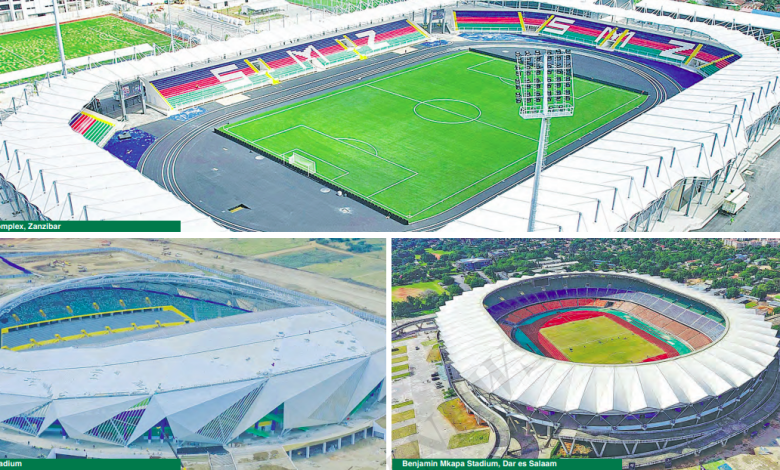
Games at Benjamin Mkapa Stadium may increase demand for nearby companies and lodging services. For Arusha, promoting travel, hospitality and investment.
Arusha offers a strategic opportunity to link football tourism with Tanzania’s renowned destinations, including the northern safari circuit. Attendees may choose to extend their stay to explore national parks, cultural tourism, conference facilities and hospitality investment opportunities.
Hotels, travel companies, restaurants, local guides, transport providers and small businesses would all benefit.
While in Zanzibar, the blue economy and foreign travel are important. Zanzibar can attract football fans and foreign tourists by leveraging its reputation for international travel, beaches, hospitality facilities and cultural attractions.
The competition may increase demand for lodging, dining options, water transportation, entertainment, cultural tourism and local goods. Additionally, it provides a chance to encourage investment in marine conservation, fisheries, sustainable tourism and the blue economy.
Tanzania can promote a range of economic experiences under a single national tourism and investment strategy thanks to the three-city model.
This geographic diversity is an advantage that can be leveraged beyond competition. Tanzania presents distinct economic prospects compared with Kenya and Uganda.
Uganda’s twocity system allows economic activity to be distributed between its capital, Kampala and Hoima, a developing investment hub linked to the nation’s infrastructure and oil development.
ALSO READ: AFCON 2027: Our stadiums may be ready, but can we protect a player’s privacy?
While Hoima can benefit from increased demand for lodging, transportation and related infrastructure, Kampala offers a well-established commercial and tourism market.
Kenya, by contrast, offers an opportunity to maximise visitor spending through its wellestablished aviation, accommodation, financial services and commercial networks, driven by its concentration of activity in Nairobi.
Kenya’s two chosen stadiums are Talanta Stadium and Moi International Sports Centre in Kasarani.
On the other hand, Tanzania’s three-city configuration offers a broader geographic distribution of potential advantages.
It can spread opportunities across commercial services, tourism and coastal economic sectors, rather than concentrating tournament activity in a single urban region.
However, there is a competitive aspect. Uganda can leverage competition to attract new investment destinations, while Kenya might benefit from concentrating foreign tourists and business activity in Nairobi.
Tanzania must therefore avoid assuming that having more host cities will inevitably lead to higher visitor spending or investment.
Service quality, international connectivity, safety, tourist experience, transportation efficiency and the ability to encourage guests to stay longer will all determine a competitive edge.
Increased tourism revenue and foreign exchange earnings will have a significant positive impact on Tanzania’s economy and its three host cities.
Football fans, tourists, journalists, sponsors, corporate delegations and foreign guests may attend the competition.
Their spending on lodging, food, travel, entertainment and tourismrelated activities can boost domestic demand and generate foreign-exchange revenue.
Tanzania could encourage tourists to attend football games in addition to safari travel, vacations to Zanzibar, cultural events and business meetings.
Rather than just boosting arrivals, the goal should be to increase average tourist spending and length of stay. Jobs and business prospects.
Demand is probably going to rise for hotels, restaurants, transportation companies, security services, event management companies, cleaning services, media, construction and retail enterprises.
Crucially, young individuals, women-owned companies, unofficial vendors and small and medium-sized firms should all have access to opportunities.
Hospitality, catering, digital services, customer service and event management training programs can produce skills that will be useful long after 2027.
Productivity and infrastructure development. Beyond competition, productivity can be increased by investing in stadiums, highways, airports, public transportation, power, water, telecommunications and urban cleanliness.
Long-term economic demand should be considered when designing these facilities.
For instance, improved urban mobility can reduce businesses’ operational costs, while expanded airport connections can boost investment, trade and tourism.
Stadiums, training facilities, hotels, airports, transportation and logistics have all been inspected by CAF across the three nations, underscoring the importance of supporting infrastructure alongside athletic venues.
A rise in foreign direct investment. Tanzania can showcase its investment climate on a global stage through AFCON.
Investors could find opportunities in the hotel, tourism, logistics, commercial real estate, digital infrastructure, entertainment and sports sectors.
Instead of relying solely on publicity, the government could use the tournament to arrange targeted investor engagements.
Expansion of domestic supply chains and SMEs. Local production of food, beverages, textiles, souvenirs, furniture, building materials and other goods and services may be boosted by competition.
Tanzania should ensure that, where possible, hotels, stadium operators and event contractors’ source competitively from domestic producers.
This will decrease the leakage of tournament expenditures through imported products and services and boost local value addition.
Expansion of the digital economy. Technology-based enterprises can benefit from digital ticketing, mobile payments, online hotel reservations, broadcasting, advertising and digital marketing.
Fintech companies, media companies, digital entrepreneurs and telecommunications organisations should be encouraged to create services that can continue to run beyond the event.
Economic diplomacy and global branding. AFCON allows Tanzania to showcase its economic prospects, tourism attractions and investment potential to millions of viewers.
This can strengthen economic diplomacy and raise the nation’s prestige abroad, particularly in attracting investors from Asia, Africa, Europe and the Middle East. Even with these anticipated economic gains, Tanzania will continue to profit beyond 2027.
It is imperative to avoid the experience of nations that make significant investments in sports facilities but find it difficult to sustain their economic value after an event.
The following priorities should be included in Tanzania’s thoughtful AFCON 2027 Legacy Economic Development Strategy.
Create a nationwide AFCON economic legacy programme first. The programme should include government agencies, local governments, the corporate sector, travel agencies, financial institutions and development partners.
Measurable goals for investment, employment, tourism receipts, SME engagement and infrastructure utilisation should be set for each host city. Second, create business zones connected to stadiums. Stadiums shouldn’t be viewed as football-only venues.
They can support concerts, trade shows, conferences, sports academies, corporate gatherings, leisure activities and community initiatives.
If construction is commercially justified and does not impose unnecessary public obligations, commercial facilities surrounding stadiums could generate sustainable revenue.
Third, increase the involvement of local businesses. To help local companies meet quality, cost, delivery and service standards, the government should establish an AFCON supplier development programme.
As a result, SMEs would be able to participate in long-term hospitality and tourism supply chains and compete for procurement opportunities.
Fourth, use travel and tourism packages to connect the three cities. Travel among Dar es Salaam, Arusha and Zanzibar should be encouraged.
Integrated packages created by airlines, tour operators, hotels and transportation firms could include football, business travel, cultural sites and recreational activities. Fifth, use bankable projects to attract private investment.
While commercially viable hotels, logistics facilities, entertainment venues and other developments should attract private capital through appropriate financing structures, including public-private partnerships where appropriate, public resources should prioritise essential infrastructure and enabling facilities.
Unquestionably, AFCON 2027 allows Tanzania to enhance its standing as a regional hub for international sporting events, trade, tourism and investment.
While Uganda and Kenya pursue their own opportunities through Kampala, Hoima and Nairobi, Dar es Salaam, Arusha and Zanzibar can highlight complementary economic strengths.
However, the number of stadiums built, visitors received, or games played shouldn’t be the sole indicator of success.
Rather, success should be measured by the extent to which the competition boosts Tanzania’s economic competitiveness, develops domestic companies, attracts sustainable investment and enhances infrastructure.
Tanzania should be ready to turn Africa’s football tournament into an opportunity for investment, tourism and industrial growth, not just host it.