TZ: Rising protagonist in African economic outlook 2025
DAR ES SALAAM: IN an era of global economic shifts, Tanzania has emerged as a beacon of stability and growth on the African continent.
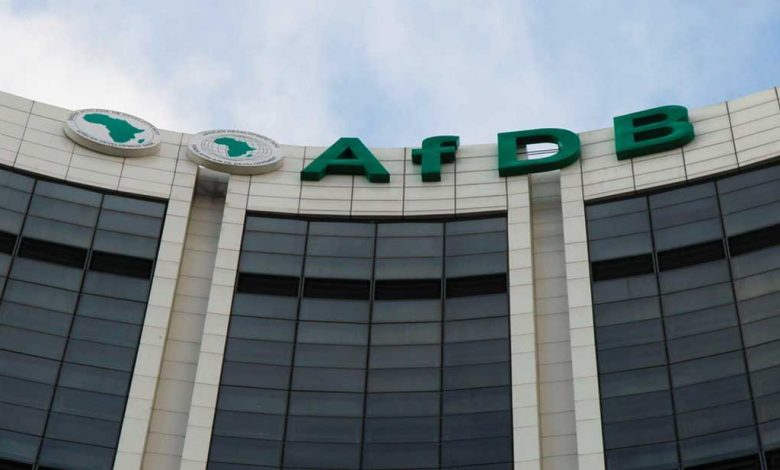
According to the African Economic Outlook 2025: Making Africa’s Capital Work Better for Africa’s Development, a flagship report released by African Development Bank (AfDB), Tanzania has been distinguished as a “good performer.”
By outshining many of its regional peers through robust macroeconomic management and a resilient post-pandemic recovery, the nation is no longer just a participant in the African economic story; it is a protagonist.
With a projected real GDP growth of 6.0 per cent in 2025 and an even more ambitious 6.3 per cent in 2026, Tanzania is positioning itself as the central hub for investment and industrialisation in East Africa.
While the nation ranks third in the East African Community (EAC) for pure percentage growth, it leads the bloc in several high-impact metrics that signal long-term health.
Notably, Tanzania recorded the fastest foreign direct investment (FDI) growth rate in the region at 28.3 per cent, more than double the regional average of 12 per cent.
AfDB’s assessment highlights Tanzania’s consistency across 10 critical performance indicators, where it secured “good” ratings in seven.
This stability is most evident in the country’s inflation control. While many African nations grapple with double-digit price hikes, Tanzania’s inflation is expected to remain anchored between 3.4 per cent and 3.5 per cent, comfortably within the national target range of 3–5 per cent.
This provides a stable environment for private consumption, far outpacing peers like Kenya or Ethiopia.
Fiscal discipline remains a cornerstone of this success story. International Monetary Fund (IMF), in its recent Article IV consultations, noted that Tanzania’s fiscal deficit is stabilising at about 2.5 per cent of GDP for the 2024/25 period.
This achievement is largely credited to digitised revenue collection and a broader tax base.
Furthermore, despite a current account deficit of 4.2 per cent projected for 2025, the gap is buffered by record-breaking tourism receipts surpassing 4.0 billion US dollars annually and a surge in gold exports.
Crucially, the nation’s public debt sits at about 41 per cent of GDP, significantly below the 55 per cent distress threshold.
Looking towards 2026, the Tanzanian economic narrative is shifting from traditional agriculture toward high-growth modern services and heavy industry.
The projected sectorspecific growth rates for 2026 reflect a nation in transition. Information communication technology (ICT) and digital economy (13.5 per cent): Leading the charge, this sector is fuelled by the 5G rollout and the expansion of the National ICT Broadband Backbone.
Energy and electricity (12.0–15.0 per cent): The full operationalisation of the Julius Nyerere Hydropower Plant (2,115 MW) has fundamentally altered the landscape, turning Tanzania from a power-scarce nation into a regional electricity exporter.
Mining and extractives (9.3–10.0 per cent): Beyond gold, Tanzania is capitalising on the global energy transition with new projects in critical minerals like nickel, graphite and rare earths.
Tourism and hospitality (9.0–12.0 per cent): With a target of 5 million visitors and 6 billion US dollars in annual revenue, the Royal Tour initiative continues to pay dividends.
Aggressive public investment serves as the engine for this momentum.
The Standard Gauge Railway (SGR), connecting the port of Dar es Salaam to the hinterland, is expected to reduce logistics costs by 40 per cent.
This cements Tanzania’s role as a gateway for landlocked neighbours within both the EAC and the Southern African Development Community (SADC).
By the end of 2026, IMF projects Tanzania’s nominal GDP to reach between 95 billion US dollars and 102 billion US dollars, closing the gap with regional leaders. In the SADC bloc, Tanzania’s performance is defined by its resilience.
Unlike countries such as Namibia or Botswana, which saw sharp growth declines in early 2025, Tanzania maintained a steady climb.
Its foreign reserves cover about 5 months of imports, surpassing the SADC benchmark of 3 months.
Under the SADC SME Development and Competitiveness Strategy 2025-2029, it is positioned to leverage its new special economic zones to become a manufacturing hub for the region.
However, the outlook is not without its challenges. AfDB warns that structural transformation remains slow.
ALSO READ: Samia urges stronger African economic co-op for self-reliance
To sustain this trajectory, Tanzania must deepen its financial markets and increase domestic revenue mobilisation. To address these needs, the government enacted the Investment and Special Economic Zones Act, 2025.
This landmark legislation consolidates the investment regime under a single regulator: The Tanzania Investment and Special Economic Zones Authority (TISEZA).
For investors, 2026 incentives are among the most competitive in Africa, offering 10-year corporate income tax holidays and 100 per cent exemptions on VAT and import duties for capital goods in designated zones like Bagamoyo Eco Maritime City or Kwala Industrial Park.
By balancing fiscal conservatism with bold infrastructure spending and investor-friendly reforms, the nation has created a Tanzanian model of development.
While the road to full structural transformation requires continued effort, the 2025-2026 outlook makes one thing clear: Tanzania is open for business and ready to lead the continent’s next economic chapter.
The combination of natural wealth, political stability and a strategic location makes it a premier destination for those looking to tap into the African century.