The forest that pays its way
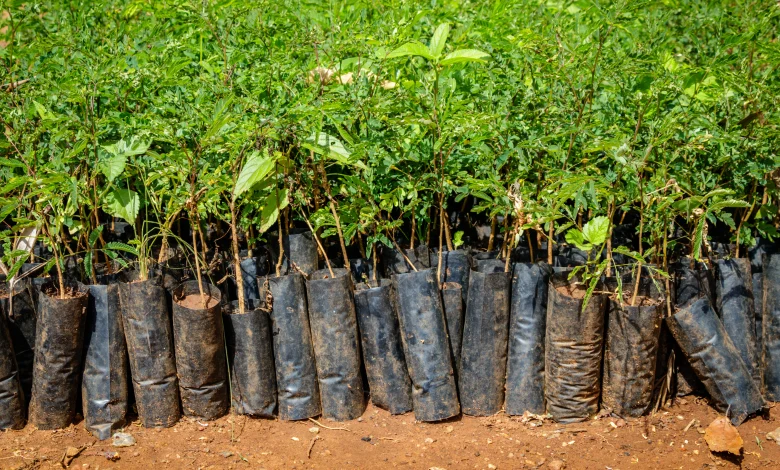
DAR ES SALAAM: A SEEDLING in a nursery is a promise. A living forest is proof. For years, the environmental response to tobacco curing in Tanzania has followed a familiar equation: wood is consumed, therefore trees must be planted.
Millions of seedlings have been raised, nurseries established and woodlots promoted. Yet the harder question remains: is the landscape healthier because the tobacco industry operates there?
That question changes the measure of success. It shifts attention from seedlings distributed to trees surviving; from hectares planted to indigenous forests protected; from promises of restoration to evidence of regeneration; and from curing wood purchased to wood whose legal and sustainable origin can be traced and eventually connected to compliant leaf.
The distinction matters because evidence is challenging the assumption that planting alone can compensate for forest loss.
A 2025 study examining seven decades of tree-planting campaigns in Tanzania’s leading tobaccogrowing districts of Urambo, Uyui and Kaliua found that afforestation efforts had not kept pace with forest loss.
Forest cover in the study area declined by 62 per cent between 1956 and 2020, while the area reforested remained small relative to annual forest loss. (PubMed) The lesson is not that planting trees has no value.
It is that planting trees and sustaining forests are not the same thing. Mkwawa Leaf Tobacco Limited’s own 2025/26 Tobacco Afforestation Programme (TAP) observations reinforce that distinction.
They recorded immature seedlings, wilting, bare-root transportation and poor establishment, including an estimated loss of half the seedlings before reaching farmers.
Significantly, the review recommended that indigenous trees and/or their regenerants should not be cleared simply to establish exotic eucalyptus woodlots.
Against that experience, another approach is gaining significance: CommunityBased Forest Management, or CBFM, combined with natural regeneration.
CBFM starts with something tree-planting programmes can overlook, the ecological capital already standing, sprouting and regenerating in the landscape. Tanzania’s CommunityBased Forest Management Guidelines describe communities as “Decision-Makers not just Protectors” and CBFM as a “power-sharing strategy.”
Village institutions manage forests, regulate access, enforce bylaws, oversee harvesting and retain revenues within the legal framework.
The philosophy is backed by law. Tanzania’s Forest Act provides for community participation in forest management and sustainable use under approved plans and rules.
A Village Land Forest Reserve, therefore, need not be a forest economically locked away from the people living beside it.
It can be a forest whose use is governed so that economic value today does not destroy ecological value tomorrow. For tobacco, that distinction is crucial. The industry needs curing energy.
Rural communities need livelihoods. Tanzania needs forests. Treat those demands as competing interests and something eventually gives way.
Manage them as parts of the same landscape and another possibility emerges: a forest with an owner, a management plan and a future.
CBFM allows nature do some of the planting, Miombo woodland offers a particularly compelling opportunity.
“Miombo woodland possesses something a nursery cannot manufacture overnight: an established ecological system,” Mkwawa’s Head of ESG, Brenden Lucas, told this reporter.
“Roots remain underground. Stumps coppice. Seeds remain in the landscape.” Protect those biological assets from repeated cutting, uncontrolled fire and grazing, he argues, and nature itself becomes a restoration partner.
This does not mean that every degraded Miombo landscape will regenerate unaided. Research from southwestern Tanzania warns that prolonged cultivation can damage rootstocks sufficiently to impair subsequent recovery.
But that makes early protection and managed regeneration more not less important.
(Wiley Online Library) The emerging proposition is therefore not simply plant more trees, but protect what remains and regenerate what can recover. Chunya, one of Tanzania’s important tobaccogrowing districts, illustrates the stakes.
District Commissioner Mbaraka Alhaji Batenga has publicly called on tobacco growers to take environmental conservation seriously.
Speaking to this reporter, on June 10th 2026, Chunya District Commissioner Mbaraka Alhaji Batenga argued that natural regeneration offers a more promising path than relying predominantly on tree planting.
Tree-planting programmes, he said, face persistent human and biological pressures, from wildfires and livestock grazing to poor survival and repeated disturbance.
Regeneration starts with nature’s existing advantage: living roots, coppicing stumps, seeds and indigenous trees already adapted to the landscape.
Protecting these assets and placing communities at the centre of their management, Batenga said, could allow degraded woodland to recover more naturally.
“We should not only count trees planted; we must look at what survives and regenerates.”
The deeper question is what remains alive years after seedlings leave the nursery. Site species mismatch, wildfires, grazing, drought, competing land uses, poor post planting maintenance and human pressure do not disappear because a planting target has been achieved.
Regeneration therefore shifts the sustainability conversation from how many trees entered the ground to whether the landscape retains the biological capacity to renew itself. At Kiwere village in Iringa, that idea is taking physical form.
The management plan for the 3,681-hectare Kidundakiyave Village Forest Reserve records that Mkwawa financed its 2024 review and supported aspects of formal forest management. Crucially, Mkwawa does not own the forest. The community does. About 2,323 hectares are designated for conservation.
ALSO READ: Tanzania told to add value to forest products
The Mwingila management unit provides for controlled utilisation, with an inventory estimating roughly 3.79 million trees and an estimated sustainable annual harvest of 1,203 trees, equivalent to about 523 cubic metres.
This tells a fundamentally different sustainability story from we planted a million trees. It says: this forest has boundaries. It has an inventory.
It has an owner. It has rules. It has a calculated harvest. It has areas that must remain protected. And tomorrow’s forest matters before today’s tree is cut.
Tanzania’s National CBFM Action Plan 2021– 2031 points in precisely that direction. It targets an expansion of land under CBFM from 2.7 million hectares to 16 million hectares by June 2031, restoration of 5.2 million hectares and a 70 per cent reduction in the national deforestation rate.
It also targets a 70 per cent reduction in natural forest area affected by wildfire. CBFM is the answer to this, communities protect what they own. For tobacco companies, this is larger than corporate social responsibility.
It is potentially a supply-chain strategy built around living natural capital. Brenden says Mkwawa has supported roughly 20 CBFM initiatives across its footprint, with the longer-term ambition of facilitating access to sustainably managed curing wood to its contracted growers.
Brenden further says, Mkwawa works with primary societies to verify wood-harvesting approvals and uses field technicians to record where farmers obtain wood and how much is delivered.
Curing studies then estimate how much wood should reasonably be consumed per kilogramme of tobacco. In effect, every cubic metre of curing wood should have a passport, according to Breden. Where did it originate? Was harvesting authorised?
Was it within the forest’s sustainable limit? Who received it? How much tobacco did it cure? Traceability turns an environmental claim into something that can be audited.
Since Mkwawa entered the Tanzanian Tobacco market in 2022, the volume of tobacco sold has grown significantly from about 60 million kilograms to 185 million kilograms in 2025, while the value of the crop increased from approximately USD 108.7 billion to USD 475.4 billion.
Despite this increase, the environmental sustainability pillar through tree planting has not improved, despite spending around USD 6 million annually. If a portion of these resources could be dedicated to CBFM/farmer assisted natural regeneration, the industry could have recorded a significant outcome.
Measuring CBFM from SDGs tripple bottom lense, People, Planet, and Profit, CBFM conservation approach becomes commercially interesting. People gain stronger village institutions, forestderived livelihoods and an economic reason to protect the resource.
Planet retains indigenous woodland capable of supporting biodiversity, carbon storage, soil protection, water regulation and natural regeneration.
Research by ResearchGate in Tanzania’s tobacco landscapes has documented losses in biomass, vegetation structure and indigenous species associated with tobaccorelated land-use pressures.
And Profit acquires a different meaning: lower environmental risk, traceable curing wood, more resilient agricultural landscapes and greater confidence that the natural resources underpinning tomorrow’s supply chain will still exist.
According to Brenden, this is not philanthropy dressed as ESG. It is natural capital connected to supply resilience. The industry’s environmental dashboard should therefore go beyond seedlings.
It should measure 12-, 24- and 36-month tree survival; hectares of indigenous forest under effective management; hectares successfully regenerating; wildfire and encroachment trends; kilograms of wood consumed per kilogramme of cured tobacco; the proportion of curing wood traceable to authorised sources; and revenues returned to participating communities.