

Madaba cuts distance to healthcare
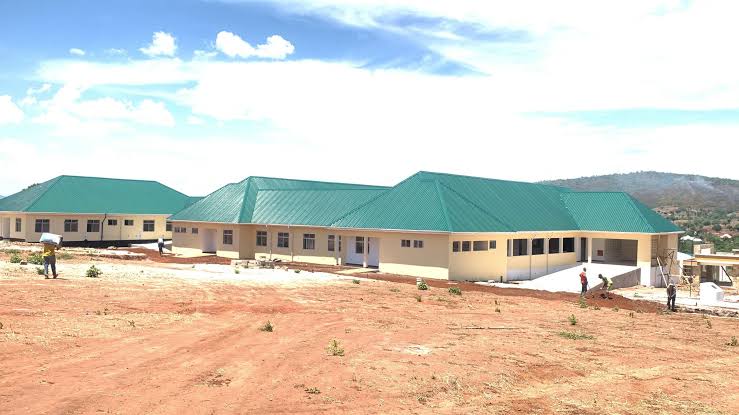
SONGEA: FOR years, residents of Madaba District faced a familiar challenge of accessing essential healthcare, which often meant travelling long distances in search of treatment.
Today, that picture is gradually changing. Investment in health infrastructure, medical equipment and human resources has expanded healthcare services across Madaba, bringing treatment closer to communities and reducing the distance residents have to travel for essential medical care.
Since Madaba District Council was established on September 25 2015, the government has continued to construct and strengthen health facilities, including the district hospital, health centres and dispensaries across the district.
The facilities now have a total of 281 health workers, including 26 doctors and 255 other health professionals from different cadres.
For residents, the significance of these developments goes beyond the construction of new buildings. Services ranging from disease screening and treatment to maternal and child healthcare are increasingly available closer to where people live.
One of the most significant developments has been the construction and opening of Madaba District Hospital.
The hospital was built at a cost of 4.4bn/-, funded by the central government, and began providing services in September 2023.
Its arrival has expanded the range of medical services available within the district, including diagnostic, treatment and specialised services.
It has also reduced residents’ reliance on travelling more than 120 kilometres to Songea for treatment, while reducing the need for referrals outside the district for some services.
Madaba District Hospital now provides outpatient and inpatient services, dental care, maternal, paternal and child health clinics, major and minor surgery, normal and caesarean deliveries, cervical cancer screening, eye examinations and treatment, radiology services including X-rays and ultrasound, laboratory services, safe blood services, mortuary services, counselling and emergency care.
The investment has also extended beyond buildings and infrastructure. The government has facilitated the provision of medical equipment to enable health professionals to provide services more effectively and respond to the needs of residents.
At the same time, efforts to increase the number of health workers have continued, alongside measures to improve access to specialised medical care.
Madaba District Hospital has received specialist doctors through the Samia Specialist Doctors Programme, who have provided services in three phases.
Other specialist doctors have also visited the district in four phases to offer services in different areas of medicine.
For residents, having access to specialist services closer to home can mean fewer journeys to distant facilities, as well as lower costs associated with seeking treatment.
Madaba District Medical Officer, Dr Dickson Mero, said the investment was beginning to produce visible changes in healthcare delivery across the district.
“We have witnessed improvements in various areas, enabling us to provide services within the district and reduce the challenges residents previously faced when seeking healthcare.
For example, Gumbiro Health Centre serves residents within the district, but also assists travellers who experience emergencies on the road because of its proximity to the main road,” said Dr Mero.
He added that other health centres were also playing an important role in strengthening healthcare services.
“Despite these achievements, we are continuing to improve areas that require greater attention to ensure every resident receives quality, safe and timely healthcare,” he said.
While the district hospital has become an important part of the transformation, investment has also reached smaller facilities serving communities in rural areas.
Through Madaba District Council, the government has constructed a total of nine dispensaries and health centres since the council was established, helping to bring healthcare services closer to residents. Among the projects is Mtyangimbole Health Centre, which was completed in 2020 at a cost of 500m/-, funded by the central government.
The construction of Matetereka Health Centre cost more than 500m/-. Mbangamawe Dispensary was completed in 2019 at a cost of 140.2m/-, while Kipingo Dispensary was constructed using 100m/- from the Central Government, 18m/- contributed by residents and 4.5m/- from the Constituency Development Fund.
Mahanje Ikulu Dispensary was constructed at a cost of 100m/- from the Central Government. Matumbi Ifinga Dispensary was initially established through community contributions before the Central Government provided 50m/- .
During the 2025/2026 financial year, a further 73m/- was provided to support its completion. Magingo Dispensary has cost more than 70m/-, while Gumbiro Health Centre was completed and began providing services in 2026 following an investment of 250m/- from the government.
The impact of the investment is reflected in the number of people using the facilities. Statistics for 2025 show that 66,582 residents received services at health facilities across the district. Among them were 2,802 pregnant women, while 3,349 children received vaccinations.
For people living in rural communities, however, the value of a nearby health facility is perhaps best measured in the time, money and effort saved when seeking treatment. A resident of Ifinga Village said the construction of Matumbi Ward Dispensary had reduced the distance residents previously had to travel to access healthcare.
“We thank the government for bringing healthcare services closer to us. Previously, we had to walk more than 50 kilometres to seek services at Lilondo Dispensary, while for referral services we had to travel to Songea, more than 120 kilometres away.
Now that the dispensary has been built, it is helping us receive treatment more quickly,” he said. Such experiences illustrate why access to healthcare is not only about whether a service exists, but also about how easily people can reach it when they need it.
For communities far from major towns, reducing the distance to a health facility can also help reduce the time and financial burden associated with seeking medical attention. The investment programme is continuing. The government has allocated 236m/- for the construction of Ifugwa Dispensary and 500m/- for an administration building at Madaba District Hospital.
Construction of both projects has already begun, alongside ongoing efforts to increase the number of health professionals working in health facilities.
Madaba District Council Executive Director, Advocate Sajidu Mohamed, said the council will continue working with the government to ensure investment in healthcare translated into tangible benefits for residents.
“Our goal is to ensure that the people of Madaba receive quality healthcare services on time and closer to home. We recognise that investment in health is an investment in people’s lives and the wellbeing of the community. That is why we will continue working with the Government to strengthen infrastructure, medical equipment and human resources in order to expand the range of services provided,” he said.
For Madaba, the transformation of the health sector is therefore an ongoing process. The construction of a district hospital, health centres and dispensaries, combined with investment in medical equipment, health workers and specialist services, has expanded the healthcare options available to residents within the district. But the work does not end with the completion of buildings.
As demand for healthcare continues to grow, sustained investment in infrastructure, equipment, technology and human resources will remain important to ensuring services are available, safe, efficient and delivered on time.



Very important resource. Thanks so much for informing this important project.
Keep pushing.