

Putting Tanzania first through dialogue, cooperation and peaceful political understanding for future generations
DAR ES SALAAM: POLITICAL competition is a natural feature of every democratic society. Different political parties often present different ideas, policies and priorities as they seek public support.
While these differences are important in strengthening democracy, they need not become barriers to national unity or development. When dialogue replaces confrontation and cooperation takes precedence over conflict, nations are better positioned to achieve lasting peace, social harmony and sustainable progress.
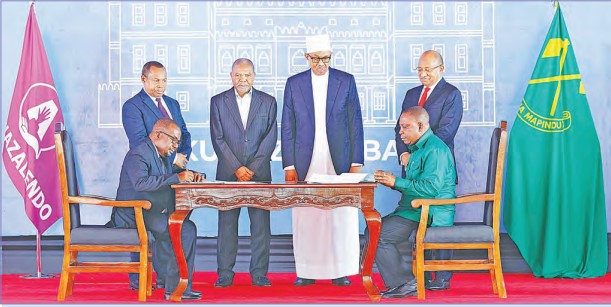
For Tanzania, the recent reconciliation agreement signed in Zanzibar between Chama Cha Mapinduzi (CCM) and ACT-Wazalendo has been widely viewed as an encouraging step towards reinforcing political cooperation and strengthening the country’s long-standing tradition of peaceful coexistence.
Beyond representing an understanding between two political parties, the agreement reflects a broader commitment to national unity, stability and collective development. Political reconciliation and peace analyst Dr Dennis Muchunguzi believes reconciliation should be regarded as an important instrument for national transformation.
In his view, countries develop more rapidly when leaders and citizens alike choose to set aside divisions and work together in pursuit of shared national interests.
According to Dr Muchunguzi, reconciliation creates an environment where constructive engagement becomes possible. Instead of allowing political differences to dominate public discourse, dialogue encourages cooperation, mutual respect and collective responsibility for addressing national priorities.
“When people work together harmoniously despite their political differences, they create better opportunities for development and improved public service delivery,” he explained.
ALSO READ: Tanzania, Japan affirm cooperation in conserving UNESCO’s World Heritage sites
The reconciliation agreement was witnessed by President Samia Suluhu Hassan and Zanzibar President Dr Hussein Ali Mwinyi, signalling highlevel commitment to strengthening cooperation between CCM and ACT-Wazalendo within the framework of Zanzibar’s Government of National Unity.
Speaking in an exclusive interview with the ‘Daily News’, Dr Muchunguzi observed that the benefits of reconciliation extend well beyond political institutions.
Ordinary citizens stand to benefit when political actors work together because cooperation often promotes faster decision-making, strengthens public confidence and creates a more stable environment for economic and social development. He noted that Zanzibar’s experience provides valuable lessons on how dialogue can help reduce mistrust while creating conditions that encourage shared prosperity.
“Political parties are important vehicles for development,” he said. “Their ultimate responsibility is to serve citizens.
Development should always remain the common objective regardless of political affiliation.” Reflecting on Zanzibar’s political history, Dr Muchunguzi acknowledged that disagreements following several elections since 2000 contributed to periods of political tension and mistrust among sections of society.
The tragic events experienced in 2001 remain an important reminder of the need to preserve peace through continuous dialogue and mutual understanding.
He explained that the establishment of the Government of National Unity under the 2010 Zanzibar Constitution marked a significant milestone in creating institutional mechanisms that encourage cooperation among political stakeholders.
The arrangement later demonstrated its practical value following the 2020 elections, when political competitors worked together within the Government of National Unity framework in pursuit of broader public interests. For Dr Muchunguzi, this experience illustrates that political competition does not necessarily prevent cooperation.
“People may hold different political opinions while remaining united in their commitment to building a stronger society,” he said.
He further observed that Tanzania’s political maturity continues to grow when leaders demonstrate willingness to engage in dialogue, accommodate differing views and seek common ground in matters affecting national development.
Dr Muchunguzi also welcomed President Samia Suluhu Hassan’s consistent emphasis on reconciliation, describing her message as one that reinforces the understanding that compromise should not be mistaken for weakness. Instead, he believes compromise represents responsible leadership focused on achieving outcomes that benefit society as a whole.
ALSO READ: CCM stands firm on reconciliation accord
According to him, successful reconciliation requires willingness from all sides to make reasonable concessions in pursuit of greater national interests.
“When compromise is made for the sake of peace, stability and development, it reflects political maturity rather than weakness,” he explained.
He added that President Samia’s approach of engaging different political stakeholders demonstrates the importance of listening carefully, understanding differing perspectives and seeking solutions through consultation rather than confrontation.
In his assessment, leadership rooted in dialogue creates opportunities for building trust while strengthening democratic institutions and social cohesion. Beyond Tanzania, Dr Muchunguzi believes the country’s reconciliation efforts also carry significance for the African continent.
Many African nations have experienced periods of political tension, yet several have demonstrated that peaceful dialogue can provide effective pathways towards recovery and national rebuilding.
He pointed to experiences from Zimbabwe, Kenya, South Africa and Rwanda, where reconciliation initiatives contributed to rebuilding trust, restoring stability and promoting national unity after difficult political circumstances.
While acknowledging that every country has unique historical, political and social contexts, he believes Tanzania can continue drawing useful lessons from international experiences while developing solutions suited to its own environment.
“This demonstrates that Tanzania possesses both the capacity and the willingness to address its challenges through peaceful dialogue and homegrown solutions,” he said.
Dr Muchunguzi emphasised that reconciliation should not be viewed solely as an agreement between political parties. Rather, it should be understood as an inclusive national process involving every segment of society.
He explained that government institutions, political leaders, private sector organisations, civil society groups, religious leaders, traditional leaders, development partners, academic institutions, researchers, farmers, workers, youth, women, persons with disabilities and the media all have important roles in strengthening peace and national cohesion. According to him, sustainable reconciliation succeeds when citizens themselves actively embrace values such as respect, tolerance, responsibility and constructive dialogue in their daily interactions.
“This is not only about political parties,” he said.
“Every Tanzanian has a role in nurturing peace, strengthening unity and contributing to national development.” He also highlighted the important responsibility carried by the media in promoting balanced reporting, encouraging informed public discussion and providing platforms that support peaceful engagement among citizens holding diverse opinions.
Likewise, educational institutions can help cultivate future generations that value democratic participation, peaceful conflict resolution and respect for differing viewpoints. As Tanzania continues implementing its national development agenda, Dr Muchunguzi believes that cooperation among all stakeholders will remain essential in achieving the country’s long-term aspirations.
He encouraged citizens, particularly young people, to remain focused on opportunities that contribute positively to national development while avoiding actions or narratives that could unnecessarily deepen divisions within society. The youth, he observed, possess enormous potential to drive innovation, entrepreneurship, technological advancement and community development.
Their participation in nation-building is strengthened when they embrace peaceful dialogue, mutual respect and civic responsibility regardless of political affiliation.
Dr Muchunguzi believes reconciliation provides an opportunity for Tanzanians to reaffirm the values that have long distinguished the country, including peaceful coexistence, national unity and respect for diversity. He stressed that differences of opinion are natural within any democracy, but they need not diminish shared commitment to building a prosperous and united nation.
Ultimately, reconciliation should be viewed not as the end of political competition, but as a commitment to ensuring that competition remains peaceful, respectful and focused on advancing the welfare of all citizens.
As Tanzania continues moving forward, sustained dialogue, inclusive governance and collective responsibility can help strengthen economic growth, reinforce social harmony and preserve the peace that has long remained one of the country’s greatest national assets.
By placing national interests above political differences and embracing cooperation wherever possible, Tanzania can continue demonstrating that unity, stability and peaceful coexistence remain powerful foundations for inclusive development and a brighter future for present and future generations.




이 웹사이트의 관리자가 열심히 일하고 있어서,
망설임 없이 곧 명성을 얻을 것입니다, 그 품질 콘텐츠 덕분에요.
I think the admin of this website is truly working hard in favor of his
web page, because here every material is quality based material.