Protect gains, sustain momentum
DAR ES SALAAM: THE decision by Fitch Ratings to revise Tanzania’s sovereign credit outlook to positive from stable is more than a favourable assessment of the country’s finances. It signals that key economic fundamentals are moving in the right direction and, importantly, that the gains made so far must be protected.
Fitch affirmed Tanzania’s long-term foreign- and local-currency issuer default ratings at B+, citing strengthening international reserves, moderate fiscal deficits and sustained economic growth. The agency forecasts the economy will grow by 5.8 per cent this year and an average 6.1 per cent in 2027-28, while government debt is expected to decline.
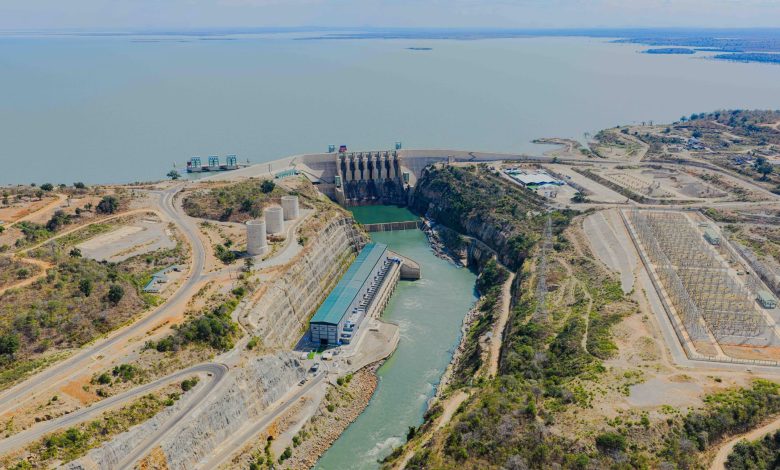
Significantly, Fitch’s announcement came as President Samia Suluhu Hassan commissioned the 2,115-megawatt Julius Nyerere Hydropower Project on Saturday, marking the ceremonial completion of the 7.45 tri/- plant whose phased entry into operation has transformed Tanzania’s electricity supply and created substantial spare generation capacity.
The coincidence is worth noting. The power project illustrates the kind of long-term investment that can change an economy’s productive capacity. Reliable and adequate electricity is vital to into factories, mines, farms, businesses and digital services. It can lower production costs, attract investment and allow existing enterprises to expand.
That is precisely where Tanzania’s improving macroeconomic position must now translate into broader economic gains.
But the Fitch assessment should also be read as a warning. A positive outlook is not a guarantee of a higher rating. Nor is it a licence for complacency.
The government has made progress in improving revenue mobilisation, foreign-exchange management and the broader macroeconomic policy framework. Such progress can easily be weakened if policy decisions become unpredictable, public institutions impose unnecessary costs on businesses or government directives conflict with the country’s wider economic objectives.
This places a responsibility not only on the central government but on leaders and officials at every level. Every directive, regulation and administrative decision should be judged against a simple question: does it strengthen or weaken our ability to produce, invest, trade and create jobs?
We cannot afford contradictions in which national policy seeks to attract investment while local decisions frustrate investors, or where efforts to improve the business environment are undermined by unnecessary bureaucracy.
Tanzania has invested heavily in infrastructure and has strengthened several economic fundamentals. The next challenge is to ensure that these gains reinforce one another.
The Fitch outlook provides an opportunity to consolidate that trajectory. Leaders at all levels should therefore treat the current momentum as something to protect, not squander.
ALSO READ: JNHPP lifts TZ’s power status
The ultimate test will be whether we can turn our stronger macroeconomic fundamentals, abundant electricity and major infrastructure investments into faster productivity growth, more private investment, better jobs and higher living standards.
That is the trajectory worth protecting.