Mary Rusimbi: Healing women, building leaders
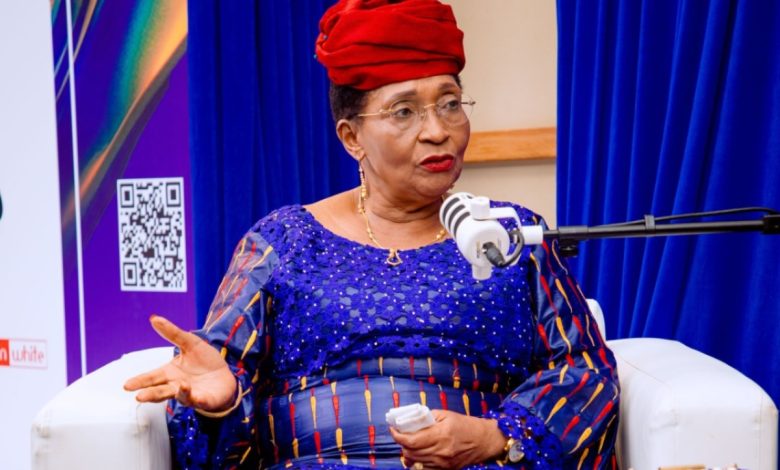
DAR ES SALAAM: FOR decades, Mary Rusimbi has helped shape conversations about women’s rights, gender equality and democracy in Tanzania.
A teacher, researcher, activist, mentor and leader, she has dedicated much of her life to creating opportunities for women to participate in decision-making and influence the institutions that shape their lives.
Today, however, her mission has taken another direction. Through Nendiwe Feminist and Coaching Centre, she is creating a safe space where women can confront emotional wounds, find support and regain the confidence to pursue their personal and professional ambitions.
For Rusimbi, empowering women is not only about giving them leadership opportunities. It is also about ensuring they have the emotional wellbeing, confidence and support systems needed to occupy those spaces and thrive.
From Mary Mbaga to Mary Rusimbi
Born in 1953, Ms Rusimbi was known as Mary Mbaga before her marriage in 1976. She later adopted her husband’s surname, becoming Mary Rusimbi, the name by which she is widely recognised in Tanzania’s gender equality and development circles.
She is the firstborn child of the late Japhet Omari Mbaga and Nandiwe.
Reflecting on the change of name after marriage, she recalls a time when women were expected to adopt their husbands’ surnames as part of the prevailing administrative practices.
“After getting married, you would be asked which surname you wanted to use. You presented your marriage certificate and then started using your husband’s family name. You began again under your husband’s identity,” she recalls.
Her journey into leadership began with the values instilled in her by her family and the people who influenced her education.
She credits her father with shaping her leadership qualities from an early age, while her mother taught her the importance of being a responsible woman in society.
Her grandmother, Namcheja, with whom she lived in Usangi, Mwanga District, from Standard One to Standard Four, also played an important role. Rusimbi remembers her as hardworking, communityminded and someone who understood the importance of resting after work.
At Zanaki Secondary School, one teacher who made a lasting impression was the late Tatu Nuru, also known as Mrs Mandala, who later served as Tanzania’s ambassador to Japan.
At a time when racial discrimination affected educational experiences, the teacher encouraged African students to believe in their abilities and pursue academic success.
Rusimbi also acknowledges veteran politician Gertrude Mongella as an important influence in her leadership journey.
“Even today, she comes to the centre and talks to young people. We continue to work together, and I respect her,” Ms Rusimbi says.
Education that shaped her activism
After completing her secondary education, Ms Rusimbi joined the University of Dar es Salaam in 1973, graduating in September 1976. The following day, she was assigned to work at the Institute of Adult Education in Dar es Salaam.
Her years as an educator introduced her to the relationship between knowledge, community participation and democracy.
She worked with both women and men, but increasingly recognised that women needed access to information and education if they were to participate meaningfully in public life.
“We taught both women and men, but more importantly, I realised that when you deny a woman knowledge, you are effectively excluding her from participating in democracy,” she explains.
She later pursued further studies in community education in New Zealand between 1981 and 1983, strengthening her understanding of community development.
A short course on gender and development at the University of Sussex in the United Kingdom in the late 1980s further transformed her professional direction.
The training helped her understand how policies, institutions and access to resources affect women and men differently.
“We returned with tools and a better understanding of gender analysis. It was around 1987 and 1988, and although it was not a long course, it was very useful. I became more focused on gender and policy issues,” she recalls.
She subsequently moved into gender-focused work, serving as a gender planning officer at the Canadian Embassy in Tanzania before transferring to the Netherlands Embassy.
Her responsibilities included advising on gender issues, engaging with civil society organisations and supporting initiatives working on women’s development. She spent approximately 12 years working in the diplomatic sector.
Beijing and the women’s movement
One of the defining moments in Ms Rusimbi’s career was her participation in the 1995 United Nations Fourth World Conference on Women in Beijing, China.
The conference brought together governments, activists and women’s organisations to advance commitments to gender equality and women’s rights.
For Rusimbi, the process was as important as the conference itself. She recalls that Tanzanian women did not simply sit in meeting rooms to develop their agenda.
Instead, consultations were conducted in rural communities, where women were given opportunities to express their concerns and priorities.
“We developed the agenda by going to the villages and listening to women. We wanted to understand their priorities and explain why the Beijing conference was important,” she says.
The objective was to ensure that women’s demands were reflected in national development plans, policies and budgets.
Ms Rusimbi became one of the founding members of the Tanzania Gender Networking Programme (TGNP), an organisation that contributed to building a stronger women’s rights movement. She later served as its Executive Director for approximately 10 years.
Her work focused on strengthening women’s participation in decision-making, genderresponsive policies and budgets, and collective advocacy.
She also became involved in the establishment of Women Fund Tanzania Trust, which supports initiatives advancing women’s development.
She was among its founders and served as its first Executive Director before leaving the position in 2022. She remains associated with the organisation as a board member.
A place for women to heal
After years of working in women’s rights and leadership development, Ms Rusimbi began reflecting on a challenge she felt was receiving insufficient attention: the emotional and psychological wounds women carry while navigating family responsibilities, workplaces and leadership structures.
That reflection inspired the establishment of Nendiwe Feminist and Coaching Centre, named after her late mother.
The centre is designed as a supportive space where women from different backgrounds can find comfort, share experiences, receive guidance and connect with appropriate professionals.
Ms Rusimbi says many people carry emotional pain from difficult family relationships, financial pressures, workplace tensions and oppressive systems.
Without a safe place to address these experiences, frustration can spill into other relationships and affect how people interact with one another.
“This is a place created by women for women, for our wellbeing. We experience different conflicts in life and oppressive systems that leave us with wounds,” she explains.
She further observes that emotional distress is not limited to women.
“As activists, and even as men, particularly young men, we experience trauma. We have conflicts and hurt one another, beginning even within our homes. There are tears, family pressures and experiences that stay with us and continue to weigh us down,” she says.
She is careful to clarify that she is not a mental health professional. Instead, the centre works with specialists in mental health and related fields to connect people with the support they need.
Its activities include discussion sessions, yoga, meditation and opportunities for women to express themselves without fear of judgement.
Private spaces are available for those who need time to reflect, cry, talk or simply rest.
“When a woman comes here, we give her space. We even have a special room where she can cry or laugh. Our doors are open to everyone, including women from rural communities. We want all women to benefit,” she says.
The centre welcomes women from different social and professional backgrounds, including young leaders, activists and women who have experienced imprisonment.
Ms Rusimbi says the intention is not to serve women from particular political parties or organisations, but women as a whole.
“We do not choose women according to their political parties. We welcome all women,” she emphasises.
Every Saturday, the centre holds programmes involving meditation, yoga and mental wellness activities.
Participants contribute Sh15,000 for the programme, while efforts are made to support those who cannot afford the fee. For Ms Rusimbi, mental wellbeing is not a minor personal concern.
“Mental health is a major development issue. We have sometimes become confused and dismissed it as a problem of morals. It is much bigger than that, and all of us need to address it,” she says.
The leader behind the mentorship Those who have worked with Ms Rusimbi describe her as a mentor who deliberately prepares others to take up leadership responsibilities.
Dr AveMaria Semakafu, National Coordinator of Women Cross-Party Platform, recalls meeting her during preparations for the Beijing conference.
She says Ms Rusimbi encouraged and mentored younger activists, helping them gain confidence and access to wider platforms.
Dr Semakafu recalls that Ms Rusimbi supported the participation of Tanzanian women in Beijing, including the coordination of civil society engagement.
ALSO READ: Healing lives: Lindi women triumph
She credits her with helping build collective advocacy networks that brought together civil society organisations around women’s rights and constitutional issues.
According to Dr Semakafu, Ms Rusimbi helped mobilise more than 200 non-governmental and community-based organisations during the constitutional reform process to advocate for women’s issues.
ctivists, explaining that activism is about fighting to have an agenda She describes Ms Rusimbi as a mentor and trainer for women, men, young people and aaccepted and changing attitudes to create positive transformation.
Political analyst and diplomacy lecturer, Mr Deus Kibamba describes Ms Rusimbi as a practical champion of democracy.
“Rusimbi lives what she teaches. She has a generous heart. As I am today, 90 per cent of who I have become is a product of Mama Rusimbi,” he says.
He remembers her as a leader who listens, values people’s contributions and seeks facts before making decisions.
“She taught me that a leader should never act on rumours. Otherwise, you may find yourself reversing decisions every day,” Mr Kibamba explains.
Director of Transforming Life, an organisation working on child protection, Ms Nashivai Mollel, also describes Rusimbi as a mentor who connected her to women’s networks and opportunities.
“I have been in the NGO sector for 17 years, and Rusimbi has supported me tremendously,” she says.
Ms Mollel adds that Rusimbi is a leader who listens, responds calmly and prepares those around her to take up leadership responsibilities in the future.
Senior journalist, Dereck Murusuri similarly describes her as a teacher, adviser and facilitator who has helped women develop their leadership abilities.
Director of Women in Development Initiatives (WAJIKI), Janeth Mawinza gives her an affectionate description: “To me and many other women, she is a mother who wipes away tears and restores lost dreams. She has been a great connection and bridge for us.”
A legacy still unfolding
Beyond her professional achievements, Ms Rusimbi is a mother of three children, one of whom is deceased, and a grandmother of five.
She enjoys reading, writing, music and dancing, which she regards as ways of maintaining balance and enjoying life.
Her contribution to gender equality has also received recognition. In September 2017, TGNP Mtandao honoured her among approximately 20 women recognised for their achievements in different fields during its Gender Festival.
Today, her work continues through women’s leadership, mentorship and wellness initiatives.
Her establishment of Nendiwe reflects her belief that women need spaces where they can rest, recover and rebuild their confidence.
For Rusimbi, leadership is not only about holding positions or influencing policies.
It is also about creating spaces where others can grow, recover, find their voices and take responsibility for change.
And through Nendiwe, she is extending that mission to a dimension she considers equally important: helping women heal so they can continue to lead.