Farming family’s journey towards resilience
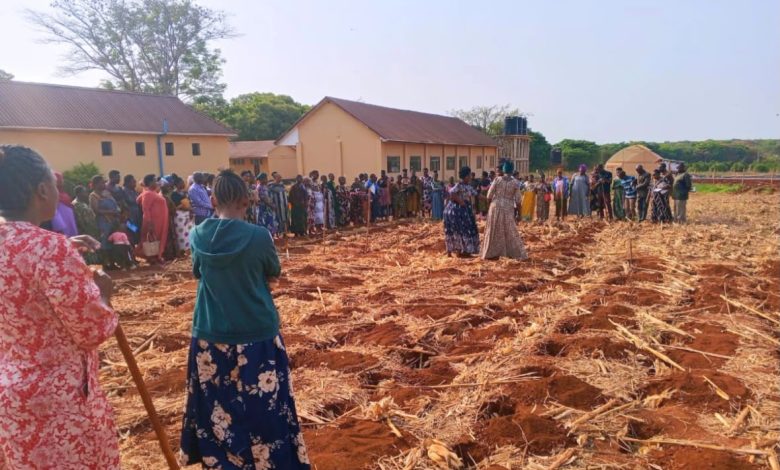
TANZANIA: WHEN heavy rains swept t h r o u g h Ruhita village in Kigoma Region, Ms Yusita Buhagwa watched months of hard work disappear beneath floodwaters.
The 40-year-old mother of eight and her husband had planted maize and beans on their one-hectare farm, hoping for a harvest that would provide food for their family and income to meet household needs.
But the floods destroyed their crops, leaving the family struggling to recover. “All we could do was stand there and look at the farm. Everything we had worked for was gone,” Ms Buhagwa recalls.
For her, losing the harvest meant more than losing crops. Like many rural families in Tanzania, the couple depend on agriculture for food and income. Their harvest supports daily household needs, children’s education and family wellbeing.
“We depend on that harvest for almost everything. It puts food on our table, pays for the children’s school needs and helps us manage our daily life,” she says.
Determined to continue farming, Ms Buhagwa and her husband turned to another piece of land, where they began cultivating beans to rebuild their livelihood.
Across Kigoma, changing weather patterns are increasingly affecting farming communities. Floods can destroy crops and livelihoods within days, while prolonged dry spells reduce yields and threaten food security.
For women, the impact can be particularly demanding because of their responsibilities for feeding families, caring for children and managing household needs.
“Things are not the same as they used to be. Before, you could tell when the rains would come. These days the weather surprises us. Sometimes there is too much rain, sometimes not enough,” Ms Buhagwa says.
Kigoma Regional Disaster Risk Reduction Officer, Mr Bayaga Lukas, says unpredictable weather is making it increasingly difficult for farming communities to plan ahead.
“Communities have long relied on seasonal patterns to decide when to plant and harvest. As these patterns become less reliable, families face greater uncertainty about how to protect their crops and livelihoods,” he says.
Although moving to another plot allowed the family to continue farming, accessing water and irrigating their crops remained time-consuming and physically demanding.
For Ms Buhagwa and other women farmers, adapting to changing weather conditions requires practical knowledge and skills to anticipate risks and protect their livelihoods.
ALSO READ: UN Women expand digital opportunities for youth
In 2026, UN Women is working with the Government of Tanzania and local partners, with support from the Government of Japan, to strengthen gender-responsive disaster preparedness and climate resilience in Kigoma Region.
The initiative aims to ensure women are not only recognised among those affected by disasters but are also actively involved in shaping how communities prepare for and respond to them. Mr Lukas explains that raising awareness among women farmers goes beyond sharing weather forecasts and early warning information.
It also means helping them understand the information and identify practical actions to protect their farms and livelihoods. “Giving people information is not enough. They also need to understand that information, interpret it and know what action they should take,” he explains.
Through a partnership with the Ministry of Agriculture Training Institute (MATI) Mubondo in Kasulu District, farmers are receiving training in climate-smart agriculture, soil and water conservation, postharvest management and community disaster preparedness.
More than 700 farmers have participated in the programme, gaining practical skills to make informed decisions as weather conditions become increasingly unpredictable. Many participants are women farmers, who are applying these skills to protect their livelihoods and strengthen household resilience.
For Ms Buhagwa, the training has changed how she approaches farming and prepares for future risks. “The training taught us that we do not have to wait until a disaster happens. We can take steps beforehand to reduce risks and protect our farms,” she says.
Access to timely information and practical knowledge can help farmers move from reacting to disasters to preparing for them, reducing the risks facing their crops and livelihoods. Today, Ms Buhagwa feels more confident about facing future challenges.
Although she cannot control the weather, the knowledge gained through the training has given her and her husband renewed hope.
“As we prepare for the next planting season, I feel more confident than before. My husband and I have learned ways to reduce risks, which gives us hope for the future,” she says.
For mothers like Ms Buhagwa, preparedness is about more than protecting crops. It is about safeguarding food security, helping families withstand unexpected shocks and creating a more secure future for their children.