JKCI cuts overseas referrals, saves 95bn/-
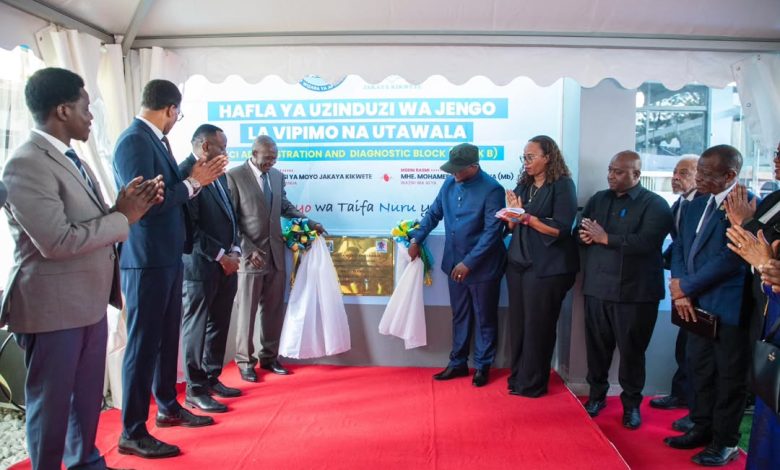
DAR ES SALAAM: THE Jakaya Kikwete Cardiac Institute (JKCI) has emerged as East and Central Africa’s leading centre for advanced heart care, saving the government more than 95bn/- in overseas treatment costs since its establishment.
The achievements were highlighted by JKCI Executive Director, Dr Peter Kisenge, during the launch of the institute’s new administration and diagnostic facilities in Dar es Salaam.
Dr Kisenge said JKCI has transformed cardiac care in Tanzania by performing complex procedures that were previously available only abroad, including open-heart surgeries, heart valve replacements, correction of congenital heart defects in children and coronary artery bypass operations.
The institute has also introduced several groundbreaking procedures rarely performed in the region. Among them is Transcatheter Aortic Valve Implantation (TAVI), a technique that enables doctors to replace damaged heart valves without opening the chest.
He said JKCI recently became the first institution in East and Central Africa to treat blocked coronary arteries using shockwave technology and has successfully performed complex pediatric procedures, including arterial switch operations.
“These achievements have not only saved lives but also reduced the need for patients to seek treatment abroad,” Dr Kisenge said.
According to him, the government has saved more than 95bn/- through JKCI’s local treatment services, noting that treating the same patients overseas, particularly in India, would have cost over 114bn/-.
The institute has also recorded significant growth in patient numbers and specialised procedures.
Dr Kisenge said annual outpatient attendance has increased from 102,000 patients in 2021 to 262,000 currently, while the number of major heart surgeries rose to 723 in 2025. He added that JKCI expects to perform more than 1,000 major surgeries in 2026.
“This makes JKCI the largest centre for advanced cardiac surgery in East and Central Africa,” he said.
Minimally invasive procedures have also increased significantly, rising from 330 cases in 2015 to 2,577 in 2025.
Dr Kisenge further noted that JKCI operates the region’s only Carto mapping system, a specialised technology used to diagnose and treat complex heart rhythm disorders.
Dr Kisenge said that since his appointment as JKCI Executive Director in 2021, the institute has pursued an aggressive expansion strategy aimed at bringing specialised cardiac services closer to Tanzanians.”
JKCI now operates facilities in Upanga, Kawe, Oysterbay, Kariakoo and Chato, with plans underway to establish a branch in Mwanza to serve residents of the Lake Zone.
The expansion has also attracted patients from more than 20 countries, strengthening Tanzania’s position as a destination for specialised healthcare and medical tourism.
Dr Kisenge attributed JKCI’s growth to decades of government investment in specialist training and healthcare infrastructure.
He traced the institute’s roots to the 1970s when the government, under Tanzania’s founding President, the late Mwalimu Julius Nyerere, began investing in the training of local heart specialists to address a severe shortage of medical professionals.
Among the pioneers were Prof William Makene and Dr Johnson Lwakatare, who received specialised training in the United Kingdom before returning to serve the country.
Successive administrations sustained the investment. During the presidency of Ali Hassan Mwinyi, additional specialists were trained, while under the late President Benjamin Mkapa, a partnership with India enabled 26 doctors, nurses and technicians to receive advanced cardiac training.
Dr Kisenge also credited former President Dr Jakaya Kikwete for securing cooperation with China that led to the construction of JKCI’s dedicated facility at Muhimbili National Hospital.
Construction began in 2011, was completed in 2013 and the institute officially commenced operations in 2015.