
TPDF to host EAC Civil-Military Cooperation Week
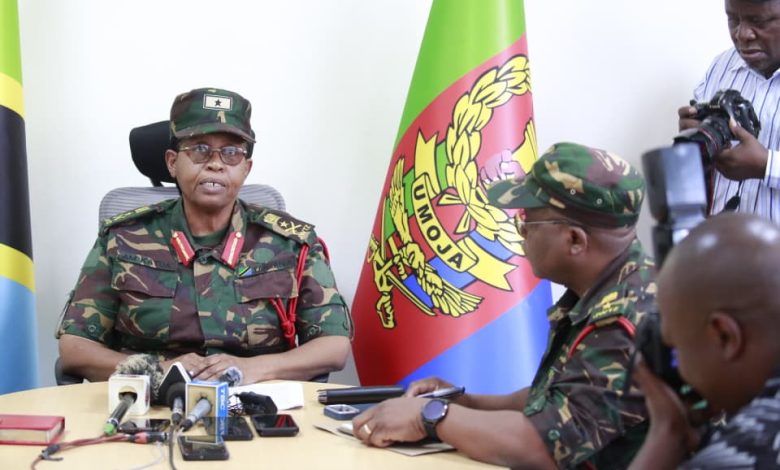
DODOMA: THOUSANDS of Tanzanians are set to benefit from free specialist medical services as the Tanzania People’s Defence Force (TPDF) hosts the sixth East African Community (EAC) Civil-Military Cooperation (CIMIC) Week from August 26 to September 1 this year.
The week-long event will bring together military medical specialists from EAC member states to provide services in several regions, alongside social support and rehabilitation of public infrastructure.
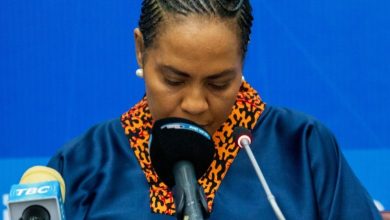
Speaking in Dodoma on Wednesday, Director of Medical Services Administration, TPDF, Brigadier General Dr Agatha Katua said specialists from Burundi, Kenya, Rwanda, Somalia, Uganda and Tanzania would work together to provide medical services in Dar es Salaam, Pwani, Arusha and Zanzibar, depending on the needs of respective health facilities.
She said the initiative would strengthen existing services, particularly maternal and child health, paediatric and other specialist services.
“Patients requiring services that cannot be provided during the exercise will be referred to other hospitals through the normal procedures,” Dr Katua said.
In Dar es Salaam, she said services would be provided at Ubungo District Hospital, Vijibweni Hospital in Kigamboni and Yombo Vituka Health Centre.
In Pwani, services will be available at Tumbi Regional Referral Hospital and Bagamoyo District Hospital, while in Zanzibar, beneficiaries will receive services at Mwera Pongwe District Hospital in Unguja and Vitongoji District Hospital in Pemba.
Dr Katua said the programme would also extend beyond healthcare, with support expected for children’s homes, including the National Children’s Home in Kurasini, Mwandai Orphanage Centre, Chanika Children’s Shelter and SOS Children’s Village in Zanzibar.
ALSO READ: TPDF reassures peace, security
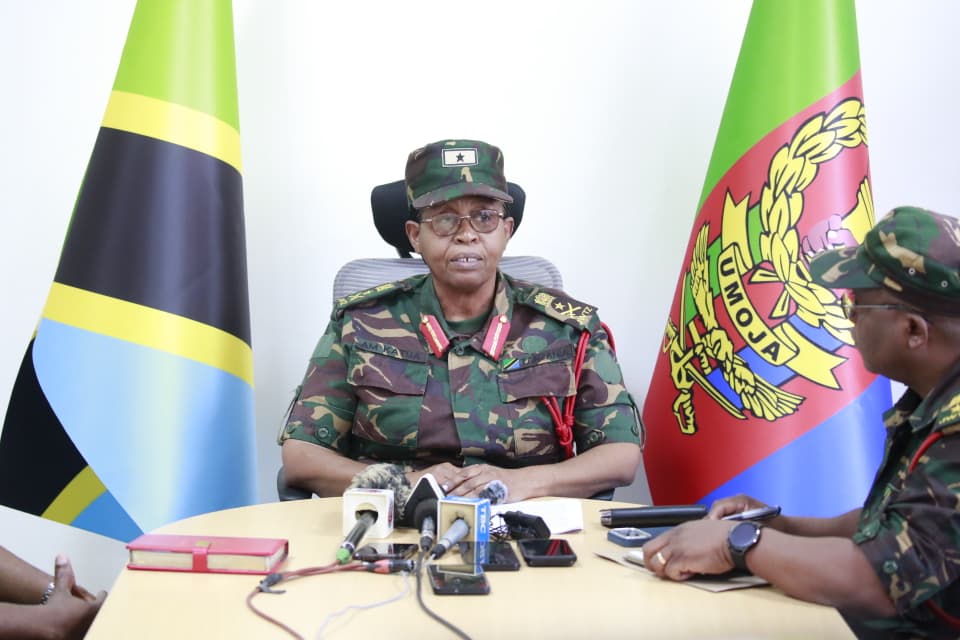
“Rehabilitation works will also be undertaken at the National Children’s Home in Kurasini, Mapinduzi Health Centre in Chamwino, Dodoma and Kibokoni Health Centre in Pemba,” she added.
She said assistance would further be extended to Segerea Prison in Dar es Salaam and Kisongo Prison in Arusha.
The annual event is held on a rotational basis among EAC member states, bringing together military and civilian components from partner states to undertake joint humanitarian and socio-economic activities. Tanzania last hosted the event in 2022, while Somalia is expected to host the next edition.
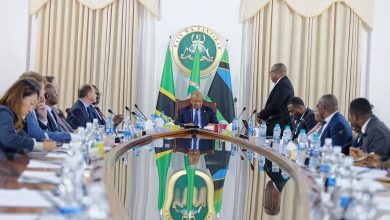
.
1. SGR investment cost
The Treasury Registrar reported the SGR project cost at approximately US$10.017 billion, equivalent at the time to about TSh 23.3 trillion.
T
Tro
Another government report gives the first phase estimate as TSh 16.883 trillion (US$7.274 billion).
M
Ministry of Finance Tanzania
For a broad project-level calculation, I’ll use TSh 23.3 trillion.
2.
.
3. How much of the investment has been recovered?
169.37
billion
÷
23
,
300
billion
= 0.727%
So, based purely on reported revenue, SGR has generated the equivalent of approximately 0.73% of the reported TSh 23.3 trillion project cost.
Tanzania SGR: investment vs revenue
Reported SGR project cost compared with cumulative revenue through March 2026.
TSh0
TSh6.5T
TSh13T
TSh19.5T
TSh26T
Project cost
Cumulative revenue
Amount
TSh
Revenue is gross revenue, not profit.
4. Simple payback period
The reported TSh 169.37 billion was generated in less than two years. If we use approximately 21 months (June 2024–March 2026) as a rough period:
Average revenue ≈ TSh 96.8 billion/year
Then:
23.3
trillion
÷
96.8
billion
≈
241
years
So at the current revenue run-rate, a very simple revenue-only payback calculation gives approximately 241 years.
MAKWAPENG INDUSTRIAL ADVISORY SERVICES BW00009923025, MAKWAPENG coaches,distribution sales@yutong.com,
.
1. SGR investment cost
The Treasury Registrar reported the SGR project cost at approximately US$10.017 billion, equivalent at the time to about TSh 23.3 trillion.
T
Tro
Another government report gives the first phase estimate as TSh 16.883 trillion (US$7.274 billion).
M
Ministry of Finance Tanzania
For a broad project-level calculation, I’ll use TSh 23.3 trillion.
2.
.
3. How much of the investment has been recovered?
169.37
billion
÷
23
,
300
billion
= 0.727%
So, based purely on reported revenue, SGR has generated the equivalent of approximately 0.73% of the reported TSh 23.3 trillion project cost.
Tanzania SGR: investment vs revenue
Reported SGR project cost compared with cumulative revenue through March 2026.
TSh0
TSh6.5T
TSh13T
TSh19.5T
TSh26T
Project cost
Cumulative revenue
Amount
TSh
Revenue is gross revenue, not profit.
4. Simple payback period
The reported TSh 169.37 billion was generated in less than two years. If we use approximately 21 months (June 2024–March 2026) as a rough period:
Average revenue ≈ TSh 96.8 billion/year
Then:
23.3
trillion
÷
96.8
billion
≈
241
years
So at the current revenue run-rate, a very simple revenue-only payback calculation gives approximately 241 years.
.
1. SGR investment cost
The Treasury Registrar reported the SGR project cost at approximately US$10.017 billion, equivalent at the time to about TSh 23.3 trillion.
T
Tro
Another government report gives the first phase estimate as TSh 16.883 trillion (US$7.274 billion).
M
Ministry of Finance Tanzania
For a broad project-level calculation, I’ll use TSh 23.3 trillion.
2.
The scale of this is impressive — bringing military medical specialists from across the EAC to deliver free services for thousands of Tanzanians is a tangible demonstration of regional cooperation. The rehabilitation and social support components are a welcome addition to the clinical care.
Great to see the sixth CIMIC Week bringing regional military medics together — the free specialist clinics across multiple regions will make a real difference for thousands of Tanzanians, especially those in underserved areas.
It’s a smart move to hold the sixth CIMIC Week in Tanzania and bring in military medics from across the EAC — the free specialist services will be a real boost for the regions they’re visiting. The August 26 to September 1 window gives local communities a clear timeframe to plan around.
The free specialist medical services are a huge draw, but the rehabilitation and social support components often get overlooked—good to see the EAC CIMIC Week covering that side too. With military medics from multiple member states rotating through several regions over those seven days, the reach could be substantial. Hope the TPDF’s coordination ensures the patients who need these services most actually hear about them in time.
It’s great to see the TPDF leveraging the CIMIC Week to bring military medics from across the EAC into underserved regions — the free specialist services and rehabilitation support will have a tangible impact for thousands of Tanzanians.
Great to see the TPDF bringing together EAC military medics for the CIMIC Week — the free specialist clinics across several regions will make a real difference for thousands of Tanzanians, especially in areas where such services are hard to access.
The free specialist medical services are a tangible benefit, but the real win here is how CIMIC Week strengthens regional military cooperation beyond just drills—it builds trust through direct community impact across EAC borders.
Great to see the TPDF bringing together military medics from across the EAC for the CIMIC Week — the free specialist clinics rolling out across multiple regions will make a real difference for Tanzanians who often can’t access that level of care.
It’s good to see the EAC CIMIC Week returning for a sixth time — the free specialist medical services across multiple regions will make a real difference, especially in areas where such care is usually hard to access. I hope the rehabilitation and social support components get as much attention as the medical camps.
It’s great to see the CIMIC Week expanding beyond just clinical care — the rehabilitation and social support components should make a real difference alongside those free specialist services. Hopefully the August 26–September 1 schedule covers enough regions to reach the thousands of Tanzanians mentioned.
Free medical services from military specialists across the EAC is a powerful way to build regional unity, and it’s great to see Tanzania hosting this initiative. The focus on rehabilitation alongside treatment suggests a holistic approach that will leave a lasting impact beyond the week itself.
The specialist medical services and infrastructure rehabilitation planned across several regions show how CIMIC Week can deliver practical benefits beyond military cooperation. Bringing EAC medical teams together should also strengthen regional expertise and coordination.
It’s encouraging to see the sixth EAC CIMIC Week combine specialist medical services with social support and rehabilitation across several Tanzanian regions. This kind of regional military cooperation can make a meaningful difference for communities with limited access to specialised care.
Providing free specialist medical services across several regions during the sixth EAC CIMIC Week is a practical way to strengthen regional cooperation while directly supporting Tanzanian communities. The inclusion of social support and rehabilitation services makes the initiative even more valuable.
The free specialist medical services planned across several regions during EAC CIMIC Week could make a meaningful difference for communities with limited access to advanced care. It is also encouraging to see military medical specialists from EAC member states working together on health, social support, and rehabilitation.
Providing free specialist medical services across several regions during the sixth EAC CIMIC Week is a practical way to strengthen regional cooperation while delivering direct benefits to Tanzanian communities.
Offering free specialist medical services across several regions is a meaningful way to strengthen EAC cooperation. The planned infrastructure rehabilitation and social support also show that CIMIC Week will benefit communities beyond healthcare.