‘Inclusiveness, solidarity pillars of progress’
KIBAHA: INCLUSIVENESS and collective responsibility remain the key pillars for building a society grounded in sustainable development, equality and social cohesion.
These principles ensure that no individual is left behind in a nation striving for unity and progress.
Collaboration and inclusiveness are central to any society’s success.
Every meaningful achievement depends on the collective contribution of individuals, communities and institutions.
Unity provides a strong foundation for collective action.
Through shared effort, societies can attain far greater success than what is possible through individual pursuits alone.
For a country like Tanzania, which has made significant progress over the past six decades since independence, these achievements are largely the result of sustained collective responsibility among its people.
Before independence, the efforts of Mwalimu Julius Nyerere relied heavily on public support to realise Tanganyika’s liberation.
Even after independence, he continued to emphasise inclusive leadership, ensuring that citizens were actively involved in shaping national policies and the broader development vision of the country.
The importance of inclusiveness is also evident in Tanzania’s political evolution during the 1990s, when the country transitioned from a single-party system to a multiparty democracy.
Through the Nyalali Commission, citizens from diverse backgrounds were given the opportunity to express their views, resulting in decisions that reflected the collective will.
This process demonstrated that meaningful progress is best achieved through broad-based participation, highlighting the enduring value of inclusiveness and unity in Tanzania’s journey towards sustainable development.
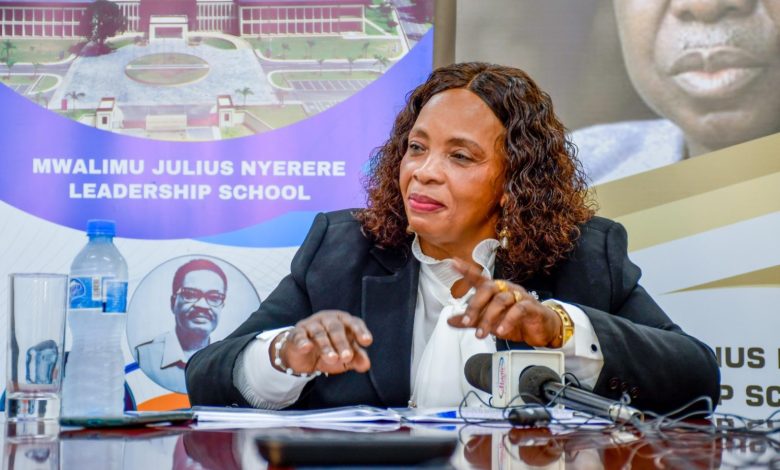
Mwalimu Nyerere Leadership School Principal Prof Marcelina Chijoriga, underscored the enduring relevance of unity and solidarity in building a resilient society, drawing inspiration from the principles of the nation’s Founding Father, Mwalimu Julius Kambarage Nyerere.
Speaking during an exclusive interview with Tanzania Standard (Newspapers) Limited (TSN) outlets, including Daily News, Habari Leo and Daily News Digital, Prof Chijoriga said the Kiswahili saying “Umoja ni Nguvu” – which literally translates to “Unity is Strength” – remains central to overcoming common challenges through collective effort.
She highlighted that Mwalimu Nyerere consistently cautioned that division weakens societies, stressing the importance of unity both within the nation and in international relations.
Citing the East African Community (EAC), Prof Chijoriga noted how regional cooperation boosts economic growth and social development.
“Tanzania’s support for liberation movements in southern Africa demonstrates the power of continental solidarity. Cooperation among African nations played a critical role in achieving independence across the region,” she said.
ALSO READ: Unity is Tanzania’s path to progress – Chijoriga
Prof Chijoriga further pointed out that national cohesion in Tanzania transcends religion, ethnicity and political affiliation. She emphasised the Swahili language as a vital unifying factor, enabling communication and fostering a shared national identity among diverse communities.
She said inclusiveness and sustainable development depend on strong and accountable leadership that actively engages citizens, particularly the youth, who form a large part of the population.
“True participation must extend from grassroots to national levels, built on trust, fairness and a shared vision for development and peace,” she added.
At a time when the nation faces multiple challenges, Prof Chijoriga noted that establishing dialogue platforms and reconciliation mechanisms is crucial for fostering national consensus.
Government efforts to set up commissions to collect citizens’ views, she said, reflect a commitment to inclusivity and the pursuit of a renewed social contract.
Reflecting on Mwalimu Nyerere’s ideas, she encouraged Tanzanians to engage in self-reflection, acknowledging past shortcomings to move forward constructively.
She stressed that this process is not about assigning blame, but about confronting difficult truths for the sake of progress.
“Inclusiveness means giving everyone a voice, enabling participation in decision-making and recognising individual contributions. This fosters a sense of shared ownership over policies and development initiatives, ultimately enhancing accountability and effectiveness,” Prof Chijoriga said.
She concluded by noting that good leadership is defined by the ability to engage others, listen attentively, and create equitable environments where all citizens can thrive.
“Leaders must not only articulate values such as integrity and transparency but also demonstrate them in practice, particularly in the fight against corruption,” she said.
Prof Chijoriga observed that development transcends political, religious and ethnic boundaries.
Major investments in sectors such as health, education and infrastructure are the result of visionary leadership combined with meaningful public participation that reflects citizens’ needs and priorities.
She also underscored that inclusiveness must be genuine rather than symbolic, with tangible outcomes that reflect real engagement.
In this context, she referred to the Tanzania Development Vision 2050, noting that it was shaped through extensive consultations across different segments of society, thereby capturing the aspirations of the people.
On the issue of reconciliation, she stressed the importance of all stakeholders coming together in good faith to seek solutions to national challenges.
She cautioned against divisive rhetoric from some leaders, urging a focus on unity and constructive dialogue.
Religious leaders and community elders, she added, play a vital role in maintaining social harmony, much like in families where disputes are resolved through wisdom, patience and mutual understanding.
Ultimately, she underscored that no external actor can resolve Tanzania’s internal challenges without the willingness of its own people to engage in dialogue, reconciliation and self-correction.
Acknowledging that no individual or group is always right is a crucial step towards national cohesion.
Turning to the youth, Prof Chijoriga described them as a critical force for national development, while also noting the need for proper guidance and preparation to navigate contemporary challenges, including unemployment and economic pressures.
She called for greater inclusion of young people in decision-making processes and encouraged them to seize available opportunities.
Commending government efforts to establish a dedicated ministry focused on youth development, she stressed the importance of ensuring that such initiatives reach grassroots levels.
At the same time, she urged young people who have already benefited from development opportunities to support and inspire their peers, fostering a culture of shared progress and ensuring that no young person is left behind in the country’s development journey.