Alumni network driving Tanzania-France economic growth
DAR ES SALAAM: France and Tanzania continue to strengthen their long-standing relations through education, business cooperation and professional networking, as demonstrated during the France Alumni Day and Networking Cocktail organised recently in Dar es Salaam.
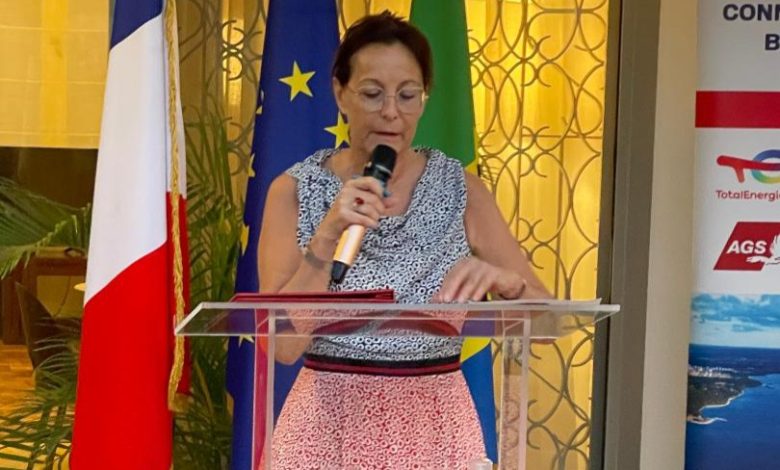
The event, hosted by France’s Ambassador to Tanzania, Anne-Sophie Avé at her residence on April 30 this year, brought together members of the French-Tanzanian Chamber of Commerce (FTCC) and Tanzanian alumni who previously studied in France.
The gathering marked an important step in deepening collaboration between the two nations by connecting former students educated in France with leaders from the business community operating in Tanzania.
Addressing participants during the event, France Ambassador to Tanzania, Ambassador Anne-Sophie Avé reinforced the significance of creating stronger links between education and commerce, noting that both sectors are essential pillars in advancing cooperation between France and Tanzania.
“For the first time we are bringing together the French-Tanzanian Chamber of Commerce and our Alumni network,” she said.
“You are both vital to us, as living bridges between France and Tanzania. The future of our cooperation lies precisely at this intersection: between education and business.”
Her remarks reflected the growing recognition that Tanzanians who studied in France are playing an increasingly important role in shaping economic development, innovation and institutional growth back home.
The Ambassador explained that the alumni community represents a blend of French and Tanzanian excellence, forged through academic experiences in French universities and higher learning institutions.
“Our alumni community, forged in French universities and schools, embodies both French and Tanzanian excellence,” she said.
“After your studies, some of you have built your own projects, others joined international or local firms and institutions.”
According to the Ambassador, former students remain an important part of the broader France-Tanzania relationship even after completing their studies.
“As former students, you are part of our network. For instance, you benefit from facilitated access to circulation visas, exclusive support and information on professional opportunities. So tonight, feel like the VIPs you are,” she added.
She encouraged alumni to maintain their ties with France while also participating actively in Tanzania’s business and development sectors.
“We strongly encourage you to keep your ties with France alive and, if you are in the business environment, to consider joining the FTCC,” she noted.
“We are fully committed to continue nurturing these bonds together, from which we also benefit since you truly are Ambassadors of our educational system and our culture.”
The event also served as a platform for the French-Tanzanian Chamber of Commerce to engage directly with highly skilled Tanzanian professionals who acquired international education and experience in France.
“To our members of the Chamber of Commerce, tonight is an invitation to discover, recruit, and collaborate with this pool of talents,” the Ambassador said.
She also commended the Chamber for its continued contribution towards strengthening economic cooperation between the two countries.
The networking event highlighted how educational exchanges are becoming an increasingly strategic part of diplomatic and economic relations between France and Tanzania.
One of the notable speakers at the gathering was Patrick Mwanri, Chief Executive Officer and Group Managing Director of Precision Air, who is a graduate of Toulouse Business School.
Mr Mwanri’s educational journey in France was presented as an example of how international academic exposure can contribute directly to Tanzania’s economic and industrial growth, particularly in the aviation sector.
Having studied aerospace management in France, Mwanri gained access to European aviation systems, operational standards and strategic management practices that can help modernize Tanzania’s aviation industry.
French and European aviation education strongly emphasizes airline strategy and commercial management. Through such training, students learn route profitability analysis, airline business models, revenue management, ticket pricing and passenger experience strategies.
For Tanzania’s aviation sector, these skills are highly valuable because they help airlines establish sustainable domestic routes, improve profitability on regional flights and compete more effectively with larger African and Middle Eastern carriers.
Another important area of expertise gained through French education is aviation safety and regulatory standards.
France is home to some of the world’s respected aviation institutions and operates under strict European aviation regulations. Students exposed to these systems gain knowledge in ICAO and EASA safety frameworks, safety management systems, operational compliance and risk assessment.
For Tanzania, adopting such standards can significantly improve confidence among international investors, tourists and airline partners. Strong safety compliance can also support the country’s broader ambition of becoming a regional aviation and tourism hub.
Mwanri’s educational background also reflects the importance of fleet and operations management skills acquired in France.
European aerospace education pays close attention to aircraft utilization, maintenance planning, fuel efficiency and scheduling systems. These are practical skills that can help Tanzanian airlines reduce operational costs, improve punctuality, extend aircraft lifespan and strengthen profitability within a challenging aviation market.
The benefits extend beyond airline management alone
France’s advanced transport and aviation systems expose students to airport and network development strategies, including hub-and-spoke planning, regional connectivity and passenger flow optimization.
Such knowledge can help Tanzania improve links between tourism destinations, strengthen domestic air transport and deepen integration with East African regional markets.
The growing tourism industry in Tanzania could particularly benefit from professionals who understand how to create efficient transport networks capable of connecting international visitors to destinations across the country. Another key lesson from French education is crisis and sustainability management.
Modern aerospace management programs in Europe increasingly focus on crisis response, recovery planning, environmental sustainability and carbon reduction strategies. These became especially important following the COVID-19 pandemic, which heavily affected global aviation industries.
For Tanzania, professionals trained in these areas can help institutions and companies prepare better for future disruptions while also ensuring long-term environmental sustainability.
International networking is another major advantage gained by Tanzanian students studying in France.
Students are often exposed to global aviation professionals, regulators, manufacturers and institutions, including major companies such as Airbus.
These international networks can later benefit Tanzania through technical partnerships, investment opportunities, staff training programs and knowledge transfer into local industries and institutions.
The experience of Patrick Mwanri demonstrates how former students returning from France can bring practical expertise capable of contributing to national development.
Beyond aviation, similar benefits can be replicated across several sectors in Tanzania, including engineering, health, technology, renewable energy, finance, hospitality and manufacturing.
Former students educated in France can help introduce international standards, operational discipline, innovation culture and strategic planning methods into Tanzanian organizations.
They can also support entrepreneurship by launching businesses that apply modern management practices learned abroad while adapting them to local realities.
The strengthening relationship between France and Tanzania through education and business cooperation reflects a broader vision centered on human capital development.
By investing in education, professional exchange and alumni engagement, both countries are helping create a new generation of Tanzanian professionals equipped with international exposure and practical skills.
As France continues to support academic exchange and private-sector partnerships, Tanzanian alumni are increasingly becoming key actors in building stronger economic ties between the two nations.
The France Alumni Day and Networking Cocktail therefore represented more than a diplomatic gathering. It symbolized the growing importance of education as a bridge connecting people, institutions and industries across borders.
For many participants, the event reinforced the idea that Tanzanians who study in France are not only graduates, but also long-term ambassadors of cooperation, innovation and economic transformation between the two friendly nations.