China’s global trade strategy offers lessons for African nations
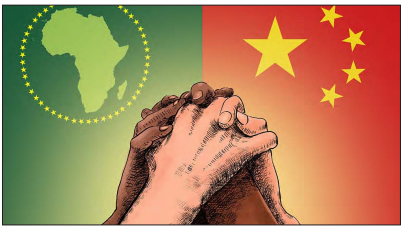
CHINA: CHINA has achieved something remarkable and deserves recognition from any rational and constructive observer of international relations, trade and investment. Those who witnessed the US president’s state visit to China and heard Chinese President Xi Jinping’s speech will recognise that many developing nations, including our own, have important lessons to learn.
China’s involvement in mediating between the two leading oil producers in the Middle East in 2023 demonstrates its reliability as an alternative to the US-led global order. Iran and Saudi Arabia have restored relations and agreed to reopen their embassies after seven years of hostility.
Despite ongoing tensions, communication between the two nations continues. Saudi Arabia cut diplomatic ties with Iran in 2016 following protests by Iranian demonstrators who attacked Saudi diplomatic missions in Iran, which occurred after Saudi Arabia executed Shia cleric Nimr al-Nimr.
The rivalry between mainly Shia Iran and Sunni Saudi Arabia has become a key aspect of recent Middle Eastern politics. Saudi Arabia and Iran align with two separate spheres of influence: the United States and China. Iran has long been part of China’s sphere, while Saudi Arabia has historically been under US influence.
The roots of this relationship date back to 1974, when Secretary of State Henry Kissinger signed an agreement with Prince Fand Ibn Abdel Aziz, the second deputy of the Saudi premier. The agreement provided for the United States to purchase oil from Saudi Arabia and to provide Saudi Arabia with protection.
In return, Saudi Arabia agreed to sell its oil in US dollars rather than in its national currency. Furthermore, they acquired weapons from the United States. It was expected that once the Saudis ratified the agreement, other Middle Eastern oil producers would also switch to selling their oil in US dollars. This expectation was fulfilled.
This is where the term ‘Petrodollar’ originates. Let’s examine who the US was defending the Saudi Kingdom against. The straightforward answer is Iran. These two nuclearpowered alliances, the US and China, follow different foreign policy doctrines. I aim for us to develop a clearer understanding of their respective strategies. Let’s start by focusing on the United States.
Its sphere of influence encompasses the Global North, NATO member countries, and much of the Global South. Under US leadership, NATO has conducted numerous operations, including bombing campaigns and invasions, often relying on varying levels of intelligence.
Certain operations have faced opposition. Since the late 1990s, NATO has conducted actions in Serbia, invaded Iraq and Afghanistan, bombed Libya, and participated in military operations in Somalia. Additionally, it occupied oiland agriculture-rich areas in Syria until April 2026.
NATO has independently imposed sanctions on numerous countries without UN approval yet enforced them on nations such as Venezuela, Iran, Cuba, and Russia and on Chinese companies like Huawei. During that period, more than a million lives were lost in those countries.
The US operates around 750 overseas military bases across over 80 nations, including 313 in East Asia, aiming to contain and encircle China within what they view as their sphere of influence. History serves as the best teacher.
In November 2022, the Biden administration notified Congress of its approval for $323 million in arms sales to Finland. In 2021, Australia canceled a €50 billion submarine contract with the French company Naval Group, which was signed in 2016 to develop a fleet of 12 advanced submarines.
The contract was subsequently transferred to the US and UK, forming part of the now-known ‘AUKUS’ submarine agreement. French President Emmanuel Macron voiced outrage, recalled ambassadors from Australia and the US, and called it a “stab in the back.” US foreign policy frequently emphasises arms sales.
After the Ukraine conflict and the EU and most Global North nations imposing sanctions on Russian gas and oil, many citizens in these countries have experienced much higher electricity and gas bills, which have sometimes tripled since 2020. This presents a significant opportunity for the US to supply liquefied natural gas to Europe, where prices exceed both the Russian equivalent and domestic levels.
European politicians expressed concerns and dissatisfaction with the US, but these did not lead to concrete outcomes. In August 2023, the US enacted its major green technology legislation, the Inflation Reduction Act, which allocates over $360 billion.
ALSO READ: Stakeholders push for modern waste management
This measure was introduced to encourage European manufacturing firms to move to the United States, resulting in fewer job opportunities and lost tax revenue for Europe.
The IRA Act seeks to provide incentives and tax rebates to companies operating within the US. Robert Habeck, who previously served as Germany’s economy minister under Chancellor Scholz, criticised US support as excessive, arguing it is diverting investments from Europe.
Meanwhile, President Macron commented, “I believe we need a European wake-up call on this issue.” It is worth noting that the US mainly seeks to sell Europe expensive LNG and encourage European manufacturing companies to relocate to the United States.
Let’s examine China’s sphere of influence. One of its key projects, in my view, is the Belt and Road Initiative, also called the New Silk Road. The main goal of this massive project is to promote regional economic growth by fostering cooperation and shared prosperity.
The goal is to establish two new trade routes connecting China with other parts of the world. At present, the majority of China’s international trade moves through the Strait of Malacca near Singapore, which is a US ally.
It can be suggested that China is attempting to free itself from the limitations of its existing route. In this context, China aims to create its own safer and more reliable trade routes without barriers. However, some argue that China’s goal is to build a more interconnected market, boost its economic and political power and develop the connectivity needed to establish a high-tech economy capable of competing with the United States.
China has not imposed unilateral sanctions on any global entity but has effectively replicated those imposed by the United States. China maintains approximately eight foreign military bases worldwide, including one in Djibouti and a few on artificial islands in the South China Sea.
In 1922, Walter Lippmann first used the term “manufacture of consent,” but it gained widespread recognition through Professor Noam Chomsky, a renowned philosopher, cognitive scientist, social critic, and political activist.
He popularised the phrase in his book ‘Manufacturing Consent,’ which he cowrote with Edward S Herman.
The book argues that US. mass media act as influential ideological instruments, disseminating system-supporting propaganda mainly through market forces, deep-seated assumptions and self-censorship, often without direct coercion, as explained by the propaganda model of communication.
This information seeks to inform readers, urging them to critically evaluate authority figures, question the information they receive, and consider the reasons behind persistent opposition to specific individuals, cultures, and ideologies.
In summary, I respectfully urge the global community to acknowledge the effectiveness of Chinese foreign policy, a point I gleaned from President Xi Jinping’s speech.
China has effectively fostered peace between Iran and Saudi Arabia and has reached a noteworthy milestone that influences ongoing developments. This success has unexpectedly gained international attention, possibly explaining why Donald Trump and other world leaders have recently been in China.
What makes China unique across many spheres is that it generally avoids criticising other countries, ideologies, or individuals, focusing instead on pursuing its own interests without hesitation. In my view, unlike other superpowers, China has never claimed to be the sole authority dictating others’ actions.
Thus, based on my assessment of China, I can state that, unlike the USA and the EU, China’s approach is a model worth considering.