How govt investment in science is turning bananas into an industrial opportunity
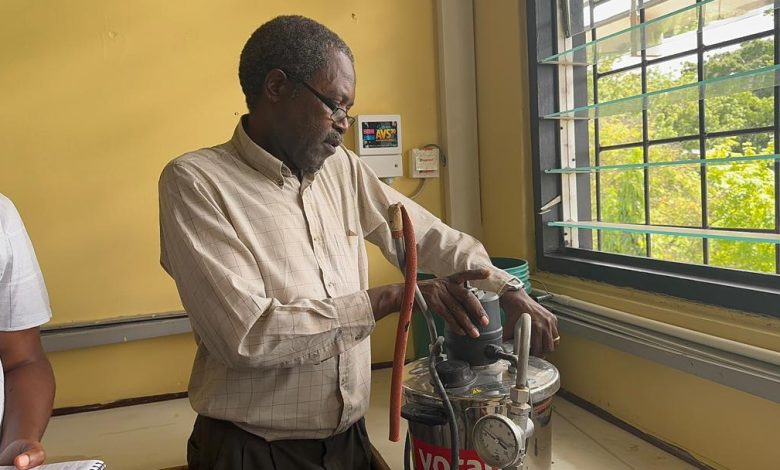
DAR ES SALAAM: GOVERNMENT investment in science, technology and innovation is increasingly opening new opportunities for economic growth by transforming agricultural resources into high-value products that create employment, reduce post-harvest losses and strengthen Tanzania’s industrial development.
One example is the development of commercial banana juice technology by researchers at the University of Dar es Salaam (UDSM). Supported by a 100m/- research grant from the Tanzania Commission for Science and Technology (COSTECH), the innovation demonstrates how public investment in research can transform one of Tanzania’s most important food crops into a commercially viable product capable of improving farmers’ incomes and supporting agroindustrial growth.
The innovation goes beyond introducing a new beverage to the market. It addresses a longstanding agricultural challenge: Post-harvest losses.
Every harvesting season, thousands of tonnes of bananas are sold at low prices or wasted due to limited processing facilities, inadequate storage and restricted market opportunities. By converting bananas into juice, the technology extends the crop’s shelf life, creates new markets and increases its economic value, giving farmers greater opportunities to benefit from their production.
The breakthrough is the result of more than three years of scientific research led by Professor Oscar Tibazohi of the University of Dar es Salaam. His inspiration came from observing traditional banana-processing practices in Kagera, Kigoma, Rwanda, Burundi, eastern Democratic Republic of Congo and Uganda.
In many communities across the region, ripe bananas have traditionally been crushed manually to produce local beverages such as Rubisi before fermentation. Although these practices represent valuable indigenous knowledge passed through generations, they present challenges in maintaining hygiene standards and achieving commercial production.
Prof Tibazohi says his interest in developing modern banana juice technology began after identifying safety concerns associated with traditional processing methods.
“I realised there was a major hygiene challenge. When bananas are crushed using feet, maintaining food safety standards becomes difficult. That was when I started thinking about how this indigenous technology could be modernised into a safe industrial process,” he says.
What started as an observation gradually developed into a scientific mission aimed at solving one of the major challenges in banana processing.
After completing his Master’s degree, Prof Tibazohi explored the idea further but faced financial and technical limitations that slowed progress. Following his doctoral studies, he resumed the research and partnered with Ugandan researcher Mkyamwangire to address the scientific difficulties involved in producing quality banana juice.
For nearly three years, the researchers conducted laboratory experiments to understand why extracting banana juice had remained challenging despite centuries of traditional processing.
Unlike some fruit varieties commonly used for juice production, bananas contain large amounts of sticky sap that create bitterness and an unpleasant mouthfeel. Attempts to use heat during processing only worsened the problem by causing the juice to darken while increasing the bitter taste.
“Our biggest question was simple: What causes the bitterness? Where exactly is it found inside the banana and how can we remove it without affecting the nutritional value or natural flavour?” Prof Tibazohi recalls.
Through extensive research and experimentation, the scientists identified the compounds responsible for bitterness and developed a processing technique capable of removing them while preserving the banana’s natural sweetness and nutritional benefits.
The achievement enabled researchers to introduce mechanical juice extraction methods, replacing labour-intensive traditional practices with modern processing systems that meet commercial food safety requirements.
Today, the technology produces high-quality banana juice suitable for supermarkets and formal retail markets.
During processing, the juice undergoes pasteurisation at temperatures between 85 and 90 degrees Celsius to eliminate harmful microorganisms before natural citric acid is added to preserve quality.
When properly packaged, the product can remain stable for up to six months without spoilage, creating opportunities for wider distribution and commercial marketing.
The technology also has the potential to produce other value-added products, including banana wine and banana beer through controlled fermentation. This diversification could expand business opportunities within Tanzania’s beverage and food-processing industries.
For Tanzania, where bananas are among the country’s most important food and cash crops, the innovation represents more than a new beverage. It provides a pathway for transforming a highly perishable agricultural product into an industrial raw material capable of supplying supermarkets, hotels, restaurants and potentially international markets.
The technology has already generated optimism among traders and agribusiness stakeholders who believe it could transform the banana value chain.
Businessman Ethan David says commercial banana juice production could strengthen competition within Tanzania’s beverage industry while creating reliable markets for bananaproducing regions.
“Banana-producing areas stand to benefit significantly because the crop will gain added value. More processing means better markets for farmers, increased demand for bananas and a wider range of locally manufactured beverages,” he says.
At Mbuyuni Market in Moshi, banana trader Lucrensia Komu believes the innovation could become an important source of economic empowerment, especially for women involved in banana farming and trading.
“We are grateful for this innovation. Commercial banana juice will increase the value of bananas and improve prices for farmers. For many women in Moshi who rely on this crop, it has the potential to increase household incomes,” she says.
Her views highlight the wider importance of agricultural value addition. Improved banana prices could enable farming households to invest more in education, healthcare, better farming methods and other income-generating activities while stimulating economic growth in rural communities.
According to Prof Tibazohi, commercialising the technology could create thousands of direct and indirect employment opportunities. These would include jobs for banana farmers, machine operators, laboratory technicians, transport providers, packaging manufacturers, distributors, retailers and marketing professionals.
“The beverage industry is an important part of the food value chain. Tanzania imports many juices and soft drinks. If we produce these beverages using our own agricultural raw materials, we will create jobs, increase farmers’ incomes and keep more money circulating within our economy,” he says.
The research also demonstrates the importance of sustained government support for science and innovation. The COSTECH grant enabled researchers to conduct laboratory experiments, improve the processing methods and assess the technology’s commercial potential.
“The COSTECH grant enabled us to carry out the scientific work needed to transform an idea into a technology ready for commercialisation. Without that support, this innovation would have struggled to move beyond the laboratory,” Prof Tibazohi says.
However, moving from successful research to commercial production remains the next major challenge. Prof Tibazohi estimates that an additional 100m/- investment is required to establish production facilities, acquire industrial equipment and employ skilled personnel.
“The technology is ready. What we need now is investment to move from the laboratory to the marketplace,” he says. He notes that many promising innovations developed by Tanzanian researchers fail to reach consumers because of limited financing, weak partnerships with industries and inadequate support for commercialisation.
To overcome these barriers, stronger cooperation between government institutions, financial organisations, private investors and industry players is necessary. Such partnerships would accelerate technology transfer and ensure that publicly funded research generates practical economic benefits.
Prof Tibazohi also emphasises the importance of strengthening science, technology and entrepreneurship education in schools and higher learning institutions. Establishing smallscale processing industries could provide young people with practical skills needed to participate in innovation-driven businesses.
ALSO READ: GF expands manufacturing as govt pushes industrialisation
Researchers say the banana juice technology demonstrates how investment in science can provide solutions to national challenges. By reducing postharvest losses, increasing the value of agricultural products and encouraging industrial processing, the innovation shows the economic benefits of research.
With continued government support and increased private sector investment, what began as a laboratory experiment could develop into a thriving agroprocessing industry. It has the potential to create jobs, improve farmers’ incomes and contribute to Tanzania’s ambition of building an inclusive, innovationdriven economy.