

FINANCIAL INCLUSION: TZ strides earn plaudits
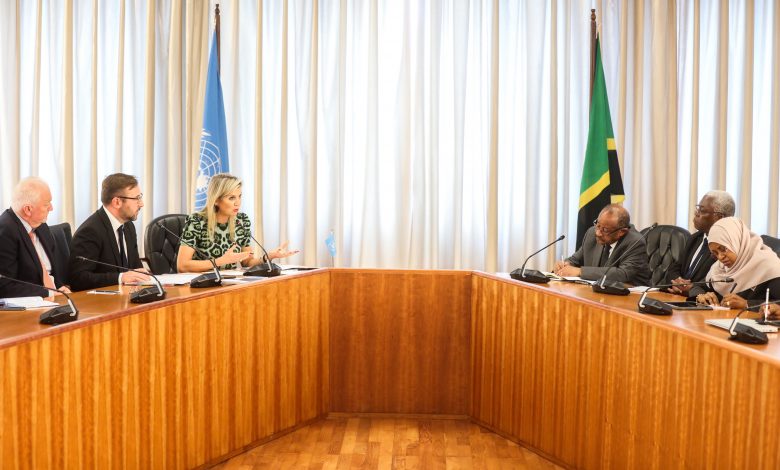
QUEEN Máxima of the Netherlands has lauded Tanzania for impressive success in promoting financial inclusion but cautioned over digital financial costs, which remain high despite advancement in digital technology.
The visiting Queen Máxima, who is the UN Secretary-General’s Special Advocate for Inclusive Finance for Development (UNSGSA) said in Dar es Salaam on Wednesday that high mobile transaction costs were a blot to an otherwise success story in the efforts to promote financial inclusion in Tanzania.
“Still costs are very high. Prices have to go down,” she told reporters after a meeting with the Central Bank’s Governor, Prof Florens Luoga, to discuss opportunities to collaborate and boost financial inclusion in Tanzania.
She said expensive digital financial services would discourage under-banked population joining the services and therefore, undermine efforts to promote financial inclusion.
“People don’t use financial services because they are expensive,” she had earlier said during the meeting.
The visiting Dutch Queen also met with President Samia Suluhu Hassan at the State House in Dar es Salaam yesterday
Tanzania is currently drafting its third National Financial Inclusion Framework on access to digital financial services for all Tanzanians. The second framework expires in December this year.
According to the World Bank Group’s Global Findex database, 52 per cent of adults in Tanzania now have a bank account, compared to 17 per cent in 2011. The increase is due in part to more people having a digital bank account.
Earlier, Queen Máxima lauded financial access projects to smallholder farmers, saying it was the right approach to promote financial inclusion.
Financial inclusion targets investment in digital public goods like interoperable payments, data privacy and digital IDs were critical to reach underserved groups like women, farmers and small businesses, she said.
The Central Bank Governor, Prof Luoga said mobile transaction costs would go down with the launch of Tanzania Instant Payment System (TIPS), which is in the final stages of preparation.
He said TIPS is set to significantly reduce the cost of mobile money transactions and other digital financial services.
The interoperable payment system was part of the measures to help lower the cost of mobile money transactions and drive financial inclusion growth, he said.
TIPS will be an interoperable digital payment platform to be operated by the Bank of Tanzania. It will allow the transfer of payments between different Digital Financial Service Providers (DFSPs), both banks and non-banks such as electronic money issuers.
The system will handle real-time payments exchanged among participating Digital Financial Service Providers (DFSPs).
He said some banks have already started using the system that is set to boost financial inclusion by improving access and usage of financial services through promoting the interoperability of digital financial services amongst all Payment Service Providers (PSPs) in the country.
In another development, Queen Máxima held a meeting with members of the Generation Equality Forum, a five-year action journey launched in 2021 under UN Women’s leadership to speed up progress towards gender equality worldwide.
GEF members, led by the Minister of State in President’s Office – Regional Administration and Local Government (Po-RALG), Angellah Kairuki presented key achievements in promoting gender inclusive financial services, which include NMB Bank’s Jasiri Bond, Tanzania Social Assistance Programme (TASAF) and its digital transformative interventions and local government local government small scale loans programme for women, the youth and people with disabilities.
Ms Kairuki told reporters that the NMB Bank’s global award-winning Jasiri Bond which seeks to bridge financing gap for women owned and led SMEs was one of outstanding achievements in efforts to promote gender inclusive financial inclusion.
She said net proceeds of the bond which raised more than 32 million US dollars after it was over- subscribed by 197 per cent would be channeled to women-owned or led businesses and those businesses
She said proceeds of the bond would finance more than 2,000 women owned businesses hence setting a new benchmark for Africa in development of sustainable financial instruments targeting gender and economic empowerment.
On TASAF, the minister said the majority of households that receive cash payments in bi-monthly basis were led by women.
She said women accounted for over 56 per cent out of over five million beneficiaries of cash transfers under TASAF.
The minister said with 89 per cent female representation on beneficiaries registered in electronic payment account (e-payment), commendable improvements have been observed on children school enrolment and literacy, regular attendance to maternal and child health services and in food security.
The minister said they were optimistic that most of the beneficiaries of the TASAF support would graduate and apply for local government loans provided to women and the youth.
Her Majesty Queen Máxima of the Netherlands, has served as the UN Secretary-General’s Special Advocate for Inclusive Finance for Development (UNSGSA) since 2009, as a leading global voice in advancing universal access to affordable, effective, and safe financial services.
In this capacity, she advises the Secretary-General, and works worldwide to make financial services accessible to all, including low-income groups and the SME sector.
Queen Máxima has been lobbying for years in the Netherlands and abroad to increase access to financial services, improve consumer protection and enhance financial literacy.
The UNSGSA believes that access to financial services is vital for creating and accelerating sustainable economic growth, creating employment and encouraging people’s personal and social development.




473261 640661I dugg some of you post as I thought they were very useful handy 740669
เว็บดูคลิปคนเย็ดกัน 2026 เย็ดหีมันส์ๆ xxx เย็ดวัยรุ่นคลิปหลุด
xxx คลิปหลุดนักศึกษา หลุดมอกรุง เย็ดหี หลุดทางบ้าน คลิปหลุด 2026 คลิปหลุดนัดศึกษา หี อมควย นมใหญ่
คลิปหลุด
แหล่งรวมเกมคาสิโนสดสล็อตเว็บตรงน้องใหม่ มาตรฐานสากลปี 2026 เล่นง่าย จ่ายจริง POMPOM456 เว็บตรงอันดับ 1 ของประเทศไทย pompom456
86638 229479This really is how to get your foot inside the door. 822749