Engineering her future, breaking barriers
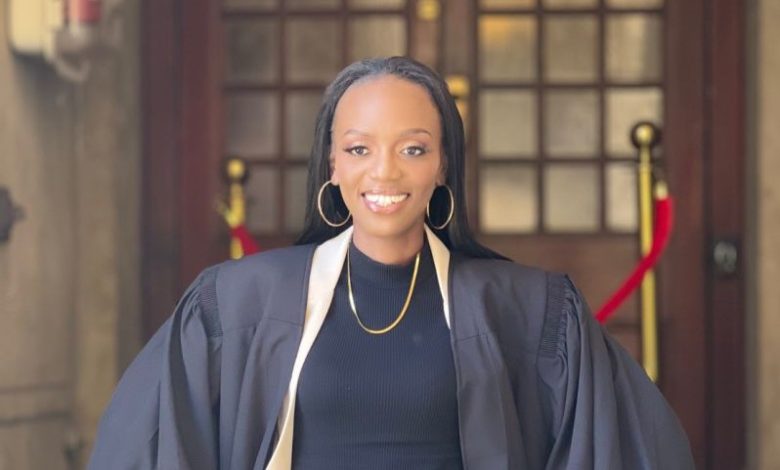
TANZANIA: FOR Engineer Neema Kahabi, engineering is more than a profession. It is a way of turning an empty piece of land into something that can change people’s lives.
As a Structural and Materials Engineer at Inter-Consult Limited, Neema works on construction projects where steel, concrete, calculations and technical designs come together to create structures that serve communities.
Her work has included contributions to projects such as the roof layers and pavement construction at Julius Nyerere International Airport (JNIA) Terminal 3.
But behind her professional achievements is a journey shaped by determination, financial challenges and the expectations she encountered as a woman entering a male-dominated field.
Neema says her interest in engineering began during childhood, inspired by her grandfather, who was also an engineer.
“Engineering for me was magic. Today you come and you find something that is just an empty site. Tomorrow, you find bridges and buildings that help one community go to the other, help hospitals get patients, and help people move from one place to the other,” she says.
For her, engineering is closely connected to how communities develop.
“Urbanisation works because of civil engineering. In general, for me, it’s magic. It’s how societies grow, it’s how societies are formed, it’s how we shape and model our own cultures and traditions,” she says.
Neema’s academic journey began at the University of Dar es Salaam, where she pursued a Bachelor of Science in Civil Engineering from 2013 to 2017.
Her studies were supported through a Higher Education Students’ Loans Board (HESLB) loan, which she continues to repay.
Her determination to advance her education did not end with her undergraduate degree.
She later pursued a Master’s degree at the University of Cape Town (UCT) in South Africa, where she secured an academic scholarship.
To support herself during her studies, she worked as a laboratory assistant and academic tutor.
Today, she is pursuing PhD studies in civil engineering in India. For Neema, however, some of the biggest challenges she has faced have not come from engineering calculations or academic work.
They have come from expectations about what women should and should not do. She recalls that her family was supportive during her early education, but attitudes changed as she progressed in her studies.
“The secondary school I attended helped shape me a lot because it was a science school. Until I finished my bachelor’s degree, my family was extremely supportive. And then after that, at the master’s level, because you were a girl, society started to view it a bit like maybe you don’t really need that much education, that you should stay home a bit,” she says.
Her experience changed again as she pursued her PhD.
“Right now, with the PhD, I see they have even stopped telling me that; now they are just excited about it,” she says.
Working on construction sites has also exposed her to challenges that can be easily overlooked when discussing women’s participation in engineering.
Neema says some construction sites lack basic facilities that would make it easier and safer for women to work.
“Worksite environments can be exceptionally harsh for women. Often, there are no adequate or hygienic sanitary facilities, nor is there even anywhere basic to sit while supervising operations or learning on the job,” she says.
Engineering projects can also take place under intense heat or in remote areas, creating additional concerns for women working in the field.
“Engineering tasks are frequently conducted under intense sun or in remote, forested locations. Consequently, women must constantly worry about their personal safety and security, or the necessity of having a chaperone,” she says.
Despite these challenges, Neema has continued to build her career and gain experience in major projects.
Her work on JNIA Terminal 3 is among the projects she highlights as part of her professional journey.
Her experience has also strengthened her belief that women should be given the opportunity to develop their skills in technical fields rather than being excluded because of assumptions about their abilities or family responsibilities.
Chair of the Institution of Engineers Tanzania (IET) Women’s Chapter and Secretary of the African Engineering Week Committee, Dr Zainab Katima, says the challenge facing women in engineering has increasingly moved beyond getting women into the profession.
According to Dr Katima, retaining women and enabling them to advance into senior decision-making positions remains a concern.
“We are not merely talking about employing female engineers; our core focus is on keeping them in the profession. The most significant hurdle remains in executive decisionmaking roles. Women are severely underrepresented at the top; they hold technical positions within departments, yet they are largely absent from boardrooms and policy-making tables,” she says.
Neema says women also face practical challenges that need to be addressed if they are to participate fully in engineering and other technical professions.
She believes improving working environments, alongside access to education and professional opportunities, can help more women build careers in fields traditionally dominated by men.
ALSO READ: Women’s voices shape peacebuilding
As technology continues to change the engineering sector, Neema also sees opportunities for women through the use of digital tools.
She advocates the use of Building Information Modelling (BIM), Artificial Intelligence (AI) and structural software to improve efficiency and simplify some technical tasks.
For young women considering engineering or other maledominated professions, Neema says understanding their circumstances is an important part of achieving their ambitions.
“You must be able to be aware what your truth looks like versus your reality. Always be able to know what your reality first looks like because that will help you go where you want to be,” she says.
Dr Katima similarly encourages girls to pursue STEM subjects without being discouraged by stereotypes.
“Girls should not be afraid, nor should they view STEM subjects as insurmountable. They should look at established female engineers and scientists. They will see ordinary people who have succeeded and they must never give up,” she says.
The IET Women’s Chapter has also sought to increase the visibility of women in engineering through initiatives such as the “Mama Mhandisi” awards, which recognise outstanding female engineers.
For Neema, however, the journey is far from over. As she continues her PhD and professional work, she hopes her experience will encourage more young women to consider careers in engineering and other fields where they may not traditionally see themselves represented.
Her journey shows that entering a male-dominated profession may come with challenges, but determination, education and professional competence can help women build their place in it.
For an engineer who once saw an empty construction site as a place where “magic” could happen, every project offers another opportunity to turn that vision into reality.