Engaruka Soda Ash project must deliver prosperity without sacrificing people’s rights
ARUSHA: FOR decades, communities in Monduli District, Arusha Region, have lived alongside vast natural resources whose potential promises to reshape Tanzania’s industrial future.
Now, with the development of the strategic Engaruka Soda Ash Project, a new chapter is emerging, one that combines economic ambition with the responsibility to protect the rights, livelihoods and welfare of the people living in the project area.
As Tanzania advances its industrialisation agenda, the success of major investments will not only be measured by production figures, revenue generation or infrastructure development. It will also depend on whether surrounding communities are treated fairly, included in the benefits and supported through periods of transition.
This is the message from Monduli Member of Parliament Isaack Joseph, who has pledged to closely monitor the compensation process for residents affected by the implementation of the Engaruka Soda Ash Project.
He stressed that strategic investments must go hand in hand with respect for citizens’ lawful rights and protection of their livelihoods. The 640 million US dollars project, being implemented by the National Development Corporation (NDC), is among Tanzania’s flagship industrial initiatives aimed at expanding soda ash production, reducing dependence on imports, creating employment opportunities and strengthening the country’s position in the global industrial minerals market.
Located in Monduli District, the project seeks to extract soda ash from extensive brine reserves in the Engaruka Basin, with a planned production capacity of up to 1,000,000 metric tonnes annually. The mineral is a critical industrial raw material used in the manufacture of glass, detergents, chemicals, water treatment products and other essential goods.
By increasing domestic production, the project is expected to support local industries, improve government revenue collection, stimulate business opportunities and contribute to Tanzania’s broader economic transformation goals. However, before the economic benefits can be realised, the interests of communities affected by the project remain a central issue.
The project area covers Mbaash, Engaruka Chini, Idonyonado and Irerendeni villages, where 595 residents are expected to receive compensation to allow project activities to proceed.
ALSO READ: Investing in rural water is investing in Tanzania’s sustainable future for all
During a public meeting held in Monduli District, residents expressed their concerns, explaining that livestock keeping remains the foundation of their local economy. They appealed to authorities to allow continued access to grazing areas until compensation procedures are completed and project implementation officially begins.
For many households in the area, land is not simply a physical asset. It represents a source of livelihood, cultural identity and economic security. Any transition involving land use must therefore be managed carefully to ensure communities do not experience unnecessary hardship.
Responding to the concerns, Mr Joseph assured residents that the government recognises the importance of protecting citizens’ interests while implementing strategic national projects. “Those who have not yet received compensation will be paid their rightful entitlements.
At the same time, the area should continue to be used in a manner that allows investment activities to proceed while ensuring Monduli residents continue accessing grazing land without harassment or unnecessary interference,” he said. The legislator said he would continue following up the compensation process until all eligible residents receive their payments in accordance with the law and established government procedures.
He emphasised that largescale investments should become engines of opportunity rather than sources of conflict. According to him, projects of this magnitude should create employment, expand business opportunities, improve infrastructure and contribute to better social services for surrounding communities.
Mr Joseph also encouraged residents to continue cooperating with government institutions responsible for implementing the project, noting that successful execution requires collaboration between investors, authorities and local communities.
He thanked Monduli residents for the confidence they placed in him as their parliamentary representative, saying the trust carries a responsibility to ensure that development projects address community concerns while supporting national economic objectives.
“Your concerns will not be ignored. I will continue following them closely until lasting solutions are found in the best interests of the people of Monduli,” he assured residents.
The Engaruka Soda Ash Project represents more than an industrial venture. It is a test of how Tanzania can balance natural resource development with inclusive growth, ensuring that economic progress leaves no community behind.
The scale and potential of the Engaruka Soda Ash Project underline why it is considered one of Tanzania’s most strategic industrial investments. Beyond supporting local production, the project represents a major opportunity to unlock the economic value of natural resources while strengthening the country’s manufacturing sector.
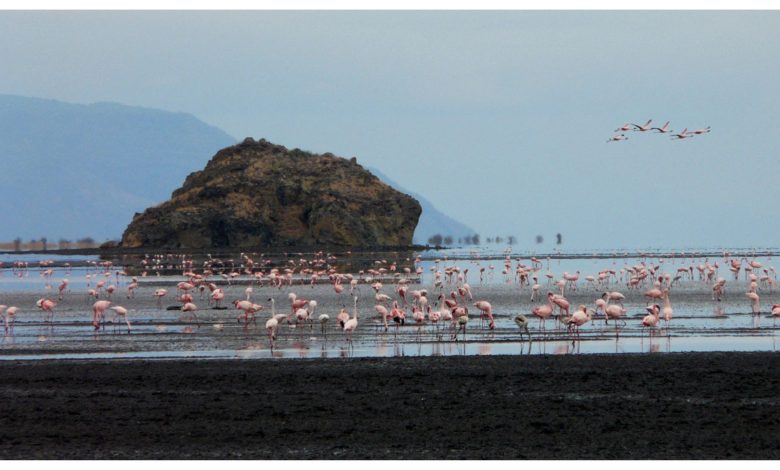
The Engaruka Basin, located approximately 160 kilometres northeast of Arusha City, contains significant deposits of brine suitable for soda ash production. Exploratory studies have identified an estimated 4.68 billion cubic metres of underground brine reserves, alongside a solid salt crust estimated at about 9.36 billion cubic metres.
ALSO READ: The future of insurance: Lessons from global markets and opportunities for Tanzania
Testing has confirmed that the mineral resources are suitable for commercial soda ash extraction. Under the planned development, the project will establish a modern extraction facility capable of producing at least 1,000,000 metric tonnes of soda ash annually. The process will involve extracting sodium carbonate solution from underground aquifers and processing it into a valuable industrial product that serves multiple sectors.
Soda ash is a fundamental raw material in many industries worldwide. It is widely used in glass manufacturing, detergents, chemicals, water treatment, paper production, fertilizers, dyes and petroleum refining.
By producing this important mineral locally, Tanzania expects to reduce reliance on imported industrial materials while strengthening domestic value chains. The government believes the project will contribute significantly to industrial growth by creating a reliable supply of raw materials for local manufacturers.
Increased availability of soda ash could encourage new investments in industries that depend on the mineral, creating additional economic activities beyond the extraction site itself. Employment creation is another major expectation surrounding the project.
Thousands of direct and indirect job opportunities are anticipated during construction and operational stages. These opportunities are expected to benefit local residents, particularly young people seeking employment and entrepreneurial opportunities. However, stakeholders emphasise that local participation must remain central to the project’s success.
Beyond providing jobs, the project offers opportunities for local businesses to participate through supplying goods and services, transportation, accommodation, catering, construction and other supporting activities. Training and skills development programmes will also be important in preparing local communities to participate effectively in the emerging industrial economy.
Equipping young Tanzanians with technical, engineering and operational skills will ensure that they are not only observers of development but active participants and beneficiaries. The government has committed to supporting the project through favourable policies, infrastructure development and institutional coordination.
As part of ensuring fairness for affected residents, authorities have mobilised more than 14 billion shillings for compensation payments to eligible individuals whose land and properties will be affected by the project. Officials have maintained that compensation processes will follow national laws and procedures to ensure that all affected citizens receive their rightful payments.
Transparent and timely compensation remains critical in building public confidence and ensuring that communities view the project as an opportunity rather than a burden. The experience of Engaruka demonstrates a broader lesson about Tanzania’s development journey. Strategic investments involving natural resources must be guided by responsible planning, community engagement and respect for citizens’ rights.
Economic transformation becomes sustainable when communities living around investment areas are empowered and included. For Monduli residents, the hope is that the project will bring lasting improvements from employment and business opportunities to better infrastructure and increased economic activity.
For Tanzania, the project represents a chance to strengthen industrial capacity and maximise the benefits of its mineral resources. The road ahead requires continued dialogue among government authorities, investors and communities. Addressing concerns promptly, maintaining transparency and ensuring that local people benefit from the project will be essential for building trust and achieving long-term success.
As Tanzania moves forward with the Engaruka Soda Ash Project, the country faces both an opportunity and a responsibility. The opportunity is to transform a valuable natural resource into industrial growth, jobs and national prosperity. The responsibility is to ensure that this progress is achieved fairly, with communities protected and included.
ALSO READ: Kiswahili, tourism and investment drive new era of Tanzania-France relations
Ultimately, the true measure of the project’s success will not only be the tonnes of soda ash produced or the revenue generated. It will also be reflected in improved livelihoods, empowered communities and a development model where economic growth and citizens’ welfare advance together.
Engaruka’s story is therefore not only about soda ash. It is about building a future where Tanzania’s resources create shared prosperity, where investments strengthen communities and where development delivers benefits for generations to come.