Financial illiteracy undermines mining compensation benefits
DAR ES SALAAM: FOR many families living in Tanzania’s rural communities, the announcement of a new mining project often brings hope of a brighter future.
The promise of compensation for land, homes and other affected properties represents what is, for many households, the largest amount of money they have ever received.
It raises expectations of building better homes, investing in businesses, educating children and securing long-term financial stability.
Yet, beneath these hopes lies a growing concern. Across several of Tanzania’s expanding mining regions, compensation payments that were intended to improve livelihoods are, in many cases, being exhausted within months.
Instead of becoming a foundation for lasting prosperity, the money is disappearing quickly, leaving some families poorer than before, burdened by debt and struggling to rebuild their lives after displacement.
Experts, researchers, government officials and community representatives are now warning that without stronger financial literacy programmes and better support systems, the billions of shillings paid to project-affected communities could become a missed opportunity for sustainable development.
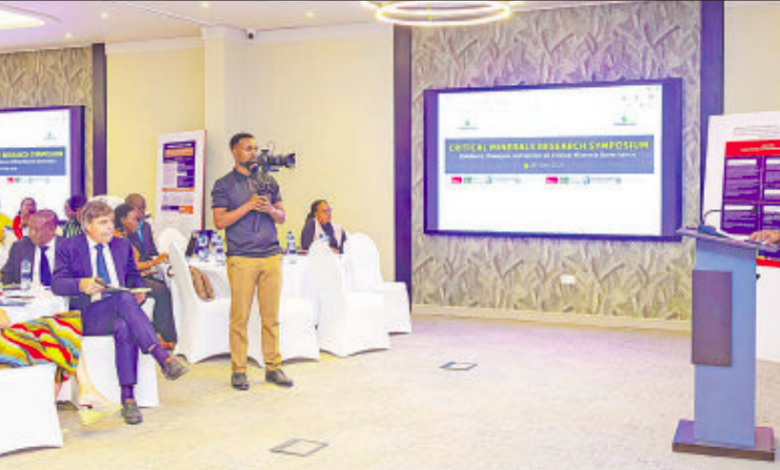
The issue featured prominently during the recent two-day Critical Mineral Research Symposium in Dar es Salaam, where stakeholders discussed the social and economic impacts of Tanzania’s rapidly expanding critical minerals industry and explored ways to ensure mining contributes more effectively to community development.
Speaking during the symposium, the Assistant Chief Valuer in the Ministry of Lands, Housing and Human Settlements Development, Adam Nyaruhuma, said many beneficiaries receive substantial compensation payments without adequate preparation on how to manage such large sums of money.
According to him, the challenge is not necessarily the amount of compensation paid but how it is managed once it reaches beneficiaries.
“Without proper guidance, this money is quickly exhausted, leaving families in a more difficult situation than they were before receiving compensation,” he said.
Mr Nyaruhuma explained that compensation is frequently paid to entire households, but spending decisions are often controlled by a single individual or a small group within the family.
This situation can result in unequal sharing of resources, misunderstandings and, in some instances, conflicts among family members.
He also noted that financial pressure often begins long before compensation is paid. Some beneficiaries enter into purchase agreements, borrow money or accumulate debts in anticipation of receiving compensation.
“When the payments are finally made, they immediately face heavy financial obligations, making it difficult to use the compensation productively,” he explained.
Such circumstances significantly reduce the opportunity for families to invest in incomegenerating activities, purchase replacement land, establish businesses or secure their future livelihoods.
Mr Nyaruhuma observed that poor financial management has wider implications beyond individual households.
Complaints raised after compensation money has been spent sometimes create the perception that payments were inadequate, even when the underlying challenge is ineffective financial planning and expenditure.
To address this problem, he stressed the importance of providing financial literacy education before compensation is paid and continuing that support afterwards.
He argued that financial education should become an integral part of the compensation process rather than an optional activity conducted after payments have already been made.
His views were echoed by Hussein Mvomvo, Research and Advocacy Officer at Business and Human Rights Tanzania, who said financial literacy should never be treated as a oneoff training session.
ALSO READ: Sotta Mining starts paying compensation
Instead, he proposed that financial education be integrated throughout the entire compensation process, enabling beneficiaries to make informed decisions before, during and after receiving their payments.
Mr Mvomvo further recommended greater involvement of financial institutions, including banks and community-based organisations, in equipping compensation beneficiaries with entrepreneurship skills, budgeting techniques and financial management knowledge.
“The responsibility of financial education should be shared among various stakeholders to ensure communities are empowered to make informed financial decisions,” he said.
While financial management remains a major concern, communities affected by mining projects say delays in compensation payments present another equally serious challenge.
Mohamed Nguku, a resident of Mahenge, where strategic minerals such as ruby are mined, said some villagers particularly those in Mdindo village have their properties valued but wait several years before receiving compensation.
According to him, prolonged delays erode the real value of compensation because the prices of construction materials and other essential goods continue to rise.
“People are assessed today but sometimes have to wait four years before they are paid. During that time, the prices of construction materials and other essential goods increase significantly,” he said.
He cited roofing materials as a practical example, explaining that iron sheets costing 15,000/- at the time of valuation may cost 20,000/- or more when compensation is eventually paid.
Mr Nguku urged authorities to speed up compensation payments immediately after property valuation to preserve their purchasing power and enable affected families to restore their homes and livelihoods more effectively.
He also supported calls for financial education, saying timely payments alone would not guarantee successful outcomes unless beneficiaries were equipped with the knowledge needed to manage their compensation wisely.
Participants heard findings from a study titled Gender-Differentiated Impacts of Graphite Mining on Land Access, Livelihoods and Resettlement, conducted in mining communities in Lindi Region.
Presenting the findings, HakiRasilimali Programme Manager Lucy Shao called on mining companies and government authorities to design livelihood restoration programmes that reflect the actual circumstances, priorities and needs of affected communities.
She emphasised that compensation should not simply replace lost property but should help families rebuild their economic security and improve their quality of life over the long term.
“It is important to ensure that compensation becomes a catalyst for development rather than a source of new economic and social problems,” she said.
Her remarks reinforced a broader message emerging from the symposium that successful resettlement requires more than financial payments.
It also depends on access to productive land, employment opportunities, social services, skills development and continued support that enables displaced communities to rebuild sustainable livelihoods.
The symposium concluded with a series of recommendations aimed at strengthening Tanzania’s approach to resettlement and livelihood restoration in mining areas.
Reading the recommendations on behalf of mining stakeholders, Policy Forum Advocacy and Engagement Manager Elinami John called on the government to establish a National Resettlement and Livelihood Restoration Framework.
He recommended that the Ministry of Minerals, working closely with other relevant authorities, prepare and oversee the implementation of comprehensive national guidelines.
According to Mr John, the proposed framework should establish clear standards, implementation procedures and timelines for compensation and resettlement while ensuring that displaced communities receive adequate housing, land, social services and economic opportunities without unnecessary delays.