DSE capitalisation rises 1.92pc despite declining turnover
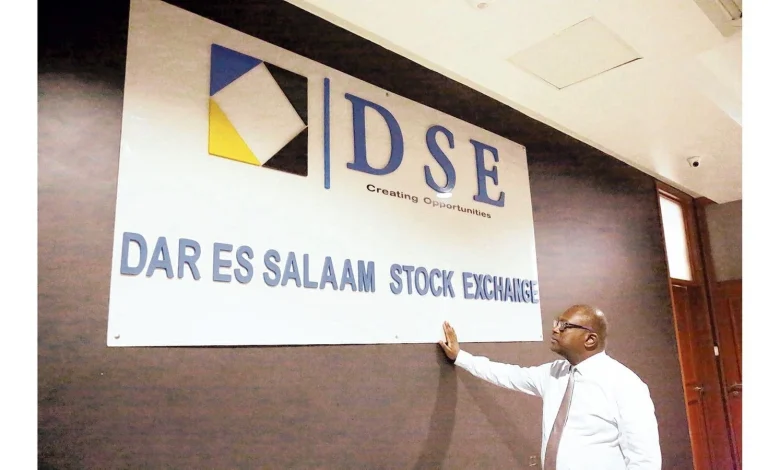
DAR ES SALAAM: THE DSE recorded a mixed performance during the week ended 20th November this year, with trading liquidity indicators registering declines while overall market valuations expanded compared to the preceding week. Total equity market turnover declined by 26.64 per cent, reaching 26.42bn/- from 36.02bn/- recorded previous week.
Foreign investor activity continued to reflect net selling pressure, with the market recording a net foreign outflow of 12.94bn/- during the week, compared to an outflow of 13.44bn/- in the preceding week.
This represents a 3.67 per cent reduction in the magnitude of net foreign outflows, indicating a slight easing in foreign selling intensity.
Nevertheless, the continued negative net flow highlights the persistence of foreign investor divestment from the exchange, which remains a key factor influencing liquidity dynamics across major counters.
Despite softer trading volumes, overall market capitalization increased by 1.92 per cent, closing the week at 38.45tri/- compared to 37.72tri/- recorded in the previous week. Domestic market capitalization registered a stronger gain of 2.79 per cent, settling at 26.60tri/- from 25.88tri/-.
The outperformance of domestic market capitalization indicates that local buying interest and upward price adjustments in key domestic-listed counters anchored the week’s valuation gains.
Meanwhile, ETF market activity moderated during the period, with combined turnover across the three listed funds reaching 764.90m/- on a volume of 3.94 million units, representing a 38.57 per cent decline from the previous week’s 1.25bn/-.
VODA emerged as the leading counter by turnover during the week, accounting for 57.77 per cent of total turnover, with transactions valued at 15.27bn/- .
CRDB followed with 4.54bn/- , representing 17.17 per cent of market turnover, while NMB ranked third at 3.58bn/- (13.55 per cent), followed by TPCC at 925.44m/- (3.50 per cent) and KCB at 660.84m/- (2.50 per cent).
On the performance front, TTP emerged as the best-performing counter, appreciating by 11.48 per cent to close at 340/- per share.
PAL followed with a gain of 9.26 per cent to close at 295/- per share, while VODA advanced by 7.81 per cent to 1,380/- and NMB gained 5.26 per cent to close at 1,800/-.
Conversely, TOL recorded the largest decline, shedding 21.15 per cent to close at 1,025/- per share. MUCOBA followed with a decline of 5.00 per cent to 380/-, MKCB dropped by 4.00 per cent to close at 3,360/- , NMG fell by 3.45 per cent to 280/-, and MCB declined by 3.03 per cent to close at 320/-.
Vodacom profit surges 183 per cent to 117.8bn/-
Vodacom Tanzania recorded a significant improvement in financial performance, with net profit increasing by 182.7 per cent to 117.8bn/- for the six months ended September this year .
The growth was supported by a 20.8 per cent increase in service revenue to 1.067tri/- , with M-Pesa revenue rising 26.2 per cent to 443.3bn/- and mobile data revenue growing 24.6 per cent to 319.2bn/-.
EBITDA increased by 33.1 per cent to 425.8bn/-, while the EBITDA margin improved to 39.5 per cent. The company also declared a final dividend of 23.91 per share, amounting to approximately 53.6bn/-.
The strong earnings performance highlights the growing contribution of digital financial services, mobile money and data consumption to Vodacom’s profitability.
Improved earnings and cash generation strengthen the company’s capacity to reward shareholders through dividends while continuing to invest in network infrastructure and business expansion.
ALSO READ: DSE’s Q3 performance: A market gaining momentum
NMB secures 30 Million US dollar facility to Boost SME Financing
NMB Bank has secured a 30 million US dollar loan facility from China Development Bank (CDB) to expand financing opportunities for small and medium-sized enterprises (SMEs), particularly businesses involved in trade between Tanzania and China.
The facility is expected to increase the bank’s lending capacity and support business expansion, investment and cross-border trade.
Through its partnership with China’s Cross-border Interbank Payment System (CIPS), NMB will also facilitate Chinese Yuandenominated payments, business accounts and trade finance solutions.
The initiative follows NMB’s recognition as Tanzania’s Best SME Bank for 2026 by Global Finance. The facility is expected to improve access to financing for SMEs, support private-sector growth and strengthen trade relations between Tanzania and China.
For NMB, the additional funding creates opportunities to expand its lending portfolio, increase interest income and strengthen its position in SME and trade financing.
Treasury bill auction no: 1210
On November 18th, this year, Central Bank was in the market offering treasury bills to investors. The offerings included 49.9bn/- for the 35-day maturity Treasury bill, 69.9bn/- for the 91-day T-bill, 99.9bn/- for the 182-day T-bill, and 169bn/- for the 364-day T-bill.
Investor demand was relatively strong across the shorter-dated Treasury bills, with the 35-day bill recording the highest subscription rate of 250.50 per cent, followed by the 91-day and 182-day bills at 115.90 per cent and 108.20 per cent, respectively.
In contrast, the 364-day Treasury bill was the only maturity to record undersubscription, with a subscription rate of 63.31 per cent.
This indicates a stronger investor preference for shorter-term government securities during the auction. Regarding allocations, the Bank of Tanzania (BoT) allotted exactly the amounts offered for the 35-day, 91-day and 182- day Treasury bills, despite the oversubscription recorded in these maturities.
For the 364-day bill, which received bids below the amount offered, the Bank accepted the full amount tendered. Yield movements were upward across all maturities, with weighted average yields increasing throughout the maturity spectrum.
Notably, the 364-day Treasury bill recorded an increase in its weighted average yield, rising from 6.1342 per cent in the late-October auction to 6.2547 per cent in the current auction, representing an increase of 12.05 basis points.
The increase in the 364-day bill’s yield was accompanied by a decline in its minimum successful price, which fell from 94.0710 to 93.3007.
This movement is consistent with the inverse relationship between bond prices and yields; whereby lower prices generally translate into higher yields. Secondary Market Activity Bond trading picked up sharply in the week of 16th to 20th November this year.
Secondary market turnover rose 60.50 per cent to 254.71bn/-, from 158.70bn/- the week before. The number of deals more than doubled to 266 from 103, an increase of 158.25 per cent, as small retail trades came back alongside large institutional ones.
As a result, the average deal size fell to about 0.96bn/- from 1.54bn/-. Wednesday was the busiest day, with 103.46bn/- Trading went back to being concentrated in the 25-year bond no. 722 (12.75 per cent).
It recorded 120.03bn/- across 160 deals, or 47.1 per cent of total turnover, at a weighted average price of 121.42 per cent and a yield of 10.45 per cent.
That yield was almost unchanged from 10.48 per cent the week before. The turnover included a 40bn/- trade on Wednesday at 125.07 per cent (10.10 per cent) and a 30bn/- trade on Monday at 121.54 per cent (10.43 per cent).
We expect the DSE to keep a positive bias in the week ahead. Last week’s gains in the DSEI (+1.88 per cent) and TSI (+2.73 per cent) were led by domestic counters, which suggests local investors are buying on strong fundamentals.
Liquidity is likely to stay soft, however. Foreign investors remain net sellers (12.94bn/- outflow last week), and turnover may stay near the 26bn/- level unless foreign selling eases further.
VODA is expected to remain the main driver of activity. Its half-year net profit rose 182.7 per cent to 117.8bn/-, and the 23.91/- per share final dividend should attract dividend-seeking demand.
Banking counters, mainly CRDB and NMB, should continue to anchor turnover; We advise investors to accumulate fundamentally strong, dividend-paying counters on price dips, especially in the banking and telecom sectors.
Fixed income investors with a longer horizon can use current yields on long-dated bonds to lock in attractive returns.