DSE’s Q3 performance: A market gaining momentum
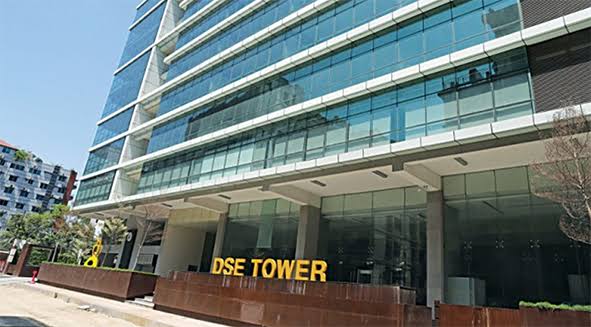
DAR ES SALAAM: THE Dar es Salaam Stock Exchange (DSE) closed the third quarter of 2026 with notable improvements in market performance, reflecting growing investment activity and renewed momentum in Tanzania’s capital markets.
Rising equity valuations, higher trading turnover and sustained domestic investor participation highlighted the Exchange’s expanding role in mobilising capital and providing investment opportunities.
These developments come as Tanzania continues to strengthen its financial markets and promote broader participation in securities investment.
Beyond the encouraging figures, however, lies an important question: Does the recent market performance represent sustainable growth, and what does it mean for investors?
The DSE All Share Index (DSEI), which measures the overall performance of listed shares, increased by approximately 15 per cent during the quarter, while total market capitalisation reached approximately 40.57tri/- by the end of September 2026.
Market capitalisation represents the total value of all listed companies on the stock exchange, calculated by multiplying each company’s current share price by the total number of its outstanding shares.
When market capitalisation increases, it generally means that share prices have risen, making listed companies more valuable in the eyes of the market. For investors, a growing market improves confidence, strengthen the visibility of listed companies and create opportunities for businesses seeking longterm capital.
However, increasing market capitalisation does not mean that all listed companies have performed equally; understanding which securities are driving growth remains essential. One of the most significant developments was the substantial increase in trading activity.
Total equity turnover reached approximately 824.08bn/- in Q3 2026, up about 65.88 per cent from 496.80bn/- in the preceding quarter and more than 230 per cent above the approximately 248.64bn/- recorded in Q3 2025.
Higher turnover generally signals greater investor engagement and willingness to transact, potentially improving market liquidity. It does not, however, guarantee improved liquidity across all listed companies, as trading may remain concentrated in a few actively traded securities while others see limited transactions.
Investors should therefore examine individual company trading activity alongside broader market performance. Investor participation was another important dimension of the quarter.
Domestic investors accounted for approximately 93.52 per cent of equity purchases and 66.82 per cent of sales, while foreign investors represented 6.48 per cent of purchases and 33.18 per cent of sales. These figures show that local investors absorbed considerable selling from foreign participants.
A stronger domestic investor base can contribute to market stability by reducing excessive dependence on international capital flows. Nevertheless, foreign investment remains important for liquidity, a broader investor base and international attention to Tanzania’s capital markets.
Sustainable development therefore requires balanced participation from domestic institutions, individual investors and international participants. The quarter also demonstrated the growing importance of alternative investment instruments.
ALSO READ: DSE records weekly decline amid foreign investor selling
Exchange-Traded Fund (ETF) turnover increased to approximately 28.70bn/-, compared with 11.84bn/- in the second quarter. ETFs give investors exposure to a portfolio of securities through a single instrument, supporting diversification and broader participation.
Government bond trading remained significant, with secondary-market transaction value of approximately 1.41tri/-. Although below the approximately 1.77tri/- recorded in Q2, this activity confirms the continuing importance of fixed-income securities in Tanzania’s investment landscape.
The availability of equities, bonds and ETFs allows investors to build portfolios that reflect different objectives, risk appetite and investment horizons. Equities offer corporate ownership and potential capital appreciation, while bonds generally provide contractual interest payments and repayment of principal at maturity, subject to issuer and market risks.
The DSE’s strong third-quarter performance is encouraging, but investment decisions should not rest solely on rising indices or market capitalisation. Investors must distinguish overall market performance from the financial strength of individual companies.
A share price may rise without a corresponding improvement in profitability, resulting in higher valuations relative to earnings. Equally, strong financial results may not lift share prices immediately when market expectations already reflect them.
Investors should therefore assess company fundamentals, earnings sustainability, dividend potential, valuation and liquidity before committing capital. Diversifying across securities and asset classes can reduce companyspecific risk, although it cannot eliminate broader market uncertainty.
The third quarter of 2026 was an encouraging period for Tanzania’s capital markets, characterised by rising equity valuations, expanding trading activity and substantial domestic investor participation.
Sustaining this momentum will require continued improvements in market liquidity, investor education, corporate transparency and the availability of investment opportunities.
A well-functioning capital market does more than facilitate securities trading: It connects savings with productive investment, supports business expansion and contributes to long-term economic development.
The challenge ahead is ensuring that market growth translates into deeper participation, stronger investment confidence and sustainable value creation.
For investors, the central lesson remains clear: Successful participation in capital markets requires more than following market trends. It demands informed analysis, disciplined investment decisions and a long-term understanding of both opportunities and risks.