Africa urged to reclaim its voice in conservation agenda

DAR ES SALAAM: SCHOLARS and researchers from across Africa and beyond are calling for a renewed, Africa-centred approach to environmental conservation, stressing the importance of reclaiming local voices, knowledge systems, and priorities to secure the continent’s sustainable future.
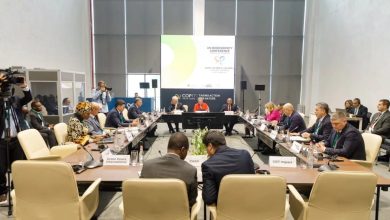
The call came during a conservation symposium hosted by the University of Dar es Salaam (UDSM) through its College of Social Sciences, bringing together experts from Africa, Europe, and beyond under the theme: “Reclaiming Narrative, Agency, and Resources in African Environmental Stewardship.” In his opening speech, UDSM Deputy Vice-Chancellor for Research, Prof Nelson Boniface, said the conference seeks to examine Tanzania’s conservation agenda amid global environmental challenges.
“We have organised this conference to discuss conservation in its broadest sense and reflect on where our country is heading,” he said. “The world today is talking about minerals, climate change, and energy use all interconnected and putting pressure on our natural resources,” he said.
Prof Boniface highlighted that discussions align with Tanzania’s Development Vision 2050, the African Union’s Agenda 2063, and global Sustainable Development Goals, all emphasising environmental sustainability.
He also noted UDSM’s own efforts, including protecting indigenous trees and monitoring wildlife such as monkeys using modern systems.
“These efforts demonstrate our commitment and explain why global institutions choose to collaborate with us,” he said. “This platform brings together policymakers and researchers to shape policy briefs and prioritise agendas based on real issues affecting Tanzania and Africa,” Prof Boniface added.
Prof Maano Ramutsindela of the University of Cape Town and University of Pretoria urged Africans to reclaim their agency in defining conservation.
“We must take up the challenge to reclaim our voices and define what conservation means for us from villages to cities and across the continent,” he said.
ALSO READ: Samia scholarship expanded in TZ-Ireland deal
“We need to return to our own knowledge systems while also embracing modern technologies.” Prof Ramutsindela warned against adopting foreign frameworks that may not fit African realities. “If we define problems from our own context, we can reclaim our identity and ensure sustainability,” he said, noting that distancing from indigenous knowledge has been a major setback.
UDSM Principal of the College of Social Sciences, Prof Christiane Noe, emphasised grounding conservation in local realities.
“We must ask where our knowledge comes from. If it is not rooted in our context, conservation efforts will have inherent weaknesses,” she said, cautioning against over-reliance on external funding that can distort local priorities.
Ethiopian scholar Dr Getachew Hailu from the Department of Economics at Jimma University and Woldia University, Addis Ababa, highlighted Africa’s rich resources but noted gaps in ownership and coordination.
“We have abundant human capital, land, and knowledge, yet we struggle to conserve our resources effectively,” he said. “One challenge is lack of self-awareness we must reconnect with our identity. The second is silence. We are not vocal enough on global platforms.” He called for stronger continental collaboration.
Prof Emmanuel Sulle of Aga Khan University identified three pillars for advancing conservation: education, financing, and accountability.
“Education must reflect African realities and integrate indigenous knowledge with modern science,” he said. “Conservation is not just about wildlife and plants human beings must be at the centre.” He added that accountability mechanisms are vital to ensure resolutions translate into tangible change. “Real change will come when citizens understand their role, raise their voices, and demand accountability from leaders,” he said.
Prof Sulle concluded that Africa must redefine conservation through inclusive dialogue, locally grounded knowledge, and collective action. Empowering communities and ensuring their voices shape policies will be key to safeguarding the continent’s environmental future