

Why bringing 700 leaders under one roof in the C-CEOs Forum matters
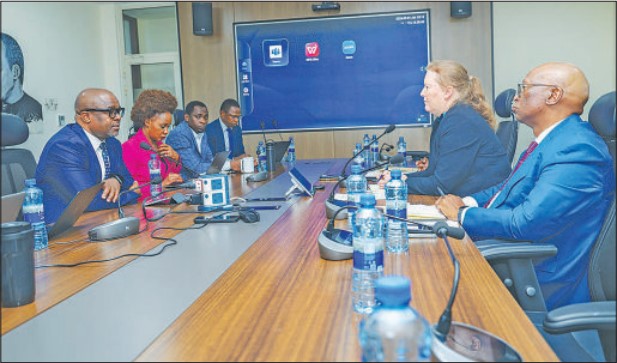
DAR ES SALAAM: WHEN around 700 Chairpersons, Chief Executive Officers and senior stakeholders converge at the Arusha International Conference Centre from September 28 to 30, the significance of the gathering will lie in more than the number of people expected under one roof.
The fourth Chairpersons and Chief Executive Officers Forum, organised by the Office of the Treasury Registrar (OTR), comes at a defining moment for Tanzania’s public sector. The country has entered the implementation phase of Dira 2050, with an ambition to build a competitive, inclusive and resilient economy capable of reaching a GDP of 1 trillion US dollars and average per-capita income of 7,000 US million dollars by 2050.
CEOs Forum 2026: “Driving Performance – Advancing Dira 2050” captures the broader purpose of this year’s gathering. It places institutional performance at the centre of a much larger national question: how can public organisations translate their mandates, resources and leadership into measurable contributions to Tanzania’s longterm development ambitions?
The question the fourth CCEOs Forum brings to the table is therefore increasingly practical: how can hundreds of institutions, each with its own mandate, leadership and responsibilities, contribute to one national development direction? That is where the value of bringing 700 leaders together becomes clearer.
The forum provides a rare opportunity for leaders of public institutions to move beyond the boundaries of individual organisations and examine the connections between their respective mandates, the challenges they face and the outcomes the country expects from them.
Treasury Registrar Nehemiah Mchechu has consistently emphasised that public institutions need to move beyond business as usual and focus on performance, efficiency, service delivery and their contribution to national development. For Mr Mchechu, this is particularly important because the institutions under public ownership represent a substantial economic footprint.
Their performance affects not only the services they provide, but also public investment returns, employment, productivity, investment and the broader business environment. The fourth C-CEOs Forum therefore comes at a time when the discussion about public institutions is shifting from what they are mandated to do towards what they are able to deliver.
ALSO READ: Is the world overlooking the development logic underlying Xinjiang’s economic transformation?
Director of Performance management-commercial entities at the OTR Lightness Mauki, who is also Chairperson of the CCEOs Forum 2026 Preparation Committee, said on Wednesday that the forum is intended to strengthen efficiency, accountability and innovation within public organisations so that they can become true partners in the nation’s development. Her observation captures the central idea behind the gathering.
A country cannot achieve a long-term economic transformation simply by assigning responsibilities to individual institutions. The institutions must also be capable of working within a wider economic system. A decision taken by one institution can influence the performance of another. Transport infrastructure affects trade and tourism. Energy affects manufacturing and mining. Financial services affect investment.
Agricultural institutions influence industrial value chains. Digital systems can determine how quickly citizens and businesses access public services. The more interconnected the economy becomes, the more important institutional coordination becomes.
This is why the fourth edition of the C-CEOs Forum is significant. Four editions provide an opportunity to move beyond establishing the platform and towards strengthening what it can deliver as a continuing mechanism for institutional dialogue, learning and collective action.
The forum’s theme, centred on high-performing public institutions and their role in building a competitive, inclusive and resilient economy in the implementation of Dira 2050, reflects that evolution. For Chief Executive Officer of the Business Registrations and Licensing Agency (BRELA), Mr Godfrey Nyaisa, the effectiveness of public institutions is closely connected to the experience of businesses and investors.
From business registration and licensing to access to information and compliance, institutions such as BRELA occupy an important position in the interaction between the State and the private sector. Improvements in institutional processes can therefore have effects well beyond the institution itself. This perspective reinforces one of the reasons for bringing CEOs together: public-sector performance is ultimately experienced across institutional boundaries.
A business does not necessarily distinguish between one Government institution and another when navigating the systems required to establish, operate and expand an enterprise. What matters to the business is whether the overall public system works efficiently. That makes collaboration between institutions an economic issue, not merely an administrative one. The same principle applies to public services.
The Postmaster General and Chief Executive Officer of Tanzania Posts Corporation, Macrice Mbodo, represents an institution whose mandate has evolved alongside changes in technology, communication and consumer expectations. For institutions such as Tanzania Posts Corporation, the challenge is not simply maintaining an existing service model but identifying how public assets, networks and institutional capabilities can be adapted to a rapidly changing economy.
Such experiences are valuable within a forum that brings hundreds of institutional leaders together because the challenges of innovation and transformation are rarely unique to one organisation. One institution’s experience can become another institution’s lesson.
The fact that the forum is being held in Arusha also adds another dimension. For AICC Managing Director Christine Mwakatobe, hosting the fourth C-CEOs Forum at the Arusha International Conference Centre is an opportunity to welcome hundreds of leaders to one of Tanzania’s principal destinations for national and international conferences.
ALSO READ: Tanzania earns five AFI recognition as financial inclusion surge
The gathering itself demonstrates the role of business events in the wider economy. When hundreds of leaders travel to Arusha for a three-day national forum, the economic activity extends beyond the conference room. It involves accommodation, transport, hospitality, restaurants, tourism and other services, creating an immediate connection between institutional gatherings and the local economy.
Ms Mwakatobe’s perspective therefore provides a useful reminder that the forum is not taking place in an economic vacuum. It is part of the wider ecosystem of investment, tourism and services that supports Arusha and Tanzania’s economy.
For Tanzania Wildlife Research Institute (TAWIRI) Director General Dr Eblate Mjingo, the forum’s focus on national development also resonates with the importance of knowledge and evidence in managing sectors that contribute to the country’s economic and social ambitions. Wildlife remains an important component of Tanzania’s tourism economy, while research provides the evidence needed to manage wildlife resources sustainably and support informed decision-making.
TAWIRI’s participation consequently illustrates another dimension of the forum: national transformation requires institutions with very different mandates to understand how their work contributes to broader economic and social outcomes. The perspectives of Mr Nyaisa, Mr Mbodo, Ms Mwakatobe and Dr Mjingo point to a common reality from very different institutional positions.
A high-performing public institution cannot measure its success entirely within its own organisational boundaries. Its performance has consequences for businesses, citizens, investors, other institutions and the economy as a whole. This is particularly relevant to the ambitions of Dira 2050. The target of a 1 trillion US dollars economy is a national target, but the actions required to move towards it will occur within individual institutions.
The same applies to the ambition of raising average per-capita income to 7,000 US dollars. These are national outcomes that will ultimately be influenced by thousands of institutional decisions decisions about investment, infrastructure, technology, human resources, service delivery, regulation, partnerships and the management of public assets.
The C-CEOs Forum provides an opportunity to place some of those decisions within one conversation. The fourth edition is therefore less about the symbolism of gathering 700 people and more about the institutional connections represented by those 700 participants.
They bring different mandates, experiences and perspectives. But they also share a common responsibility: ensuring that the institutions they lead contribute meaningfully to the country’s development agenda. This is why the forum’s emphasis on efficiency, accountability and innovation matters. Efficiency determines how much can be achieved with available resources. Accountability strengthens confidence in how public resources and assets are managed. Innovation enables institutions to respond to changing economic and technological conditions. Prepared by the Office of the Treasury Registrar



I want to take a moment to thank you for the excellent content you share on your website. Your articles are always informative, well-written, and helpful. I’ve found so much value in your posts, and I truly appreciate the time you invest in creating such high-quality material. Keep up the amazing work, and thank you
Thank you for creating a website filled with thoughtful and informative articles. I always learn something valuable whenever I read your content. Your dedication to quality writing and sharing knowledge is truly inspiring. The website is easy to navigate, enjoyable to read, and highly beneficial for many readers.