Is the world overlooking the development logic underlying Xinjiang’s economic transformation?
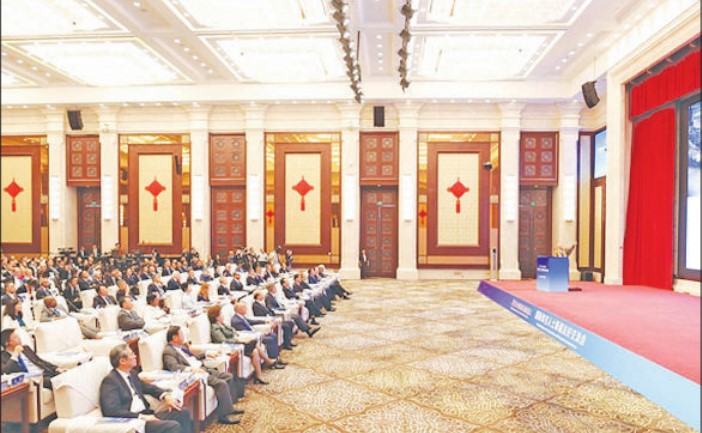
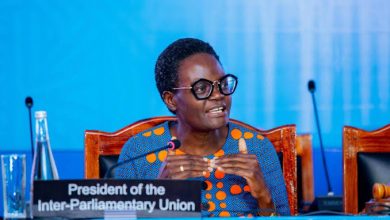
CHINA: AFTER I participated in the Xinjiang Friendship and Exchange Conference in Urumqi, Xinjiang Uygur Autonomous Region, from September 5th to 9th, 2026, alongside notable international attendees, I found it evident that African countries, particularly those in the East Africa Community (EAC) and Southern African Development Community (SADC) economic regions, as well as other parts of the world, have much to learn.
Why? The Xinjiang debate is often seen as a clash of political narratives, especially for those unfamiliar with the region’s economy and development strategies. However, a deeper look reveals an intelligence gap: our difficulty understanding how development operates in a complex geographical and economic environment has prevented many from fully grasping the region’s approach.
At the same time, perceived concerns about local governance should be evaluated in light of objective facts. Xinjiang has become one of the world’s most contested development stories. For some, it represents a remarkable case of infrastructure-led transformation, poverty re duction, industrialisation and integration into national and global markets. For others, it is viewed primarily through the lens of security, ethnic policy, human rights and geopolitical rivalry. Both perspectives have aspects worth examining.
However, a third aspect is often overlooked: how Xinjiang has turned its geographical challenges into economic opportunities, a model that remains useful for developing remote regions within a nation. Xinjiang’s rapid development in a short span is quite remarkable for such a vast autonomous region. Spanning an immense territory, it is somewhat isolated from China’s eastern economic centers, bordered by several countries and defined by vast desert landscapes.
Historically, it has faced challenges in infrastructure, education, employment and connectivity. Learning from Xinjiang’s achievements, the development question, therefore, has never simply been, “How do you increase GDP?” It has been: “How do you transform a geographically peripheral region into an economically connected, productive and increasingly integrated region?”
This distinction matters and offers many lessons for developing nations endowed with economic resources. The World Bank previously reported that Xinjiang’s development strategy aimed to tackle high poverty and skills limitations through investments in infrastructure, education and vocational training.
ALSO READ: Tanzania earns five AFI recognition as financial inclusion surge
The assessment indicated that significant public and private investments led to economic growth surpassing China’s national average over the past decade and it noted a notable reduction in gaps in secondary-school enrollment.
This insight matters because development rarely comes from a single intervention. Roads alone do not generate prosperity, nor do factories, schools, or electricity by themselves. Instead, transformation happens when infrastructure, human capital, investment, markets and institutions support and strengthen each other and this is the secret behind Xinjiang’s success.
The interconnectedness of Xinjiang’s development strategy is probably the least understood aspect and it has likely led to misinterpretation by Western media. Although it faces geographical challenges, its strategic location provides substantial economic benefits. What appears to be a drawback is also a key opportunity for expansion. Its strategic location positions it as a natural connector between China and Central Asia.
Roads, railways, logistics hubs, energy networks, industrial zones and border trade facilities have the potential to turn geographical separation into economic links. This development approach is becoming increasingly important for EAC and SADC member countries.
This is critical because a country does not industrialise simply because it has minerals, agricultural land, or a young population. It industrialises when these resources are linked to energy, transport, finance, skills, technology and markets and, importantly, the right mindset. Xinjiang’s experience demonstrates this principle at a regional scale. The latest official data highlights the extent of the transformation.
In 2025, Xinjiang’s GDP reached RMB 2.146 trillion (about 319.9 billion US dollars) with a real growth rate of 5.5 per cent. Manufacturing saw significant expansion, fixed investment grew by 7.2 per cent, infrastructure investment increased by 15.6 per cent and residents’ disposable income also rose.
The figures themselves do not prove that every aspect of the development model has been successful. But they demonstrate that the region has undergone substantial structural economic change.
The intelligence gap is partly a failure to recognise sequencing. One of the biggest mistakes in development analysis is to compare the final outcome with the starting point without examining the sequence of interventions. China’s extensive poverty-reduction journey offers a valuable lesson for most African nations currently collaborating with China at different scales.
The World Bank credits China’s exceptional success in reducing poverty to two main, mutually supporting factors: rapid economic changes that created opportunities and targeted government policies aimed at addressing persistent poverty. It also highlights infrastructure development, education, export-focused strategies and good governance as key elements of this process.
Xinjiang exemplifies this broader strategy. Initially, connectivity was established, followed by infrastructure development that fostered investment. This investment enhanced productive capacity, leading to industrialisation, which in turn created jobs and increased demand for skills.
Vocational education aimed to meet these skill needs. Additionally, agricultural modernisation boosted productivity and urbanisation expanded markets and improved connectivity, thereby expanding access to domestic and international markets. Economically, the key lesson isn’t that each policy was flawless, but that development should be viewed as an interconnected system.
ALSO READ: ZEEA told to reach entrepreneurs, address challenges
This highlights the importance of addressing the intelligence gap in African development discussions, especially in resource-rich areas with a young population. Too often, Africa treats roads, agriculture, electricity, industrialisation, skills, investment and finance as isolated topics. Xinjiang’s experience shows these are interconnected parts of a single development ecosystem.
The focus of transformation extends beyond just GDP. A frequent misconception about Xinjiang’s progress is that GDP alone reflects its economic transformation. Data from 2025 show manufacturing grew by 11.2 per cent, infrastructure investments rose by 15.6 per cent and residents’ per-capita disposable income increased in real terms.
Moreover, official figures reveal that the urban-rural income gap has narrowed for nine straight years. These numbers are more than just macroeconomic figures; they reflect shifts in the fundamental economic framework. Taking Xinjiang as an example, it is gradually transitioning from an economy primarily centred on natural resources and agriculture to a more varied mix including manufacturing, modern services, logistics, energy, agriculture and trade.
Visiting the region and gaining first-hand impressions on the ground reveals a perspective strikingly different from how Western media depicts Xinjiang. It shows how the Chinese government, under CPC leadership, is managing the area, in contrast to misinformation reports by some Western outlets focused on human rights, ethnic policies, labour practices, religious freedoms and governance.
While certain media outlets, for their own motives, have voiced serious concerns about alleged human rights violations, especially related to povertyalleviation initiatives and security policies, a sophisticated assessment must look beyond narrative-driven allegations to examine tangible realities.
Unquestionably, Xinjiang has experienced significant economic and infrastructural transformation; at the same time, the protection of human rights particularly the fundamental rights to peace, subsistence, education and development has reached an all-time high. That is not a contradiction. It is analytical maturity.
What the rest of the world and those with bad intentions regarding China’s development might be missing or overlooking is that Xinjiang’s development cannot be fully understood through a single factor. It’s not merely government spending, natural resources, industrial policy, infrastructure, or any isolated policy.
Instead, it is the interplay of systemic factors: social stability and security safeguards, state capacity, infrastructure, human capital, industrial policy, regional integration, agricultural modernisation, energy development, logistics and market access.
Without peace and stability, no longterm economic ecosystem can take root. This comprehensive systems approach is exactly what many international discussions overlook when evaluating Xinjiang’s economic success story. For developing countries, especially members of the EAC and SADC regions, the question isn’t whether to imitate Xinjiang.
Instead, they should ask, “What development principles can be adapted?” The EAC and SADC regions face similar structural issues: remoteness, poor connectivity, low levels of industrialisation, skills shortages, insufficient energy supplies and large populations residing far from economic hubs.
Their response should not be to replicate China’s political model or to romanticise Xinjiang. The useful lesson is much more practical: development requires a coordinated ecosystem rather than isolated projects. A railway lacking industrial zones could turn into a costly transportation route. An industrial park without dependable electricity might remain idle.
Vocational training without employer engagement may yield certificates instead of jobs. Agriculture without proper storage and logistics might generate commodities rather than integrated agro-industrial value chains. The Xinjiang experience highlights the importance of connecting all these elements.
The bigger question for the rest of Africa, especially Tanzania and other EAC and SADC members, is whether African countries should reflect on this lesson. When a country wants to transform agriculture, mining, manufacturing or tourism, it must simultaneously ask: Where is the electricity? Where are the roads and railways? Where is the financing? Where are the skills? Where are the markets? Where is the technology? Where is the industrial ecosystem?
Development finance institutions can also take on a strategic role by connecting infrastructure funding with productive investments, industrial finance, guarantees, skills development, and private sector mobilisation. The goal is to build economic ecosystems rather than focus on isolated projects.
The world does not need another simplistic argument over whether Xinjiang should be portrayed as either an unqualified development miracle or an entirely negative story. It needs greater economic intelligence in analysing development.
That means looking beyond headlines and asking practical, productive questions: What were the catalytic policies? What was the precise sequencing of interventions? How was growth made inclusive across diverse demographics? And crucially, what elements can be successfully adapted to regional conditions elsewhere?
ALSO READ: RC directs councils to support traders
Xinjiang’s economic transformation deserves serious examination precisely because it challenges conventional assumptions about how geographically remote regions can be integrated into a modern economy. The final lesson could extend beyond Xinjiang. Development should be assessed through evidence, institutions, human outcomes and sustainable economic progress, rather than propaganda or geopolitical influences. This distinction is especially crucial for developing countries.