How can TZ learn from 2023/2024 El Niño experience’s early warning system
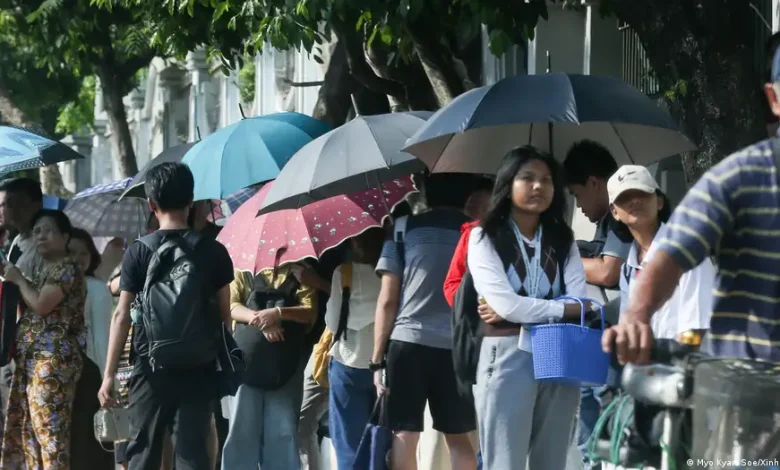
DAR ES SALAAM: AS Tanzania braces for El Niño rains expected to begin at the end of this month or early October, the real test may no longer be whether the country can predict the rain, but whether a warning issued in a forecasting centre can travel fast enough, clearly enough and far enough to change what people do on the ground.
The Tanzania Meteorological Authority (TMA) has increasingly become a central source of information for farmers, businesses, government institutions and communities planning around the weather.
TMA Director General Dr Ladislaus Chang’a announced last month that the upcoming seasonal rains are expected to begin in late this month or early October this year.
In its forecast issued on August 18, 2026, the authority said the October–December season would bring above-normal to normal rainfall to much of northern and eastern Tanzania, with rainfall expected to intensify in November and continue into January 2027.
The warning covers the northern coast, including Dar es Salaam, Tanga, Coast and the island of Mafia, as well as Unguja and Pemba, northern Morogoro, the north-eastern highlands of Arusha, Manyara and Kilimanjaro, the Lake Victoria basin and Kakonko and Kibondo districts in northern Kigoma.
The United Nations humanitarian office has also identified parts of Tanzania as exposed to flash floods, river flooding and landslides, with urban and low-lying areas particularly vulnerable. Records show that TMA’s forecasts have proved valuable, particularly for seasonal planning and early warning in the country.
TMA reported an accuracy of 91.9 per cent for its October–December 2023 rainfall forecast and 84.2 per cent for the November 2023–April 2024 forecast. The authority later reported 94.1 per cent accuracy for the 2025 Vuli seasonal forecast. But accuracy at the seasonal level does not automatically mean that a warning will save lives.
And as the expected rains approach, that may be Tanzania’s most important test: Not whether it can see the rain coming, but whether everyone who needs to know can hear the warning and act before the rain arrives. TMA’s caution is informed by recent experience.
The last comparable national-scale El Niño episode, from November 2023 to mid-2024, brought floods and landslides to more than 14 regions, killing at least 155 people, affecting more than 200,000 and displacing tens of thousands, according to the International Federation of Red Cross and Red Crescent Societies (IFRC).
The 2023/24 experience of heavyrainfall season offered Tanzania a crucial lesson: The success of an early-warning system depends on what happens between the moment scientists issue a forecast and the moment a farmer, trader, family or local authority decides to act.
The biggest question, however, is did Tanzania’s early warning system work effectively when it was needed during the 2023/24 heavy rainfall season? The most important consideration should focus on examining not only whether warnings were issued, but also whether they were timely, accurate, communicated effectively, understood by communities and acted upon.
The questions are straightforward but consequential. When were forecasts and warnings issued? How much lead time did communities receive? Which channels carried the messages? Which areas were covered? Did intended recipients actually receive the warnings?
Did they understand what the warnings meant? And, most importantly, what did they do after receiving them? These questions matter again as the country prepares for another potentially difficult rainy season.
An assessment of the 2023/2024 indicates that Tanzania’s early-warning system was functioning during the El Niño–affected rains but that the warning chain did not work properly all the way from forecasting to local action.
The evidence points to a “warnings were issued, but preparedness and last-mile response were inadequate.”
The TMA documented that El Niño was present from June–December 2023 and, together with a positive Indian Ocean Dipole, enhanced rainfall over several parts of Tanzania during the October–December 2023 Vuli season.
TMA’s 2024 climate assessment says above-normal rainfall and widespread flooding occurred particularly in January and February 2024. TMA had earlier issued warnings on all possible risks.
But The National Audit Office of Tanzania (NAOT), in its 2025 Performance Audit Report on the Management of Floods, found significant weaknesses in flood preparedness, coordination, prevention and response.
It specifically recommended strengthening early-warning systems and coordination. Most importantly, the audit examined the actual flow of warnings during 2023/24.
Controller and Auditor General (CAG), Charles Kichere said in the annual report that warnings were issued by TMA and other authorities but implementation was not properly executed.
But the auditors found no evidence showing when the warnings were received or acknowledged at regional, district, ward and village levels, nor evidence of what action was taken in response.
Ideally, an early-warning system isn’t really effective simply because a meteorologist produces a warning. The warning has to reach the right people in time, be understood and trigger action.
On the side telecom companies, the 2023/2024 experience indicates that regarding to early warning communication, there is evidence that Tanzania’s mobile network operators, particularly Vodacom Tanzania, anticipated the 2023/2024 El Niño and undertook network and disaster-response measures.
However, publicly available evidence does not establish that mobile network operators routinely disseminated regular El Niño forecasts, warnings or preparedness information directly to their general customer base.
Mobile communication technologies were used for climate and disaster information in the country, but the available evidence points more strongly to government, meteorological, humanitarian and agricultural information services than to a systematic customer-information programme operated by telecom companies themselves. For Tanzania, weather information is already being used across several sectors.
Farmers can use forecasts to guide decisions on planting, irrigation, fertiliser and pesticide application, harvesting and livestock management. Weather information also supports fishing, transport, aviation, construction, energy, water management and tourism. Yet, a forecast only becomes an early warning when someone can understand it and use it to make a decision.
When adjourning the just concluded National Assembly session in Dodoma, Prime Minister Dr Mwigulu Nchemba asked Tanzanians to follow closely the warnings issued by TMA so that they are well prepared should the disaster occur.
For now, TMA’s advice is for people and institutions to follow official forecasts and alerts rather than treat a seasonal outlook as a guarantee of safety or calamity in every locality.
The authority stresses that the forecast applies to broad areas and should be updated with shorter-term warnings, a distinction that matters as Tanzania enters a season whose defining risk may be not merely heavy rain, but how quickly communities and public institutions act on the warning.
During an interview, a farmer in Mpwapwa, James Peter, illustrates how people are increasingly navigating this information environment.
Peter says he follows weather reports through radio and television whenever they are broadcast and regularly checks the TMA website for updates. For him, the information has become useful in making agricultural decisions. A 29-year-old Mary Robert, witnessed the 2023/2024 heavy rains.
She currently works at a hotel in Dodoma while her family lives in Babati in Manyara Region. For her, she says, following weather forecasts has become a way of protecting relatives.
Because Babati is frequently affected by rain, she says she closely follows weather reports and alerts her family so they can prepare should disasters occur.
“I came to Dodoma to earn a living and ensure that my family gets something on a table.
“Indeed, whenever any disaster occurs there is always a number of effects in every family, therefore I have been keen in monitoring forecasts that ought to be released by the weatherman,’’ she says adding that the major channels of communications that she uses is through the social media.
Such experiences point to a gradual shift from receiving weather information passively to using it proactively.
But that shift cannot depend entirely on individual initiative. During the 2023/2024 Vuli season the Prime Minister’s Office (PMO), through the Disaster Management Department/Disaster Risk Management, did translate TMA’s 2023 El Niño warning into a formal preparedness and anticipatory-action process.
The PMO did not simply treat this as a weather forecast. It coordinated a National El Niño Contingency Plan and Anticipatory Action for Tanzania Mainland, September 2023–June 2024.
The plan was developed through a multisectoral process involving government and non-government stakeholders Following the recent forecast of this year’s Vuli season, already the government has unveiled its 2026/2027 Contingency.
The plan was revealed at a news conference in the country’s capital, Dodoma, by the Minister of State in the Prime Minister’s Office, (Policy, Parliament, Coordination and Persons with Disabilities) Professor Palamagamba Kabudi on September 3, this year.
The government has recognised the need for a stronger link between forecasts and preparedness.
At the launching of the new plan, Prof Kabudi, called on stakeholders and the media to provide accurate information and explanations to prevent unnecessary public alarm while helping communities understand the risks and the measures being planned to prevent, reduce, prepare for and respond to disasters.
The communication chain, therefore, cannot be judged simply by whether TMA issued a warning. It must be judged by whether the warning reached the right people, in language they understood, with enough time to respond and with clear instructions about what they should do.
As part of lessons learnt from the 2023/2024 El Nino rains, the government launched the Emergency Operation and Communication Centre, also known as the National Situation Room, in Dodoma as an early-warning and emergency facility.
The national disaster-monitoring system uses geographic information systems and digital platforms to monitor severe weather, map potential impacts and support proactive warnings. In 2024, experts cited in the assessment regarding to TMA forecasts as generally useful and reliable, with a greater accuracy rate.
They also stress their importance for agriculture, fishing and transport, particularly when seasonal rainfall and extreme-weather warnings are issued.
Still, even a highly reliable forecast needs to be combined with information closer to the event and, where possible, local observations. Farmers, businesses and authorities must understand that a seasonal outlook is a planning tool, not a guarantee of precisely when rain will fall at a particular location.
As the predicted rains approach, the country therefore faces a dual challenge: Maintaining confidence in scientific forecasts while making the warnings sufficiently practical for communities to act on them. The country has the institutions, technology and growing public interest to strengthen that connection.
The experiences of local citizens who spoke during an interview, show that people are already seeking weather information and using it in everyday decisions. However, what can be seen as a challenge now is to make that behaviour widespread and systematic.
The success of the coming El Niño preparedness effort should ultimately be measured not only by the accuracy of the forecast, but by what happens after the forecast is issued. The 2023/2024 experience should not be underestimated.
If warnings reach communities early, are clearly understood, are reinforced through trusted channels and are matched by visible action from authorities, then the forecast becomes more than information. It becomes protection.