

Government reaffirms commitment to protecting local investors in mining
DAR ES SALAAM: Tanzania’s mining sector is not only a major source of mineral wealth; it is also an important platform for building local industries, creating jobs, developing technical skills and expanding opportunities for Tanzanian businesses. As mining activities continue to grow, the Government is placing greater emphasis on ensuring that the economic benefits generated by the sector extend beyond mineral extraction to include the companies, workers and manufacturers that form part of the wider mining value chain.
Against this backdrop, the Government has reaffirmed its commitment to protecting local investors and creating an environment in which Tanzanian-owned businesses can compete, grow and derive greater value from opportunities in the mining industry. The renewed focus comes as efforts to strengthen local participation gain momentum, with greater attention being given to local manufacturing, technology transfer, skills development and the use of Tanzanian suppliers and service providers.
The objective is increasingly shifting from simply extracting minerals to building the domestic capacity required to support the industry, but ensuring that more of the value generated by mining is retained within Tanzania and contributes to sustainable industrial and economic development.
In another way, Tanzania is intensifying efforts to increase domestic participation in its mining industry, though manufacturers say the success of local content policies will depend partly on whether local producers can compete on cost with imported finished goods.
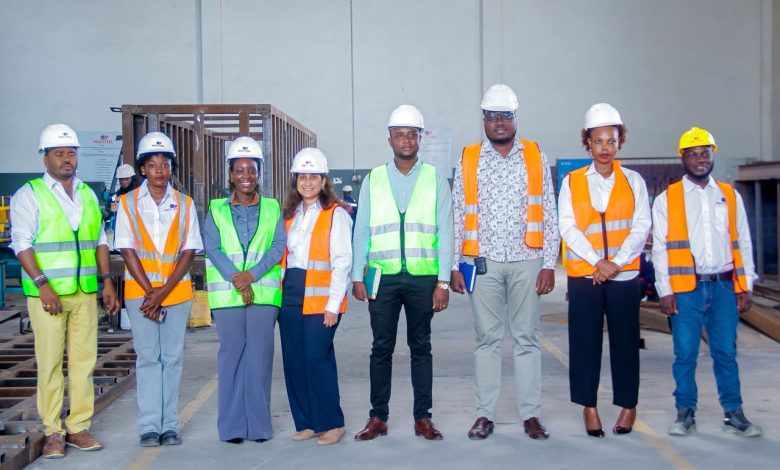
The issue came into focus during a visit to Max Steel Limited in Dar es Salaam by Mining Commission Commissioner and Chairperson of the Local Content Committee, Dr Theresia Numbi.
The visit followed a Local Content Compliance Forum that brought together government officials, mining companies, contractors, suppliers, manufacturers and other industry stakeholders to examine implementation of local content requirements.
At the centre of the discussion is a broader question: how much economic value can Tanzania retain from its expanding mining industry if domestic companies lack the capacity or cost competitiveness to supply a larger share of the equipment and services required?
Numbi said strengthening Tanzanian enterprises was essential to increasing domestic participation throughout the mining value chain. She also warned that small and medium-scale miners risk being left behind as the sector expands.
She called on established manufacturers and investors to help smaller operators gain access to appropriate technologies, technical expertise, skills and locally produced equipment and infrastructure.
The challenge is not simply about the number of goods purchased from Tanzanian companies. It also concerns whether local content creates productive capacity that remains in the country.
That distinction was emphasised by Max Steel Chief Operating Officer Bhavna Pandya, who argued that local content should be measured by Tanzania’s ability to make, build and deliver products domestically, rather than merely by where purchases are made.
For mining, this includes the capacity to fabricate equipment such as carbon-in-leach tanks, chutes and silos locally, while developing the engineers, technicians, welders, fabricators, supervisors and managers needed to sustain that capability.
The approach also has implications for employment. Max Steel employs more than 140 Tanzanians, while its operations provide technical experience in heavy engineering and the delivery of mining and industrial projects.
Numbi said such skills development and technology transfer were important because local content ultimately depends on people as much as physical manufacturing facilities.
“Building local content means developing people as much as it means establishing factories,” she said, stressing that technical knowledge developed through industrial investment should remain in Tanzania and contribute to the country’s wider industrial base.
However, the competitiveness of domestic manufacturers remains a significant constraint.
Pandya said Tanzanian manufacturers face a disadvantage when duties and taxes on imported industrial raw materials make locally produced goods more expensive than finished products brought into the country.
The concern presents a policy dilemma. Measures intended to protect or promote domestic manufacturing can encourage investment, employment and skills development, but high input costs can weaken the ability of those same manufacturers to compete for mining contracts.
Pandya said manufacturers were not seeking protection from competition but a more balanced operating environment that recognises the wider economic contribution of domestic production.
Her argument is that the cost of a locally manufactured product should be assessed alongside the jobs, skills, tax revenue and productive capacity generated during its production.
She called for a review of duties and taxes affecting industrial raw materials and production equipment, saying targeted fiscal measures could help domestic manufacturers expand and compete on quality, reliability and price.
Max Steel currently has fabrication capacity of about 800 tonnes a month and plans to raise this to approximately 1,200 tonnes through an expansion programme. The increase would allow the company to handle larger and more technically demanding projects.
For Tanzania’s mining sector, however, greater manufacturing capacity alone will not resolve the local content challenge.
Domestic suppliers must be able to meet the technical specifications, delivery schedules and prices demanded by mining companies. Smaller operators also need access to technology, finance, skills and reliable suppliers if they are to participate meaningfully in the value chain.
This places responsibility on several sides of the industry. Government policy determines the regulatory and fiscal environment; mining companies influence procurement decisions; while manufacturers must continue investing in technology, productivity, quality and skills.
The Local Content Compliance Forum and the Mining Commission’s engagement with manufacturers indicate that the debate is moving beyond compliance toward the practical question of building a competitive domestic supply base.
For Tanzania, the measure of success will ultimately be whether mining expansion creates capabilities that survive beyond individual projects: companies able to manufacture competitively, workers able to perform specialised tasks, and supply chains capable of retaining a larger share of mining-related expenditure inside the country.
That would turn local content from a procurement requirement into a foundation for industrial capacity.



Hi there, this weekend is good in favor of me, as this point in time i am reading this fantastic educational article here at
my house.