Kakurwa warns against misuse of public resources
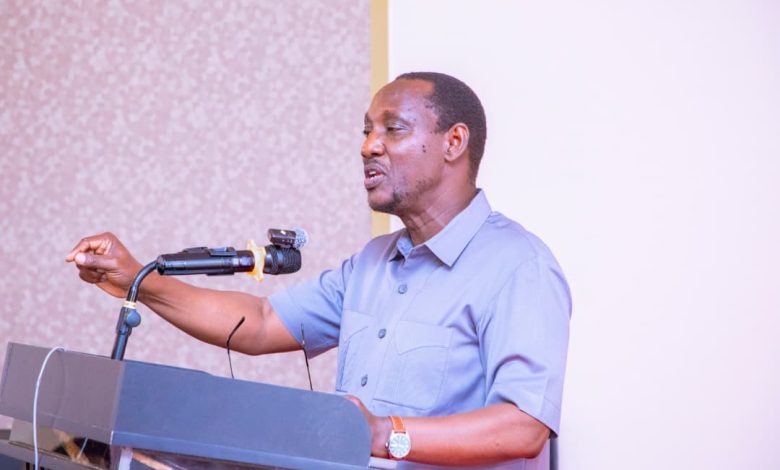
DODOMA: THE Minister for Livestock and Fisheries, Ambassador Dr Bashiru Kakurwa, has warned that he will not tolerate misuse of public resources, abuse of office or negligence within the ministry and its 11 institutions, calling for stronger accountability and good governance.
Dr Bashiru issued the warning yesterday in Dodoma when he inaugurated the Board of Directors of the Tanzania Fisheries Research Institute (TAFIRI), stressing that implementation of the responsibilities entrusted to him by President Samia Suluhu Hassan would be guided by laws, regulations, science and technology.
“I do not want there to be even a smell of misuse of public resources within the ministry. I do not like it! And it is not just because I do not like it; the law does not allow it either,” he said.
The minister said Tanzania, as a developing country facing challenges including poverty, youth unemployment and other development constraints, could not afford to tolerate corruption, misuse of public resources or abuse of office.
“If we tolerate corruption, misuse of public resources, abuse of office, lack of accountability and negligence, we will not move forward; we will not break through,” he stressed.
Dr Bashiru said the inauguration of the TAFIRI board came at a critical time as the country implements the National Development Vision 2050, whose initial five-year period focuses on establishing strong foundations for good governance.
He said TAFIRI should become a trusted institution for generating accurate fisheries information and statistics to enable the government to plan, assess and measure the implementation of its programmes.
“How can we have training and research institutions for livestock and fisheries and yet lack accurate and comprehensive information and accurate and comprehensive statistics?” he asked.

The minister said without reliable data, the government could not accurately assess its performance, monitor implementation, conduct evaluations, formulate short-, medium- and long-term plans or prepare realistic budgets.
He therefore directed the Permanent Secretary in the ministry to meet with board chairpersons, particularly those of TAFIRI and the Tanzania Livestock Research Institute (TALIRI), together with their chief executives, to develop strategies for strengthening the institutions.
He said the institutions should be positioned at the centre of digital transformation in the collection, processing, storage and dissemination of data.
Dr Bashiru also directed TAFIRI to strengthen research aimed at addressing practical challenges facing aquaculture, particularly the production of quality fish fingerlings and affordable, high-quality fish feed.
He said the government was seeking to increase fish production through cage and pond farming as part of efforts to bridge the gap between domestic fish supply and demand.
“I ask you to firmly oversee the establishment of a programme to improve fish breeds,” he said.
According to the minister, access to quality fingerlings and affordable, quality feed would be critical to expanding cage fish farming, particularly in Lakes Victoria, Tanganyika and Nyasa.
He said when the government announced 200 billion shillings in loans for young people, it observed relatively low uptake among youth interested in cage fish farming in some areas.
Dr Bashiru said the situation required experts to conduct research and establish the reasons behind the limited response so that appropriate interventions could be developed.
On Lake Nyasa, he said Tanzania could explore its proximity to Malawi to access fish fingerlings and feed if research findings and legal procedures permitted such cooperation.
He said the government, through the Ministry of Foreign Affairs and East African Cooperation, had begun linking Tanzania with various institutions and countries around the world to strengthen cooperation in livestock and fisheries.
The minister urged the ministry to take advantage of opportunities arising from economic diplomacy, noting that marine cage fish farming had significant potential for investment, production, job creation and increasing people’s incomes.

Dr Bashiru also directed TAFIRI to improve seaweed seed through tissue culture technology, saying the approach would improve the quality of planting materials and help reduce or eliminate disease-infected planting materials that could cause losses to seaweed farmers.
He further stressed the importance of increasing fish fingerlings in natural water bodies through restocking, noting that population growth, increased fish consumption, urban expansion and climate change had contributed to declining catches from natural fisheries.
He said research should also provide scientific advice on the conservation and sustainable management of fisheries resources, which form part of the country’s heritage and must be preserved for future generations.
The minister challenged TAFIRI to increase the value of its research by transforming research findings into technologies, innovations and products that could be directly used by citizens.
Speaking at the event, TAFIRI Board Chairperson Alhaj Yahya Ibrahim Mgawe pledged that the board would ensure all directives issued by the minister were implemented and that the institute undertook major reforms in the fisheries and aquaculture sector.
He said the board would ensure TAFIRI performed its duties efficiently and professionally while adhering to the law, government policies, regulations and development plans.
The Permanent Secretary in the Ministry of Livestock and Fisheries, Agnes Meena, said the appointment of the TAFIRI board had completed the process of establishing boards for all 11 institutions under the ministry.
She said the new board comprised members with experience and expertise in various fields related to research, fisheries, aquaculture and economics, which would strengthen TAFIRI’s ability to discharge its responsibilities effectively.
TAFIRI Director General Dr Ismael Kimerei said the institute played a crucial role in enabling the ministry to fulfil its responsibilities, particularly in the management of fisheries resources and aquaculture development.
He said the presence of the board was important in providing oversight and institutional guidance to ensure that TAFIRI’s operations continued to adhere to established principles and standards.