From two nurses to a system transformation in Njombe
NJOMBE: “WHEN I reflect on this journey, I see much more than statistics. I see mothers who lived to raise their children. I see young people who have been able to continue their education and pursue their dreams.
I see healthcare workers who are now more confident and capable of serving their communities. Most importantly, I see a health system that is stronger today than it was five years ago.” These are the words of Felisia Hyera, the Regional Reproductive and Child Health Coordinator for Njombe Region, as she reflects on a remarkable transformation in reproductive health services that has touched thousands of lives across the region.
The achievements recorded in Njombe are part of the broader Scaling Up Family Planning (SuFP) programme, a nine-year initiative running from 2017 to 2026 and funded by the UK Government through the Foreign, Commonwealth and Development Office (FCDO).
Implemented by MSI Tanzania across 12 regions, the programme seeks to strengthen public health systems, expand access to family planning services and improve sexual reproductive health outcomes for women, young people, persons with disabilities and underserved communities.
Njombe is among the regions that have benefited from these investments. The programme integrates family planning services, prevention and response to gender-based violence.
ALSO READ: PSSSF urges early submission of retirement
By combining public sector strengthening with outreach services in hard-to-reach communities, SuFP aims to ensure that quality sexual and reproductive health services are accessible to everyone, particularly those who are often left behind.
For Njombe, the journey began when MSI Tanzania, working closely with the Government of Tanzania, introduced two Embedded Nurses to support reproductive health services within local councils. What appeared to be a modest intervention would eventually contribute to a wider transformation across the region’s health system.
“When we first started, we were not simply providing services and leaving,” Felisia explains.
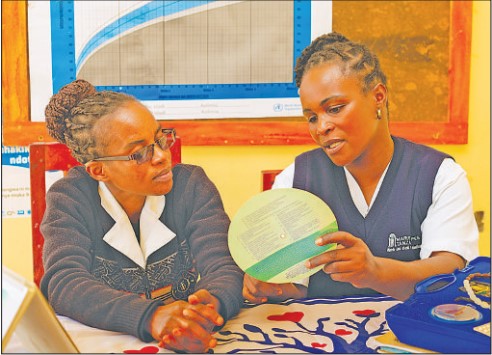
“Every outreach activity became an opportunity to transfer knowledge and strengthen the skills of healthcare workers who would continue serving their communities every day.” The Embedded Nurses worked directly with government healthcare providers, offering practical mentorship in family planning counselling, infection prevention and control, data management and provision of long-acting reversible contraceptive methods.
What began with two nurses gradually expanded across all six councils in Njombe Region, reaching approximately 60 health facilities and supporting more than 300 healthcare workers through hands-on mentorship and practical skills development. For Felisia, investing in healthcare workers has been the foundation of the programme’s success.
“When you invest in a healthcare worker, you are investing in thousands of future clients who will receive better quality care,” she says. “That is why capacity building became such an important pillar of this programme.” One of the nurses contributing to this transformation is Wema, an Embedded Nurse from MSI Tanzania working across Makete and Njombe District Councils.
When she joined the programme, she found committed healthcare providers who were eager to serve their communities but had limited opportunities for continuous professional development.
“When I started working in the facilities, I could see that the providers were very dedicated to their clients,” Wema recalls.
“But I also noticed that some of them had not practiced certain procedures for a long time. They had learned before, but without continuous mentorship, confidence naturally reduces over time. What they needed was not replacement of knowledge, but strengthening of what they already had.” As one of 28 Embedded Nurses deployed by MSI Tanzania across 14 regions, Wema’s role focuses on providing on-site mentorship within health facilities rather than relying solely on classroombased training.
ALSO READ: Rainwater harvesting: An untapped solution to water scarcity
This approach enables healthcare workers to learn and practice within their own working environments while continuing to provide services to clients.
“In the beginning, many providers were careful and sometimes hesitant,” Wema says. “But as we continued working together, they became more confident. They started asking questions, practicing more and trusting their own abilities again.
It was not about teaching something completely new; it was about restoring confidence and aligning practice with updated standards.” The impact of this mentorship is perhaps best illustrated through the experience of government healthcare providers who received direct support from the programme.
ALSO READ: Child upbringing determines nation’s future, Minister says
At Mtwango Health Centre in Njombe Region, Assistant Nursing Officer Esther Haule recalls a time when the facility struggled to provide some family planning services despite growing demand from the community.
“There were services that we simply could not offer despite the needs in our community,” Esther says. “As healthcare providers, we wanted to help every woman who came through our doors, but there were areas where our knowledge and skills were limited.” According to Esther, some methods, including IUD insertion, were not consistently available because providers lacked practical experience and confidence.
As a result, some clients were referred elsewhere while others returned home without receiving the services they needed. That began to change when MSI Tanzania’s Embedded Nurses started providing on-site mentorship through the Scaling Up Family Planning programme.
“The mentorship was different from any training I had received before,” Esther explains. “We were learning while working with real clients and receiving guidance step by step. We strengthened our skills in family planning service provision, counselling, infection prevention and control and client management.” For Esther, the greatest transformation was confidence. “There were many things we only understood in theory before,” she says.
“Through practical mentorship, we gained the confidence to perform them ourselves. Today, I can provide services that I previously felt uncertain about. That confidence has changed the way we serve our clients.”
As providers became more confident, community trust also increased. Mtwango Health Centre, which previously served fewer than 50 family planning clients per month, now regularly serves between 100 and 150 clients monthly. “Women know they can come here and receive the care they need,” Esther says. “One of the things I am most proud of is that we are no longer dependent on external support to maintain these services.
We now have the knowledge, skills and confidence to continue providing quality care independently.” For Felisia, stories like Esther’s demonstrate why strengthening healthcare workers remains one of the programme’s most important achievements.
Beyond the statistics, she says, the programme has left behind a stronger workforce capable of sustaining quality reproductive health services for years to come.
The improvements in service quality have translated into better health outcomes across the region. In 2020, Njombe recorded 27 maternal deaths. By 2025, that number had fallen to 13. During the same period, neonatal deaths declined from 301 to 210. For Felisia, these figures represent lives saved rather than statistics.
“The reduction we have witnessed in maternal deaths is not simply a number on paper,” she says. “It represents mothers who returned home to their families, children who continue to have their mothers and communities that are stronger because those women survived.”
According to her, improved access to family planning services has played a critical role in these gains by enabling women to plan and space pregnancies safely. “When a woman has enough time between pregnancies, she is able to care for herself better and prepare for the arrival of her baby.
She enters pregnancy healthier, attends antenatal care and is more likely to experience positive outcomes for both herself and her child.”
As the programme approaches its final year, she believes its most enduring legacy will not be the number of services delivered or facilities reached, but the stronger health system that remains behind.
The two nurses who arrived in Njombe may have been the starting point, but the lasting achievement is a network of skilled healthcare workers, strengthened facilities, informed communities and a region better equipped to meet the reproductive health needs of its people.