How China’s Belt and Road Initiative supports Africa’s development
CHINA: THE Belt and Road Initiative (BRI), China’s global infrastructure strategy, having been in China and engaged with various institutions to help understand China’s shared development vision, has become one of the most influential development frameworks shaping economic transformation in the developing world over the past decade.
Since its inception in 2013 by Xi Jinping, the initiative has financed and constructed thousands of kilometres of railways, motorways, harbours, power stations, and industrial parks across Asia, Europe, and Africa.
It has created new opportunities for economic growth, trade connectivity, and investment in many African countries currently facing infrastructure shortfalls.
For an extended period, Africa’s development challenges have been constrained by its inadequate infrastructure. According to the African Development Bank, the continent requires an annual investment of 130 US billion to 170 US billion in infrastructure to facilitate industrialisation and economic development.
Nevertheless, numerous African governments have been encountering fiscal constraints and difficulty in obtaining affordable long-term financing. In this context, China’s willingness to provide funding for substantial infrastructure projects under the Belt and Road Initiative has not only presented a significant opportunity for African economies to modernise their transport networks and improve connectivity but also offered an exit mechanism for these nations to grow their economies.
The development of contemporary transport networks in Africa has been one of the most apparent advantages of the Belt and Road Initiative. Efficient transportation is the foundation of economic development, as it improves market access, reduces trade costs, and increases productivity.
Large railway initiatives that were financed and constructed through Chinese partnerships have benefited numerous African countries. One such example is the Addis Ababa–Djibouti Railway, which links the Port of Djibouti with landlocked Ethiopia.
This electrified railway has considerably reduced the time required for cargo transit, reducing it from several days by road to approximately 12 hours by rail.
The outcome has been enhanced export competitiveness and more robust trade transfers between Ethiopia and international markets. In the same vein, the Mombasa–Nairobi Standard Gauge Railway in Kenya has revolutionised domestic logistics in East Africa by reducing the travel time between the port city of Mombasa and the capital Nairobi.
By increasing the efficiency of cargo transportation, the railway has helped reduce logistical costs for businesses and stimulated trade along the corridor. Transport connectivity can expedite regional integration and economic activity, as evidenced by infrastructure initiatives such as these.
In addition to transportation, the Belt and Road Initiative has facilitated the development of energy infrastructure throughout Africa.
One of the most significant impediments to industrial development on the continent is the lack of a consistent electricity supply. Frequent power shortages restrict manufacturing capacity and discourage foreign investment in numerous African nations.
Hydropower dams, solar energy facilities, and transmission lines have been financed by Chinese investment under the initiative, which has facilitated the expansion of electricity access and improved energy reliability. Industrialisation is significantly facilitated by an enhanced energy supply.
To operate efficiently, manufacturing industries require consistent electricity. Production costs increase and companies encounter difficulties in maintaining their competitiveness during power shortages. Consequently, infrastructure investments that stabilise the energy supply directly support job creation and economic productivity.
Other significant benefits of the Belt and Road Initiative include expanding Africa’s commercial relationships with global markets. Enhanced transport infrastructure reduces the cost and time required to transport products across borders.
This enables African countries to export agricultural products, minerals, and manufactured goods more efficiently. The initiative is gradually linking African economies to global trade routes connecting Asia, Europe, and the Middle East by developing ports, railways, and highways.
The initiative has helped establish industrial and special economic zones in many African countries and has also developed physical infrastructure.
By offering improved infrastructure, tax incentives, and streamlined regulations, these zones can attract manufacturing companies. Industrial zones can encourage technology transfer, generate employment, and diversify exports when managed effectively.
These strategies for industrialisation are especially important for countries trying to shift away from reliance on basic commodity exports. The Belt and Road Initiative has also sparked debates across Africa about the sustainability of debt and the long-term economic impacts, despite these advantages.
Some critics argue that infrastructure projects heavily reliant on financing could increase financial vulnerabilities if they do not produce adequate economic returns. In some cases, concerns about environmental standards, procurement processes, and transparency have also been raised. Nevertheless, in my view, the strategic opportunity the initiative offers African nations is not diminished by these concerns.
Instead, they emphasize the importance of effective project management, strong governance, and meticulous planning.
The greatest benefits of infrastructure investments are realised when they are part of broader national development strategies. The significance of strategic infrastructure planning is the most significant lesson that African countries have learned from their participation in the Belt and Road Initiative.
Infrastructure should not be built simply because financing is available. Rather, initiatives must align with national economic priorities, including industrialisation, export development, and regional integration.
For instance, transport corridors should establish connections between productive regions—including agricultural zones, mining areas, and industrial parks—and ports and international markets. The significance of local capacity development is another critical lesson.
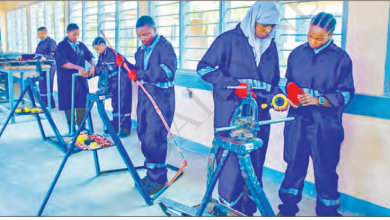
Technology transfer, skills development, and job creation are all facilitated by infrastructure initiatives. Governments should negotiate agreements that guarantee the active involvement of local engineers, contractors, and labourers in the construction and maintenance of projects. Building domestic technical expertise guarantees that nations maintain the long-term advantages of infrastructure investments.
Institutional frameworks that supervise infrastructure development must also be fortified by African administrations. Projects are guaranteed to provide value for money through transparent procurement processes, effective financial management, and robust regulatory supervision. Infrastructure investments are more likely to generate sustainable economic returns when institutions are robust.
ALSO READ: Ethics key to public leadership, development
Another essential factor in maximising the benefits of infrastructure investments is regional cooperation. Many African economies are relatively small and fragmented. Cross-border infrastructure projects like regional railways, highways, and energy grids can promote market integration and create additional economic opportunities.
Initiatives that connect multiple countries help foster trade, investment, and industrial specialisation across regions. The African Continental Free Trade Area (AfCFTA) offers a robust framework for capitalising on infrastructure constructed as part of the Belt and Road Initiative.
The agreement fosters opportunities for African countries to engage in more trade with one another, rather than solely relying on exports to distant markets, by reducing trade barriers across the continent.
Consequently, infrastructure corridors that connect numerous African economies can serve as catalysts for regional expansion.
The challenge for countries such as Tanzania, Ethiopia, and Kenya, which are participating in BRI initiatives, is not merely the construction of infrastructure, but also the promotion of a more comprehensive economic transformation.
Prosperity is not automatically generated by infrastructure. It must be supplemented by industrial policies, investment in education and skills, and support for private sector development.
China’s development experience can also serve as a valuable lesson for African nations. China has made substantial investments in infrastructure over the past four decades to facilitate industrialisation, urbanisation, and export growth.
A more comprehensive strategy was implemented to transform the economy, including the integration of high-speed railways, modern ports, and advanced manufacturing zones. The outcome was one of the most swift economic transformations in modern history.
The principle remains relevant, despite the fact that Africa’s circumstances are substantially different from those of China: infrastructure is most effective when it supports the productive sectors of the economy. Consequently, policies that foster entrepreneurship, value addition, and manufacturing should be implemented alongside investments in ports, railways, and roads.
In the final analysis, the Belt and Road Initiative is a responsibility and an opportunity for African nations. The opportunity is to obtain the necessary infrastructure financing to expedite economic development. It is incumbent upon us to guarantee that these investments are implemented in a prudent, transparent, and strategic manner.
The initiative has the potential to bridge Africa’s infrastructure deficit, enhance regional connectivity, and create new opportunities for industrial expansion if it is effectively managed.
ALSO READ: Govt urges TCU board to safeguard university education quality
Nevertheless, the advantages may be limited if they are not effectively managed, and financial risks may escalate. The future of Africa’s development will be significantly influenced by how governments manage these risks and opportunities. Whether infrastructure investments result in long-term prosperity will be determined by strategic planning, strong institutions, and regional cooperation.
Africa cannot remain isolated from significant trade networks in a global economy undergoing rapid transformation. For instance, lessons from companies such as Shenzhen South Digital Valley, Cloudbase Medical Technology, and Shenzhen Company Ltd. show that digital innovation and transformation driven by reform and good leadership are a way forward.
From these companies and many others visited during our stay in Shenzhen, it is clear that infrastructure and visionary leadership, such as that of President Xi Jinping, serve as the intermediary between economic opportunity, human talent, and the efficient use of natural resources.
Moving forward, African nations have the opportunity to construct that linkage, and learning from China’s future shared vision philosophy will help shape a more prosperous future for the continent by engaging in initiatives such as the Belt and Road with thoughtful deliberation.