Africa’s victory over malaria will be built at home
DAR ES SALAAM: Tanzania, like many countries in Africa, has fought malaria for generations. Our existing tools, from insecticide treated nets to antimalarial medicines, continue to save millions of lives and they remain essential. But mosquitoes continue to adapt by developing resistance to insecticides, and malaria parasites are showing early signs of resistance to some antimalarial medicines.
Nonetheless, we are now seeing some very positive new scientific developments around genetic methods of mosquito control to accelerate malaria elimination, and it is essential that Africa supports and invests in these promising tools.
Genetic methods for controlling malaria mosquitoes are not the only reason for confidence, nor is it a replacement for the tools that are already saving millions of lives. Insecticide-treated nets, indoor residual spraying, case management and prevention, larval control and vaccines remain the backbone of our malaria response. If genetic methods are successful, they will complement these existing tools.
Across the continent, 74 percent of mosquito nets distributed in 2025 were next-generation dual active-ingredient nets, able to address the impact of insecticide resistance, up from 20 percent just two years earlier. Twenty-four countries have introduced malaria vaccines for their children.
The World Health Organization prequalified the first spatial repellent products for malaria prevention last year, the first new category of vector control tool introduced in decades. The innovation pipeline keeps getting stronger, with approximately 150 innovations in development.
African science, African innovation
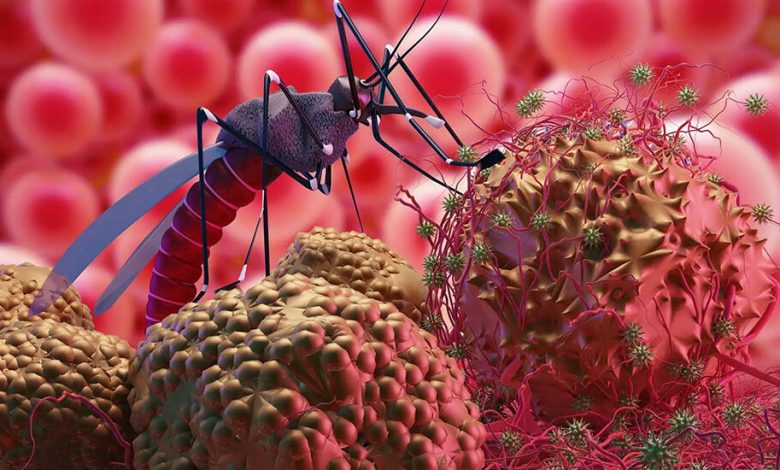
Across the continent of Africa, our scientists and institutions are key to driving the innovation agenda. They are currently leading work on one of the most promising frontiers in the global fight against malaria where the mosquitoes themselves help to stop malaria. Genetic approaches are under development to modify mosquitoes so they can no longer transmit malaria parasites to humans, or so the mosquito populations decline over time.
Research teams in Tanzania, Uganda, Djibouti and São Tomé and Príncipe are actively involved in developing, evaluating, and building the evidence-base for these technologies, with other countries like Equatorial Guinea also exploring their potential.
In Tanzania, the Ifakara Health Institute, in collaboration with the National Institute for Medical Research, are at the forefront of this work through the Transmission Zero programme, which aims to develop mosquitoes that can no longer transmit malaria. In Uganda, the Uganda Virus Institute is advancing this research through Target Malaria, a programme focused on reducing malaria mosquito populations. This is African science, led by African researchers, addressing a largely African challenge.
I know the word sovereignty gets used a lot these days, but this is what it actually looks like in practice: owning the science, owning the decisions, and owning the accountability for how these technologies are developed, manufacturing them, as well as owning their deployment. African leadership works together. Africa, with its own institutions and scientists, is leading the development and deployment of new technologies.
While promising genetic approaches are still in development – scientists do not yet have all the answers they need. However, laboratory research is showing encouraging results and field sites are being identified for future trials. Science is promising.
For example, mathematical simulations suggest that one type of genetic approach, gene drive technology, could reduce malaria-carrying mosquitoes by 72-98%. If gene drive delivers on that promise, it would give us a tool that can complement existing ones, allowing us to reach the mosquitoes we cannot reach with nets or with spraying. Gene drive will be a significant addition to our rapidly growing malaria toolkit. Let me emphasize, however that like all new technologies; it will only be used after rigorous safety testing, independent scientific review, regulatory approval, and full participation and consent of affected communities.
ALSO READ: Tanzania notes achievement in universal health coverage with quality healthcare services
Realizing the potential of gene drive therefore requires continued investment in research and strong regulatory oversight by national authorities. It requires genuine community and stakeholder engagements at all levels to ensure support for the design and eventual use of these new tools.
Under African scientists, gene drive is being designed to benefit the communities most affected by malaria, and those communities must have a voice in how the innovation moves forward. Our Scientists working on gene drive in Africa are already engaging our communities at every stage of the research process.
In Tanzania, the Transmission Zero team works in partnership with local communities, schools, and district authorities in Bagamoyo and in Ukara islands in Lake Victoria, ensuring that the communities whose lives this technology could affect are informed, consulted, and heard from the very start. As a leader, I believe this is the right approach.
Technologies that affect people’s lives and environments should never be imposed. They should be co-created with communities through transparent and ongoing dialogue. Communities are not just being consulted but are genuine partners in decision-making.
No deployment will proceed without community trust and consent.
The African Union has already laid the necessary groundwork. In 2025, the AU Development Agency (AUDA-NEPAD) released updated recommendations on genetic approaches, focused on gene drive through its High-Level Panel on Emerging Technologies, calling for phased evaluation, strong national regulation, African-led commercialization, and alignment with the AU’s Agenda 2063: The Africa We Want.
These frameworks also call for independent ethical review, comprehensive environmental risk assessment, and harmonized biosafety guidelines. In Tanzania, we are working across the ministries of health, environment, and agriculture to provide oversight and guidance for this research as it progresses. We are not waiting for science to arrive and then scrambling to respond. We are preparing now and doing so within an oversight framework that meets both African Union standards and international best practice.
Innovation only counts if it reaches people
While the innovation pipeline is exciting, the harder question is whether these innovations will reach the communities that need them. Innovations that Africa cannot access affordably, reliably, and at scale will not reach the mothers and children who need them most. Today, our continent imports 99 percent of its vaccines and 95 percent of its medicines. We saw during COVID-19 what happens when supply chains we do not control are disrupted. We cannot build a continent free of malaria on the same dependency.
This is why Tanzania has moved local manufacturing to the top of our health agenda. Under our Pharmaceutical Investment Acceleration Strategy, we have established a dedicated taskforce to fast-track decisions on licensing, land, regulation, and procurement for pharmaceutical investments.
We are constructing specialized manufacturing hubs in the Coast and Dar es Salaam regions and are investing 10 million US dollars in shared laboratory infrastructure so that manufacturers can conduct quality and bio-equivalence testing in-country.
More than 40 investors from around the world have expressed interest. We are progressing with the formal certification of Kibaha Biolarvicide, a Tanzanian-manufactured vector control product, with the support of our research institutions to generate the data needed for WHO prequalification. Moreover, our AtoZ factory in Arusha is working with BASF of Germany to explore opportunities to efficiently manufacture new nets designed to overcome mosquito resistance to insecticides.
Manufacturing is the bridge between innovation and impact. A vaccine developed in a laboratory saves no one until it reaches a child in a village. A net designed to beat mosquito resistance changes nothing until it hangs over a bed. Local production shortens that distance, creates skilled jobs, strengthens our economies, and builds the kind of health security that does not depend on the priorities of external partners.
None of this happens by accident. Innovation requires an ecosystem. In Tanzania, we have built a multisectoral collaboration framework led from the Office of the Prime Minister, where Permanent Secretaries across every ministry identify and implement malaria-smart activities within their portfolios. We have established End Malaria Councils on the mainland and in Zanzibar to mobilize domestic resources from government, the private sector, faith communities, and civil society. And for gene drive specifically, we are working across ministries to ensure that community trust and regulatory readiness come before deployment, not after.
Prepare now, not later
I want to speak directly to my fellow African leaders who may be reading this. The tools that could significantly accelerate malaria elimination in our lifetime are within reach. But they will only serve our people if we prepare for them now. That means ratifying the African Medicines Agency treaty, so we can harmonize regulatory standards and accelerate the registration of new products across the continent.
It means investing in technology transfer and local production capacity. It means funding research and the scientists who are doing the work of innovating. And it means building the regulatory, institutional, and community engagement frameworks that will allow new technologies like gene drive to be assessed transparently, ethically and deployed responsibly.
To our international partners who keep journeying with us, you now have the assurance that Africa is leading. We are investing our own resources, building our own institutions, and developing our own science. What we ask is that you invest alongside us and be our partners. Support the research. Back the manufacturing. Trust African institutions to provide leadership and to be your collaborators.
I will end with this. Tanzania is home to the African Leaders Malaria Alliance, the continental body through which our Heads of State and Government coordinate and drive accountability for the fight against malaria. We host it because we believe that when African leaders commit to a challenge with their own resources, their own institutions, and their own political will, we deliver results. The next generation of tools against this disease will be developed, evaluated, manufactured, and used in Africa. Fellow African will agree that that is a future worth every investment we can make.