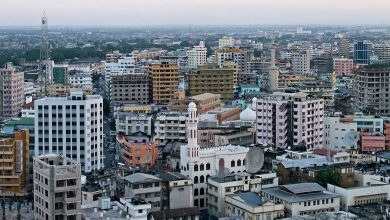
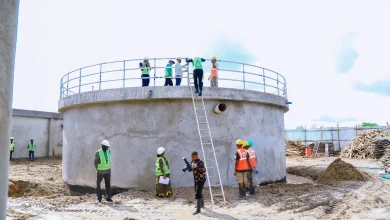
Where it all began: Why Tanzania was always the right choice
DAR ES SALAAM: THE idea of the Great Lakes regional organisation was born in Dar es Salaam in 2004. More than twenty years later, Tanzania is welcoming the region home, this time with women at the centre of the story. On the morning of 12 May 2026, a Standard Gauge Railway train departed Dar es Salaam carrying a delegation of parliamentarians and officials from across the Great Lakes Region.
The journey to Dodoma takes roughly three and a half hours, long enough to watch the coastal humidity give way to the drier plateau of Tanzania’s interior, and to reflect on what was waiting at the other end.
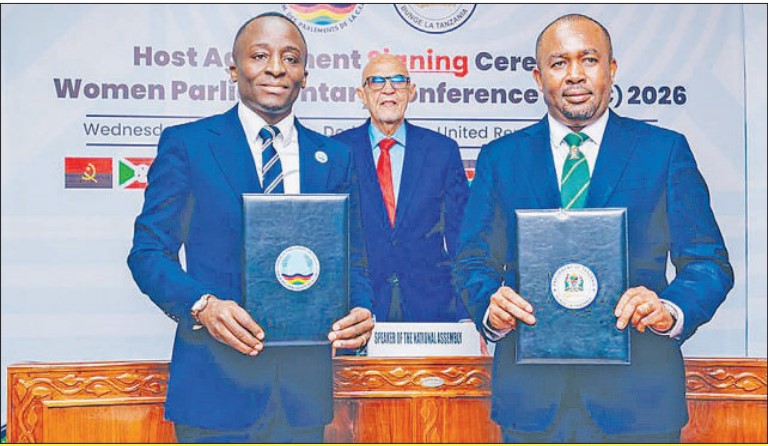
The occasion was the signing of a Host Agreement between the Forum of Parliaments of the International Conference on the Great Lakes Region (FP-ICGLR) and the Parliament of the United Republic of Tanzania, formalising Tanzania’s commitment to host the inaugural Women’s Parliamentary Conference (WPC) 2026, scheduled for November in Dar es Salaam.
But the train journey carried a deeper resonance. Tanzania had not simply agreed to host an event. It was, in a very real sense, receiving back something it had helped create.
The ICGLR itself was founded through a summit held in Dar es Salaam in November 2004. It was a moment of fragile optimism, with eleven heads of state gathering in a city whose name translates from Arabic as “Haven of Peace”, and the late President Benjamin William Mkapa was the host. His closing words at that summit are still quoted, more than twenty years later, by the organisation’s current Secretary General.
Addressing the gathering, Mkapa said: “Tanzania commits herself to being a firm partner toward the realisation of the hopes and yearnings of the people of the Great Lakes Region for peace and development.” He spoke of building a regional culture of tolerance, dialogue, and reconciliation.
He also cautioned that no omen could determine the outcome of their resolve; only commitment could do that. Ambassador Dr Deo Osmund Mwapinga, the FPICGLR Secretary General who spoke at the Dodoma ceremony in May, returned to those words twice. The repetition was not accidental. It was a reminder that what Tanzania agreed to in 2004 was not a one-off gesture, but an ongoing posture, one that the country has, by most measures, maintained.
“For us, bringing the Secretariat here is important because the original idea of establishing the organisation was born in Tanzania,” Mwapinga said. “Secondly, Tanzania has long been recognised as a leader in promoting political stability, peace and security in neighbouring countries.” Tanzania’s positioning as a regional anchor is not simply rhetorical.
The country has hosted peace negotiations for neighbouring states, maintained relatively stable democratic institutions across multiple electoral cycles, and absorbed significant numbers of refugees from countries across the Great Lakes. It is also the base from which the WPC’s conference management agency, SRC Studio Red Communications, is operating, a Pan-African agency headquartered in Dar es Salaam that is coordinating communications, logistics, and content production for the November gathering.
ALSO READ: Nation builders pay taxes before counting profits
The five-day FP-ICGLR mission that preceded the signing ceremony offered a glimpse of what the deeper relationship between the organisation and its host country looks like in practice. The delegation arrived at Julius Nyerere International Airport on 11 May, where they were received and filmed, with the airport footage forming part of a documentary record of the mission.
The following day, before boarding the SGR train, members of the delegation held courtesy calls with both the Clerk and the Speaker of the National Assembly in Dodoma.
The signing itself took place on 13 May, witnessed by Speaker of the National Assembly Mussa Zungu, who described Tanzania’s hosting role as both an honour and a shared commitment. Alongside Zungu stood FP-ICGLR ExCom President Sergio Vaz, who signed on behalf of the Forum, and the Clerk of the National Assembly, who signed on behalf of the Parliament of Tanzania.
The backdrop bore the flags of all twelve member states and the branding of the WPC, a conference whose date, venue and theme were now officially locked in. One detail in the Secretary General’s remarks at the ceremony points to something more specific about why the timing of this particular conference matters.
Tanzania, Mwapinga noted, launched its first National Action Plan on Women, Peace and Security for 2025 to 2029 last year, a domestic policy framework designed to implement UN Security Council Resolution 1325, which enshrines the right of women to participate in all aspects of peace and security decision-making.
A country hosting a regional women’s parliamentary conference while simultaneously implementing its own national gender and security plan is not simply providing a venue. It is offering a model.
The November conference is expected to produce a Regional Action Plan that all twelve member states can take home and use as a basis for similar national commitments. There is also an unavoidable symbolism in the person of President Samia Suluhu Hassan.
Africa’s only sitting female head of state will be presiding, by extension, over a country that has agreed to gather approximately 200 women legislators from twelve nations. When Special Seats MP Silvia Francis Gulla spoke at the signing ceremony, she named this directly: the WPC will convene under a woman president, in a country with a 38 per cent women’s parliamentary representation rate, to address a region-wide average of 28 per cent.
“We are making history under a woman president as we prepare to host a major conference for women parliamentarians from the Great Lakes Region. I see this as a great opportunity because it will bring women together to discuss various issues affecting women, including peacebuilding, where women play a significant role,” Gulla said.
The late President Mkapa said in 2004 that the conference in Dar es Salaam was a good omen. He was right about that. And he was right about the other thing, too: what would determine the outcome was not the omen, but the commitment. Twentytwo years on, Tanzania is still turning up.