When farmers reap big harvests without toxic chemicals
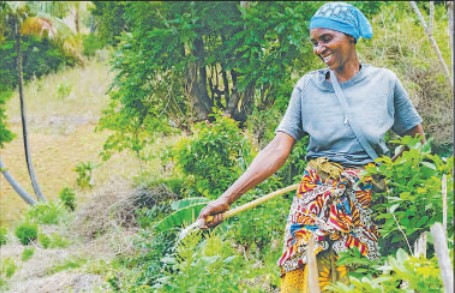
FOR years, farming in Ekenywa Village meant a familiar routine: buying chemical pesticides, hoping the rains would cooperate, praying pests would stay away and, at the end of the season, wondering whether the harvest would be enough to pay the bills. Today, however, farmers joke that some of the most powerful “farm workers” on their land are no longer found in bottles from agro-dealers for they grow on trees.
Neem, once just another shade tree in many homesteads, has become one of the village’s most trusted allies in protecting crops. Behind the smiles and improved harvests lies a remarkable transformation driven by agroecological farming, where organic pesticides, indigenous seeds and sustainable farming practices are helping farmers produce healthier crops, earn better incomes and access reliable markets.
The success stories emerged when journalists and agroecology stakeholders recently visited Ekenywa Village in Elitrument Ward, Arusha Region, where farmers openly shared how a change in farming methods has changed their lives.
Among those eager to tell her story was Loma Lotaswariake, a member of the Afya Group. She recalls a time when farming largely depended on chemical pesticides, with little thought given to what they were doing to people’s health or the environment.
Everything began to change after receiving training from the non-governmental organisations Research, Community and Organisational Development Associates (RECODA) and Island of Peace (IDP).
The training introduced farmers to agroecology, a farming approach that places equal importance on healthy soils, healthy crops and healthy people.
For Lotaswariake, one of the biggest lessons was understanding that productive farming starts beneath the surface. She learned that soil is far more than dirt it is home to countless living organisms that naturally break down organic matter and maintain fertility.
Protecting these organisms, she said, has become just as important as planting the seeds themselves. The programme also taught farmers how to prepare organic biopesticides using locally available natural materials instead of relying on chemical products containing toxic substances.
“We were taught methods of making organic biopesticides from natural ingredients instead of using toxic ones that affect our health and insects too,” she said.
One of the most effective solutions has been neem, whose natural properties help keep destructive pests away from crops without harming beneficial insects or exposing farmers to dangerous chemicals. For Lotaswariake, the results have been impossible to ignore.
“Right now, we no longer use chemical pesticides with toxins in farming, a situation that improves our health, but also gives us a guaranteed market for our crops,” she said.
The benefits extend beyond healthier food. Buyers are increasingly showing confidence in organically produced crops, giving farmers a dependable market while reducing the money they previously spent on expensive agricultural chemicals. A short distance away, the Afya Group has even more numbers to celebrate.
Its Chairperson, Lucas Lekuye, said agroecological farming has significantly increased maize production. Before adopting the new practices, farmers harvested an average of 12 bags of maize per acre.
Today, yields have climbed to about 20 bags per acre. For any farmer, that is the kind of arithmetic that requires no calculator. Lekuye said the group comprises 30 members, including 21 women, reflecting the important role women continue to play in promoting sustainable agriculture within the community. He said the increased production has gone hand in hand with improved market opportunities, providing members with reliable incomes and greater financial security.
ALSO READ: Who is watching development funds? PCCB has answers
Despite the encouraging progress, Lekuye believes one challenge still deserves urgent attention. He appealed to the Government and other development partners to support irrigation and improve water availability throughout the farming season, saying consistent water supplies would enable farmers to maximise the gains already being achieved through agroecology.
“The education I received on agroecology has liberated me a lot and I ask the government to invest in this farming because it is beneficial to the farmer, the land and the consumer,” he said.
Nearby, members of the Namaiyani Group tell a similar story of transformation. The group’s member, Martha Samweli, said agroecological farming has improved not only her household income but also her family’s health and overall quality of life.
The Namaiyani Group consists of 41 members, of whom 35 are women and six are men. Through the training programme, members have acquired practical skills in growing vegetables, bananas, orange-fleshed sweet potatoes and cassava using environmentally friendly farming methods.
They have also learned how to prepare and apply natural pesticides and, equally important, how to cultivate a savings culture that enables families to better manage their finances.
“We have learned vegetable farming, bananas, orange-fleshed sweet potatoes, cassava, spraying natural pesticides on the farm and saving, which enables us to run our lives,” she said.
Income diversification has also become part of the community’s strategy. Besides crop farming, members rear chickens and pigs for sale, providing additional income that helps households meet every day needs and cope with unexpected expenses.
According to Martha, the impact of the programme has spread beyond Ekenywa Village. “RECODA and IDP have helped us because we have been able to establish other groups in the neighboring village,” she said.
She believes one of the greatest benefits has been improved health. Previously, she said, consuming food produced using chemical inputs had adverse effects on her well-being. Since adopting agroecological farming, she feels healthier while spending less on production and enjoying better market prospects for her produce. Village Chairperson Wilson Piniel has watched the changes unfold from a different perspective.
For him, the arrival of RECODA and IDP has not only transformed farming practices but has also strengthened community participation and improved livelihoods, making local leadership considerably easier.
Piniel said his administration will continue supporting the projects to ensure the benefits are sustained for future generations. Behind these visible successes stands the Rural Innovation Participatory Action Transformation (RIPAT) Extension System.
According to RECODA Executive Director Josephine Ng’ang’a, the Sustainable Agriculture Project has applied the RIPAT model across ten villages, with each village establishing two farmer groups dedicated to agroecological farming. She said the model encourages practical learning, knowledge sharing and locally adapted farming solutions that empower communities to become selfreliant. Ng’ang’a noted that the Afya and Namaiyani groups have demonstrated encouraging results that deserve replication in other parts of the country.
She added that the project has improved both the value of farmers’ crops and the fertility of their soils, creating a stronger foundation for sustainable agricultural production. For Island of Peace Project Manager Ermelinda Temba, these achievements represent exactly what the organisation envisioned.
She said the Agro Agriculture Project in Arusha Region has shown how the RIPAT Extension System can transform communities by producing local farmer facilitators with specialised knowledge in vegetable production, poultry keeping and pig farming. These facilitators are now sharing their skills with fellow farmers, ensuring that knowledge continues to spread well beyond the original project beneficiaries.
Temba said IDP works in partnership with several agroecology centres, including RECODA, SJS Mwanga, Sustainable Agriculture Tanzania (SAT), MFEC, PPIZ and Bihawana, to promote environmentally sustainable farming practices across the region.
In Ekenywa Village, the evidence of that collaboration is visible not only in fuller granaries and healthier soils but also in the renewed confidence of farmers who now see agriculture as a pathway to prosperity rather than simply a struggle for survival. And if anyone still doubts that a humble neem tree can compete with a shelf full of chemicals, the farmers here have a simple response: they have the harvest to prove it.