

Vijana Platform empowers youth to drive national transformation
DAR ES SALAAM: ACROSS the world, young people are increasingly recognised as a driving force behind social, economic and political transformation. With more than 1.2 billion individuals aged between 15 and 24, according to the United Nations, youth represent not only a significant portion of the global population but also a critical resource for shaping the future.
Their energy, creativity and adaptability continue to influence industries, governance systems and innovation ecosystems. From digital entrepreneurship to civic engagement, young people are redefining how economies function and how societies evolve.
They are building startups, influencing public discourse and contributing to technological advancement at an unprecedented pace. Yet, despite their growing influence, many continue to face persistent challenges, including unemployment, limited access to capital, and underrepresentation in decision-making processes. Nowhere is this dual reality more pronounced than in Africa.
The continent has the youngest population in the world, with more than 60 per cent of its people under the age of 25. Institutions such as the African Union have consistently highlighted the importance of harnessing this demographic advantage through strategic frameworks like Agenda 2063, which positions youth as central to Africa’s long-term prosperity.
However, the promise of this demographic dividend is often constrained by structural barriers. Skills mismatches, limited employment opportunities, and restricted access to financing continue to hinder the full participation of young people in economic development. In response, governments and development partners across the continent have intensified efforts to invest in youth-focused programmes, digital innovation hubs and entrepreneurship platforms designed to unlock potential and create opportunities.
In Tanzania, the youth population forms a substantial share of the national demographic, making their role in development both significant and unavoidable. Recognising this, the government under Samia Suluhu Hassan has prioritised youth empowerment through a combination of policy reforms, institutional frameworks, and targeted initiatives.
These efforts are aimed at equipping young people with relevant skills, expanding access to opportunities, and enhancing their participation in national development processes.
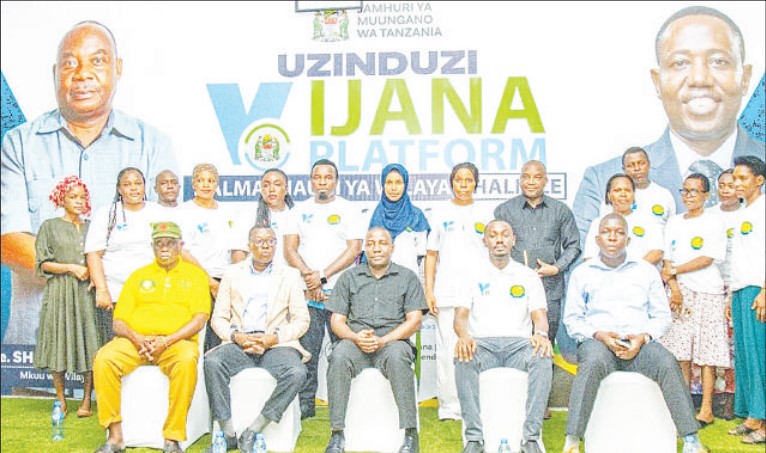
It is within this broader context that the launch of the “Vijana Platform” in Chalinze, Bagamoyo District, emerges as a timely and strategic intervention. Designed as a hub for youth engagement, the platform seeks to provide young people with access to information, skills development opportunities, and networks that can support their personal and professional growth.
Speaking during the launch, Bagamoyo District Commissioner Shaibu Ndemanga underscored the importance of recognising young people as active contributors to national progress rather than passive beneficiaries of future opportunities.
“Young people are not just leaders of tomorrow; they are leaders of today,” he said, emphasising that their energy and creativity are essential to the country’s development trajectory. However, he cautioned that this potential must be matched with a strong sense of responsibility.
Ndemanga drew attention to what he described as a critical but often overlooked issue the importance of understanding national history. He warned that a disconnect from historical context can leave young people vulnerable to misinformation and misinterpretation.
ALSO READ: TSN forum to unlock opportunities in Mwanza
“The greatest threat to any nation begins with the distortion of its history,” he said.
Without a clear understanding of Tanzania’s journey from independence through periods of challenge and progress young people may struggle to form informed perspectives about their country. He urged youth across the country to actively learn about Tanzania’s past, noting that such knowledge provides a foundation for responsible citizenship and informed decision-making.
In an era where information is abundant but not always accurate, this call carries particular relevance. Also speaking at the event, Acting Administrative Secretary of Bagamoyo District, Salum Gumbo, reinforced the central role of youth in shaping the nation’s future.
He described young people as both the backbone of the country and the primary engine for achieving longterm development goals. Gumbo encouraged youth to take their responsibilities seriously, noting that their numerical strength and workforce potential place them in a unique position to influence the country’s trajectory.
He referenced the philosophy of the Mwenge wa Uhuru as a symbol of unity, hope, and development, urging young people to embody these values in their daily lives. From a policy perspective, the government’s commitment to youth development was further highlighted by Godfrey Nyaisa from the President’s Office responsible for Youth Development.
He emphasised that youth issues are being given increased priority through deliberate institutional measures, including the establishment of a dedicated ministry. “This is not just a structural change,” he noted. “It is a clear demonstration of the government’s intention to listen to young people, understand their realities, and respond with practical solutions.” He explained that current initiatives are designed to create inclusive and impactful programmes that address key areas such as entrepreneurship, employment, innovation, and skills development.
The goal, he said, is to ensure that no young person is left behind as the country advances its development agenda. At the community level, the impact of such initiatives is already being recognised. Faiza Jamal, a resident of Chalinze, described the Vijana Platform as a timely and important development for young people striving to improve their livelihoods.
She noted that many youth possess ideas and the willingness to work but often lack guidance and access to reliable opportunities. By providing a space for information sharing, networking, and skills development, the platform helps bridge this gap.
“Through this platform, young people can connect, learn, and gain confidence,” she said, adding that such engagement is essential for fostering self-reliance and innovation. Faiza also highlighted the importance of digital literacy, encouraging young people to use their smartphones as tools for productivity rather than distraction. In a world where digital access is increasingly widespread, the ability to leverage technology effectively can significantly enhance economic participation.
Her observations reflect a broader shift in how youth engagement is being approached not merely as a policy objective but as a practical pathway to economic empowerment. By equipping young people with knowledge, skills, and networks, initiatives like the Vijana Platform aim to transform potential into tangible outcomes. While the platform itself is a local initiative, its significance extends beyond Chalinze.
It represents a model for how targeted interventions can support youth development in a structured and sustainable manner. By integrating education, entrepreneurship, and community engagement, it addresses multiple dimensions of empowerment simultaneously.
There is also an implicit recognition that youth development is not a onedimensional process. It requires coordination between government institutions, local authorities, financial systems, and the young people themselves.
Each plays a role in creating an environment where opportunities can be accessed and utilised effectively. As Tanzania continues to implement its long-term development vision, the role of youth will remain central. Their participation is not only desirable but necessary for achieving inclusive growth and social cohesion.
Platforms such as Vijana serve as practical tools for translating policy into action, ensuring that young people are not only included in development narratives but are actively shaping them.
In the end, the success of such initiatives will depend on sustained engagement, continuous learning, and the willingness of young people to seize the opportunities presented. The foundation may be laid through policy and programmes, but the outcomes will ultimately be determined by how effectively that foundation is built upon. In Chalinze, the launch of the Vijana Platform marks a step in that direction—a reminder that while the future belongs to the youth, their influence is already being felt in the present.


