TZ’s institutional approach to national questions
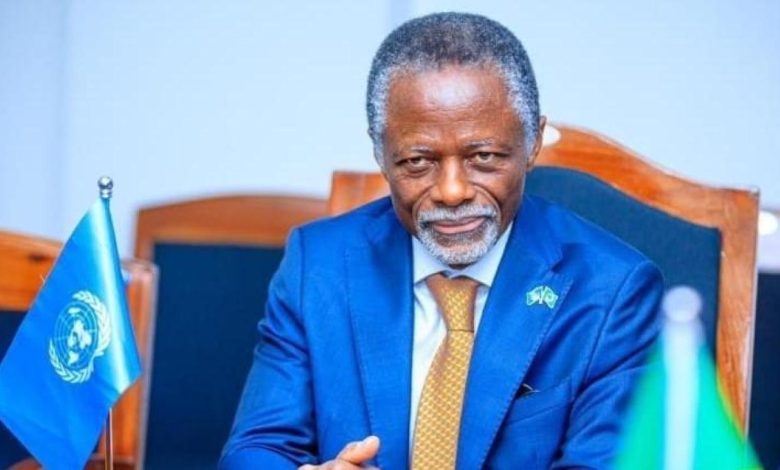
DODOMA: “WELCOME to Tanzania.” Those words have recently taken on renewed meaning as the Government of Tanzania extends a gesture of openness and engagement to distinguished international visitors.
Among them is the United Nations Secretary-General’s Special Representative to the African Union, Mr Parfait Onanga-Anyanga, who has already arrived in the country.
Media coverage has shown the UN envoy meeting Tanzania’s President Dr Samia Suluhu Hassan, as well as retired Chief Justice Mohamed Chande Othman, who chairs the Commission of Inquiry established to investigate the incidents that occurred during and after the October 2025 General Election.
These are among the key stakeholders the UN representative is engaging with during his visit to Tanzania. The meetings form part of a broader effort by the United Nations to follow developments in the country and encourage constructive dialogue. Another high-level visit is expected soon.
According to a recent statement issued by the Commonwealth Secretariat, a delegation led by the Secretary-General’s Special Envoy is also expected to travel to Tanzania this month. These visits by respected international figures represent an important step in the right direction.
They send a clear message that Tanzania is prepared to engage both domestically and internationally in addressing the concerns that arose following the events surrounding the October 2025 elections.
One hopes that such engagement will continue, and that Tanzania will maintain the openness that befits a responsible member of the global community.
In many ways, the seeds of this constructive path were planted earlier when the Government decided to establish a Commission of Inquiry to examine the incidents.
The decision signalled a willingness to investigate what had happened and to support a process of reflection and national reconciliation. The violence that occurred during and after the elections had already indicated that something had gone wrong and required careful examination.
More importantly, it raised concerns that Tanzania might be drifting away from the peaceful trajectory that has long defined its national character and international reputation. It is therefore notable that the decision to establish the Commission has received recognition beyond Tanzania’s borders.
Addressing the 61st Session of the United Nations Human Rights Council in Geneva on 1 March 2026, the UN High Commissioner for Human Rights, Volker Türk, described the establishment of the commission as “a welcome development,” acknowledging Tanzania’s willingness to investigate the events surrounding the October elections.
From time to time, nations encounter complex questions that demand careful investigation beyond the ordinary mechanisms of government administration.
Issues affecting national governance, public confidence, or social stability often require independent processes capable of establishing facts, collecting public views, and recommending practical solutions.
In Tanzania, one of the institutional mechanisms historically used to address such challenges is the Commission of Inquiry.
Such commissions are not unique to Tanzania. Around the world, governments have established similar bodies to investigate sensitive national issues, clarify the circumstances surrounding major events, and provide guidance for future policy decisions.
In Tanzania, their establishment is grounded in the country’s constitutional and legal framework and forms part of a long-standing tradition of addressing complex national questions through lawful and structured institutional processes.
In order to ensure that the inquiry left no stone unturned, the Government issued a comprehensive set of terms of reference to guide the Commission’s work.
The Commission was tasked with investigating the root causes of the violence that occurred during and after the General Election of 29 October 2025, including examining the motives of those involved in planning and carrying out the acts.
It was also mandated to assess the extent of the damage caused — ranging from loss of life and injuries to destruction of property and infrastructure, as well as the broader social and economic consequences of the violence.
In addition, the Commission was required to examine the context in which the incidents occurred and review the measures taken to detect, prevent, and respond to the acts of violence.
Importantly, the inquiry was expected to recommend improvements aimed at strengthening shared responsibility between the Government and citizens in maintaining peace, the rule of law, human rights, and good governance.
It was also tasked with proposing frameworks for inclusive national dialogue and reconciliation in order to prevent similar events from recurring in the future.
The Commission was further empowered to investigate any other matters it considered relevant and aligned with its mandate.
The Commission is now understood to be approaching the final stages of its work, with both Tanzanians and members of the international community increasingly anticipating the release of its report.
Given the breadth and significance of its terms of reference, many observers – including sceptics – expect that its findings and recommendations will provide an important opportunity to clarify the circumstances surrounding the incidents and chart a constructive path forward.
Ultimately, the hope is that the Commission’s work will contribute to national healing, strengthen public confidence in institutions, and reinforce Tanzania’s long-standing commitment to peace, dialogue, and responsible governance.
Legal foundations in Tanzanian law Clarity about the legal foundations of commissions of inquiry is important, as it provides the framework through which both the process and the eventual report can be fairly assessed.
In Tanzania, the authority to establish a Commission of Inquiry is grounded in both the Constitution of the United Republic of Tanzania, 1977 and statutory law, particularly the Commissions of Inquiry Act, Cap. 32 (Revised Edition 2022).
ALSO READ: African Union’s PSC calls for commitment to the South Sudan peace
Under Article 36(1) and 36(2) of the Constitution, the President of the United Republic of Tanzania is vested with executive authority and is empowered to exercise functions necessary for the execution of government responsibilities.
In practice, this constitutional authority provides the basis upon which the President may appoint commissions to investigate matters of public importance.
The Commissions of Inquiry Act further operationalises this power by providing the legal framework for the establishment, mandate, and functioning of such commissions. Once established, a Commission of Inquiry operates with defined legal powers.
It may summon witnesses, collect evidence, receive submissions from individuals and institutions, and examine relevant documents necessary for the discharge of its mandate.
However, a commission does not function as a court of law. Rather, it serves as a factfinding mechanism, tasked with gathering information, analysing circumstances surrounding particular events, and producing recommendations that may guide future policy, administrative, or institutional decisions.
In many instances, such commissions are chaired by respected public figures, including senior judges or experienced professionals.
The involvement of individuals with strong professional reputations helps strengthen public confidence in the commission’s independence, credibility and integrity.
Against this legal background, a natural question may arise: where does the Commission for Human Rights and Good Governance (CHRAGG) fit into this picture? It is important to clarify that the establishment of a Commission of Inquiry does not in any way replace or diminish the role of CHRAGG.
The Commission for Human Rights and Good Governance is itself a constitutional body established under Article 129 of the Constitution of the United Republic of Tanzania, with its functions and powers further elaborated under Article 130 and the Commission for Human Rights and Good Governance Act.
Its mandate includes promoting and protecting human rights, investigating complaints related to violations of rights or abuse of power, and promoting principles of good governance in public institutions.
In this context, the work of a Commission of Inquiry should be understood as complementary rather than substitutive.
While the Commission of Inquiry was established to examine the specific circumstances surrounding the incidents of violence linked to the October 2025 elections, CHRAGG retains its independent constitutional responsibility to investigate human rights concerns and promote accountability within its mandate.
The constitutional framework governing CHRAGG also provides strong safeguards for its institutional independence.
In exercising its mandate, the Commission operates as an autonomous constitutional body and is expected to discharge its functions without being subject to directives or instructions from any person, government department, political party, or public or private institution [Article 130(2)].
This principle of non-interference is central to ensuring that the Commission carries out its responsibilities impartially and in accordance with the Constitution.
Within this framework, CHRAGG retains the authority to undertake investigations relating to human rights and administrative justice on its own initiative or upon receiving complaints.
The constitutional design therefore requires that CHRAGG performs its duties independently and on the basis of its own assessment of the matters falling within its jurisdiction.
In keeping with this arrangement, government authorities do not issue instructions to CHRAGG on how it should exercise its mandate, as doing so would be inconsistent with the constitutional safeguards intended to preserve its autonomy.
Taken together, the existence of these parallel institutional mechanisms reflects the maturity of Tanzania’s governance system in addressing national challenges through established internal processes.
By relying on lawful institutions such as commissions of inquiry and constitutional oversight bodies, the country demonstrates its capacity to examine difficult questions through structured and legitimate mechanisms grounded in its own constitutional framework.
Sovereignty and the responsibility of States From the perspective of international law, the establishment of commissions of inquiry also reflects the sovereign authority of states to organise their internal governance mechanisms.
The principle of sovereign equality of states, recognised under the Charter of the United Nations, affirms that each country has the right to manage its political and legal affairs through institutions created under its own constitution and laws.
In particular, Article 2(1) of the Charter recognises the sovereign equality of all Member States, while Article 2(7) emphasises the principle of non-intervention in matters that fall within the domestic jurisdiction of states.
Within this framework, commissions of inquiry represent one of the tools available to governments seeking to address complex national issues.
They provide structured platforms through which states can investigate events, gather evidence, and consult stakeholders while maintaining responsibility for managing domestic affairs through nationally established legal processes.
Modern international practice increasingly emphasises that sovereignty is accompanied by a duty of responsible governance.
Contemporary human rights law recognises that states have an obligation to investigate serious incidents affecting the rights and welfare of individuals within their jurisdiction.
Instruments such as the International Covenant on Civil and Political Rights emphasise the responsibility of states to ensure the protection of fundamental rights and to provide effective remedies where violations occur.
In many countries, commissions of inquiry have therefore become an established mechanism through which governments discharge these responsibilities.
By creating formal processes to examine facts, hear from affected parties, and recommend corrective measures, such commissions help ensure that national institutions are able to respond to public concerns in an orderly and transparent manner while remaining consistent with both constitutional principles and broader international legal standards.
As Tanzania welcomes international visitors including Parfait Onanga-Anyanga and delegations associated with the Commonwealth Secretariat, the message is simple: national questions are being addressed through institutions established under the country’s own constitutional framework.
Understanding these processes is essential for appreciating how Tanzania manages complex national moments.
The next article turns to another key question – whether the members of the Commission of Inquiry possess the professional competence, experience and integrity required to command public confidence in their work.