

Economic analysis of the Chinese ambassador’s speech and the high-tech centre’s benefits

DAR ES SALAAM: THE speech delivered by the Chinese Ambassador to Tanzania at the opening of the “Experience China” HighTech Fair on 1st May 2026 is more than a mere diplomatic statement on technological cooperation.
Economically and strategically, the speech indicates China’s long-term goal to strengthen its technological, industrial, and digital collaboration with Tanzania, positioning the country as a key innovation and logistics hub for East and Central Africa. The address also illustrates how China is increasingly integrating technology cooperation into its wider economic diplomacy and industrial partnership approach in Africa.
A key message in the speech highlights scientific and technological innovation as a strategic pillar for boosting productivity and national strength. This is economically important because it supports Tanzania’s development goals of industrialisation, digital transformation, and regional economic integration.
The speech basically presents technology not just as a modern convenience but as a powerful economic instrument that can change industries, employment, productivity, and regional trade competitiveness.
The ambassador highlighted China’s achievements in artificial intelligence, robotics, digital economy infrastructure, renewable energy, electric vehicles, high-speed rail, and aerospace technologies.
By showcasing these achievements in Tanzania, China is signalling that Africa should not remain solely a consumer market for imported products but should gradually integrate into technology driven industrial ecosystems.
Economically, this significantly affects Tanzania and nearby land linked nations such as Zambia, Rwanda, Burundi, Uganda, Malawi, and the Democratic Republic of the Congo.
Tanzania’s strategic location offers a natural edge as a regional logistics and trade centre. With developments such as the Port of Dar es Salaam, the Standard Gauge Railway (SGR), highways, and digital infrastructure, Tanzania is steadily emerging as a gateway linking the Indian Ocean with Central and East Africa.
The establishment of a high-tech exhibition and innovation centre therefore has the potential to become a regional platform for technology transfer, skills development, digital commerce, industrial networking, and entrepreneurship for young people across the region. A significant economic impact of the speech concerns the digital economy.
The ambassador highlighted that Chinese firms like Huawei have contributed to Tanzania’s telecommunications progress, including 5G networks and fibre-optic backbone systems. This is crucial because digital infrastructure is increasingly regarded as essential to economic growth, on par with roads and electricity.
Enhanced digital connectivity broadens opportunities across mobile banking, fintech, e-commerce, online education, remote work, digital entrepreneurship, and innovation ecosystems.
For young people, particularly in urban and semi-urban regions, it opens doors beyond conventional jobs. An increasing number of African youths are participating in fields like digital marketing, software development, online retail, logistics technology, content creation, and fintech services.
The centre could serve as a catalyst for digital entrepreneurship by introducing Tanzanian youths to emerging technologies like AI systems, smart devices, digital logistics platforms, and data-driven business solutions. Rather than depending only on traditional employment, young people might increasingly start businesses focused on technology-enabled services and innovation-driven ventures.
Another significant economic advantage pertains to industrial productivity. The ambassador highlighted China’s expertise in intelligent manufacturing, robotics, and industrial technologies.
Meanwhile, Tanzania’s industrial sector continues to struggle with low productivity, minimal automation, limited adoption of new technologies, and high production costs. The high-tech centre could introduce affordable industrial technologies to local businesses and young entrepreneurs, tailored to African markets.
Small manufacturers in sectors like textiles, agro-processing, construction materials, packaging, and logistics might benefit from access to modern machinery and digital production systems, boosting their efficiency and competitiveness.
ALSO READ: Good communication, trust and why good policies still fail
This is particularly significant because many African economies face low industrial productivity and rely heavily on imported finished goods.
Effective technology transfer could enable Tanzania and neighbouring countries to gradually enhance local value addition and decrease their reliance on external manufacturing. The speech also emphasises agricultural transformation as a major focus.
The ambassador pointed out China’s collaboration in hybrid rice technology, agricultural demonstration centres, drone use, mechanised farming, and modern agricultural systems. Despite agriculture being the primary employer of young people in Tanzania and nearby countries, productivity levels are still relatively low.
Young people frequently steer clear of agriculture, viewing it as labor-heavy, low-paying, and outdated in technology. Yet, the integration of modern technology has the potential to reshape this image.
Tools like agricultural drones, precision farming, advanced irrigation, smart logistics, satellite surveillance, and digital marketplaces can turn farming into a more lucrative and contemporary industry. The centre could thus motivate a new wave of agritech entrepreneurs who integrate agriculture with digital technologies.
Young innovators might develop businesses focused on agricultural data services, smart irrigation, food processing, logistics, supply chain management, and export-focused agribusiness.
This is particularly important for land linked countries like Zambia, Rwanda, Burundi, and the DRC, which rely heavily on agriculture and regional trade routes via Tanzania. Improving access to modern agricultural technologies and logistics through the Tanzanian innovation ecosystem could enhance regional food security and boost agricultural trade.
The speech also emphasised renewable energy collaboration, such as solar projects and rural electrification initiatives. These have significant economic consequences because access to energy is still one of the greatest hurdles to industrial growth and entrepreneurship throughout Africa.
Many youth-led enterprises face challenges due to unreliable electricity and costly energy. Renewable energy solutions like solar mini-grids, off-grid systems, and batteries can overcome these obstacles and open up new business opportunities for young entrepreneurs.
The growing global green economy provides new opportunities for Africa to participate in renewable energy supply chains. Youths can engage in activities such as installing and maintaining solar panels, managing battery systems, supporting green logistics, promoting clean cooking solutions, and developing energyrelated startups.
China’s leadership in solar technology and lithium batteries creates opportunities for technological partnerships and knowledge exchange in industry.
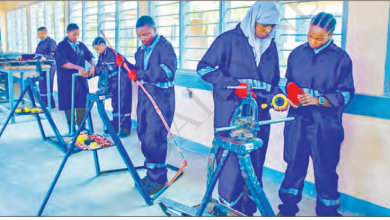
Another important aspect of the speech was emphasising the localisation of technology and capacity building. The ambassador mentioned initiatives like scholarships, training programmes, technical exchanges, and talent development efforts targeted at Tanzanian youths.
This is crucial because sustainable technological transformation depends on developing local human capital. Africa’s effective industrialisation relies on engineers, software developers, technicians, data analysts, digital innovators and industrial experts.
By educating young people, China is contributing to building a future workforce equipped to support digital economies and industrial growth.
The long-term success of this cooperation hinges on African countries’ ability to negotiate more extensive technology transfer and promote local industrial participation. A common risk in foreign technology partnerships is becoming dependent without fostering local innovation.
Tanzania and other African nations should therefore focus on ensuring that such collaborations involve local manufacturing, research efforts, vocational training, and skills development.
Economically, the centre could further enhance regional entrepreneurship ecosystems. Landlinked nations typically encounter higher logistics expenses, limited port access, fragmented markets, and weaker industrial infrastructure.
Tanzania, serving as a regional gateway, suggests that technological and logistical advancements from the centre could eventually boost regional trade integration under the African Continental Free Trade Area (AfCFTA).
For instance, by leveraging digital logistics systems, smart customs management, transport technologies, and e-commerce infrastructure, SMEs and young entrepreneurs across East and Central Africa can enhance the efficiency of cross-border trade.
The ambassador’s speech also highlights wider geopolitical and economic changes. China now views Africa less just as a resource provider, but as a key economic and technological partner within the Belt and Road Initiative. Technology collaboration is evolving into a core component of China’s ongoing strategy to enhance industrial, digital, and trade links with developing nations.
For Tanzania, this offers both opportunities and responsibilities. The nation needs to position itself not just as a technology recipient but also as an engaged player in regional industrialisation and innovation networks.
With effective management, the high-tech centre has the potential to transform from merely an exhibition facility into a multifaceted hub. It could serve as an innovation hub, a platform for business incubation, a technology transfer ecosystem, a regional training centre, and a platform for industrial partnerships across East and Central Africa.
Ultimately, the ambassador’s speech emphasises that future economic competitiveness will rely more on technology, innovation, digital infrastructure, and human capital development.
For Tanzania and neighbouring landlinked nations, the centre could foster a new wave of young entrepreneurs who are technologically skilled and capable of leading initiatives in industrialisation, digital trade, agricultural modernisation, and regional economic integration in the coming years.



Hi there, just wanted to say, I enjoyed this post.
It was inspiring. Keep on posting!