TZ steps up meteorological services to safeguard lives, livelihoods
DAR ES SALAAM: AS the World today commemorates the World Meteorological Day (WMD), Tanzania is highlighting the critical role of weather and climate observation in protecting communities, infrastructure and national development.
The 2026 WMD, themed “Observing Today, Protecting Tomorrow,” serves as a reminder that timely weather and climate information is not just a tool for planning, but a vital safeguard for lives and livelihoods.
Speaking on this occasion, Prof Makame Mbarawa, Minister for Transport, has emphasised the government’s strategic commitment to strengthening meteorological infrastructure and services.
“As we mark the WMD, I have great pleasure also to join the global community in commemorating the 76th Anniversary of the World Meteorological Organisation,” Prof Mbarawa said.
He added: “This day provides an opportunity to recognise and acknowledge the significant contribution of the National Meteorological and Hydrological Services across the world in saving lives, protecting property and supporting sustainable socioeconomic development.”
He stressed the importance of the WMD 2026 theme, noting that strengthening observation systems allows countries like Tanzania to anticipate hazards and reduce risks associated with the increasing frequency and intensity of extreme weather and climate events.
Prof Mbarawa highlighted the indispensable role of reliable weather information for decision-making across multiple sectors.
“Timely and accurate weather and climate forecasting enhance efficiency and effectiveness in transport, infrastructure, construction, agriculture, energy, water, health, mining and other climate-sensitive sectors,” he said.
However, he cautioned that climate change continues to pose serious challenges, with extreme events threatening livelihoods and development.
Globally, between 1970 and 2021, extreme weather events caused an estimated 4.3 trillion US dollars in losses and nearly 2 million deaths, over 90 per cent of which occurred in developing countries.
“These figures underscore the dire need for enhanced observation and monitoring systems, as well as robust early warning capabilities, to protect lives and property,” the Minister added.
Investing in meteorological infrastructure
According to Prof Mbarawa, Tanzania has made deliberate investments in meteorological infrastructure and early warning systems, including the use of Artificial Intelligence (AI) and modern technology.
“Investing in weather and climate services is not a cost to taxpayers but an investment in national security, economic stability and long-term resilience,” he said.
The Minister linked these initiatives to Tanzania Development Vision 2050 (Dira 2050), launched last year, which recognises climate change as a major risk to national growth and security.
Pillar three of the Vision, Environmental Integrity and Climate Change Resilience, emphasises building a climate-ready nation capable of safeguarding people, infrastructure, and property from natural and man-made disasters.
“Climate change, characterised by global warming, erratic weather patterns and increasingly frequent extreme events, disproportionately affects climate-sensitive sectors, which form the backbone of Tanzania’s economy. Strengthening weather and climate observation and monitoring is critical for informed decision-making and sustainable development,” Prof Mbarawa said.
Under President Dr Samia Suluhu Hassan, Tanzania has prioritised the modernisation of meteorological services, ensuring that reliable weather and climate information reaches communities at all levels. Key initiatives include the Meteorological Instrument Calibration Centre in Dar es Salaam, which will enhance observation capacity and improve data accuracy.
Prof Mbarawa highlighted collaboration with international partners, particularly the WMO, through initiatives such as the Systematic Observations Financing Facility (SOFF) and the National Early Warning for All (EW4ALL) programme.
Through SOFF, Tanzania has procured nine new surface Automatic Weather Stations, four upperair stations and upgraded 18 surface AWS and one upperair station.
“These investments greatly enhance the operational capacity and efficiency of the Tanzania Meteorological Authority (TMA), enabling accurate and timely services that safeguard communities and support our economy,” he said.
Prof Mbarawa urged all stakeholders including government institutions, development partners, the private sector, media and the public to support meteorological services and effectively use weather and climate information.
“Let us continue to invest in meteorological observation systems now to protect the future of our beloved country and our people,” he said.
In his remarks, Dr Ladislaus Chang’a, Director General of the TMA, reiterated the central role of meteorology in building a climateresilient society.
Dr Chang’a, who also serves as Tanzania’s Permanent Representative to the WMO and Vice-Chair of the Intergovernmental Panel on Climate Change (IPCC), highlighted the importance of observation systems in informing national socio-economic decision-making.
“This year’s theme, ‘Observing Today, Protecting Tomorrow,’ reminds us that weather and climate observations form the foundation of all we do. From surface and upper-air stations to radar and hydrological networks, these systems allow us to anticipate hazards, provide timely information and safeguard communities,” Dr Chang’a said.
ALSO READ: SADC centre commends TMA for quality weather services
Strengthening observation networks
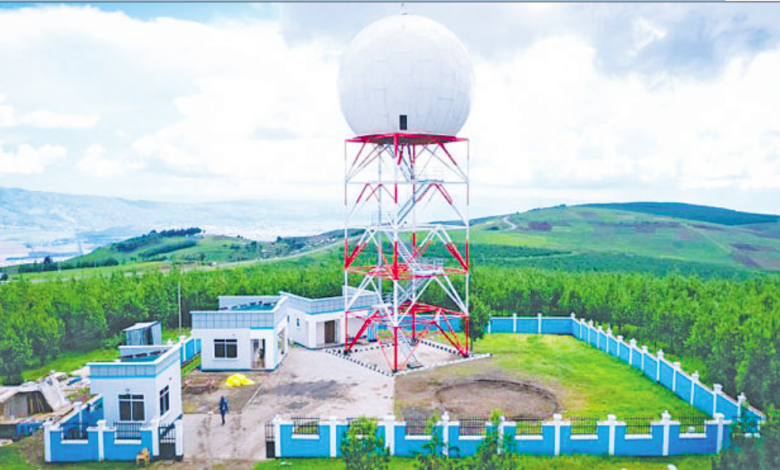
Dr Chang’a detailed Tanzania’s investments in meteorological infrastructure. These include five operational weather radars in Mwanza, Dar es Salaam, Mtwara, Kigoma and Mbeya, with two more planned.
Modern instruments have been deployed nationwide, including 50 Automatic Weather Stations (AWS), 60 automatic rain gauges, 15 agrometeorological AWS and 10 Aviation Meteorological Systems (AVIMET).
Additionally, the Authority has installed a High-Performance Computing (HPC) cluster to support advanced data processing and forecasting.
Modern forecasting systems now enable more accurate predictions, supporting both life-saving early warnings and economic activities.
Construction projects such as the Eastern Zone building and Tsunami Warning Centre in Dar es Salaam aim to provide enhanced early warnings for coastal areas, while the Calibration Centre will save time and costs previously spent sending instruments abroad for calibration.
Leveraging technology and innovation TMA has embraced Artificial Intelligence, Machine Learning and Big Data Analytics to improve service delivery.
Innovations like the Digital Meteorological Observatory (DMO), Marine Meteorological Information System (MMIS) and Meteorological Aviation Information System (MAIS) streamline data collection, management and dissemination, allowing Tanzanians to receive tailored forecasts and alerts.
Dr Chang’a emphasised that technology, coupled with robust observation networks, strengthens community resilience and sector-specific decision-making, from agriculture to aviation and marine transport.
Human capital and training
Skilled personnel remain at the heart of effective meteorological services. TMA’s National Meteorological Training Centre (NMTC) in Kigoma offers specialised training in observation, climate monitoring, radar meteorology, ICT and climate change.
Higher-level programmes from Bachelor to Doctorate degrees are provided in collaboration with the University of Dar es Salaam and the Nelson Mandela African Institute of Science and Technology (NM-AIST).
“Investment in human capacity ensures that Tanzania’s meteorological services remain cutting-edge and capable of protecting lives and livelihoods,” Dr Chang’a said.
He also stated that the country continues to play an influential role on the international stage.
Fifteen Tanzanian experts serve in WMO working groups, commissions and the IPCC. Notably, Dr Chang’a was elected ViceChair of the IPCC in July 2023.
Other leaders, such as Dr Pascal Waniha and Dr Hamza Kabelwa, hold senior positions in WMO commissions and committees, shaping global standards for meteorological services.
TMA also provides technical support to other African countries, including Burundi, South Sudan, Namibia and Zimbabwe, reinforcing Tanzania’s aspiration to be a regional hub for meteorological knowledge, innovation and excellence.
Tanzania’s meteorological services are strengthened through partnerships with development organisations and the WMO. Programmes like SOFF and EW4ALL focus on expanding observation networks and improving early warning capabilities.
These initiatives ensure that even the most vulnerable communities receive timely alerts.
As Tanzania celebrates WMD 2026, both the Minister and TMA Director General emphasised that observation is the first step toward protection. Every dataset, forecast and early warning is ultimately aimed at safeguarding people, property and economic development.
“Let us work together to observe today and protect tomorrow,” Dr Chang’a said.
“Ensuring a safer, more resilient and sustainable future is a shared responsibility, and weather, climate and water connect us all.”
In Tanzania, the commitment to meteorological services reflects a broader vision for national resilience, innovation and sustainable development.
From modern infrastructure and advanced technology to skilled personnel and regional leadership, the country is positioning itself to meet the challenges of climate change head-on while protecting the well-being of its citizens.