

TZ pushes for tougher global plastic treaty over toxic chemicals
DAR ES SALAAM: AS the world moves closer to finalising a legally binding global treaty aimed at ending plastic pollution, Tanzania is increasingly placing human health and environmental safety at the centre of the conversation, particularly over the growing concern surrounding hazardous chemicals found in plastic products used every day.
From bottled drinking water and juice containers to food packaging and household storage materials, plastics have become deeply woven into modern life.
Yet behind their convenience lies a dangerous reality: many plastic products may contain toxic chemicals such as phthalates and bisphenols, substances now drawing serious concern from environmental experts, scientists, and policymakers.
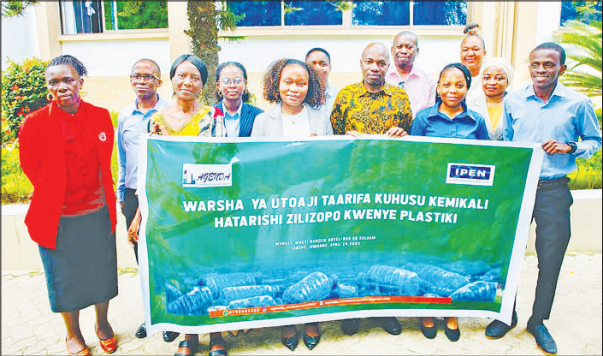
This issue took centre stage during a stakeholders’ workshop held in Dar es Salaam on recently where environmental experts, civil society actors, and industrial stakeholders met to contribute Tanzania’s position ahead of the upcoming phase of the Global Plastic Treaty negotiations.
The treaty, being negotiated under the United Nations Environment Programme’s Intergovernmental Negotiating Committee (INC), is designed to address plastic pollution across its full life cycle from production and design to consumption, disposal, and recycling.
UNEP confirms that the process has now reached preparations for INC-5.4, expected later this year, following the resumed fifthsession discussions held in Geneva in February 2026.
Speaking during the workshop, Senior Programme Officer from Agenda for Environment and Responsible Development (AGENDA), Silvani Mng’anya, said Tanzania must ensure the treaty addresses dangerous chemicals embedded in plastic products, particularly those that come into direct contact with food and beverages.
“Our goal is to ensure this treaty deeply considers hazardous chemicals present in plastics, especially food and beverage packaging, because these substances pose risks to both human health and the environment,” he said.
He added that, “Phthalates are chemical compounds commonly added during plastic manufacturing to make products softer, more flexible, and more durable. They are often found in packaging films, plastic wraps, and containers.
Bisphenols, including the widely discussed Bisphenol A (BPA), are used to make plastics harder, more rigid, and long-lasting.”
“Health experts have long warned that these chemicals can migrate from plastic containers into food, water, milk, and juices, particularly when exposed to heat, prolonged storage, or poor-quality production standards,” he emphasised. He mentioned that, “According to data presented by AGENDA during the workshop, Tanzania currently has no specific national regulations that set clear limits on phthalates and bisphenols throughout the entire plastic life cycle.”
While the country has made significant progress in tackling plastic pollution through regulations such as the 2019 ban on plastic carrier bags and the 2022 prohibition of plastic bottle cap seals, there remains a regulatory gap when it comes to toxic chemical content within plastics themselves.
Existing frameworks include the Environmental Management (Prohibition of Plastic Carrier Bags) Regulations, 2019, the Industrial and Consumer Chemicals (Management and Control) Regulations, 2020, and the National Environmental Policy, 2021.
However, none specifically establish maximum allowable limits for phthalates and bisphenols in consumer plastic products. This legal gap is becoming increasingly concerning as scientific studies continue to confirm the presence of these chemicals in Tanzania’s environment.
A recent study conducted along the Tanzanian coastline found measurable levels of phthalates in marine sediments, seawater, and shellfish collected from Dar es Salaam, Tanga, Mtwara, and Zanzibar, confirming the spread of plastic-related chemical contamination into aquatic ecosystems.
Researchers warn that once released into the environment, these chemicals can persist in soil, water bodies, and marine food chains, ultimately finding their way back into human consumption.
Other local studies have also raised concerns over consumer exposure through bottled water and packaged drinks sold in Dar es Salaam.
According to environmental health experts, prolonged exposure to phthalates and bisphenols has been linked to reproductive disorders, hormonal disruption, obesity, diabetes, asthma, cancer risks, and neurodevelopmental complications.
These substances are particularly known as endocrine-disrupting chemicals, meaning they interfere with the body’s hormonal systems by affecting estrogen and testosterone regulation. AGENDA Executive Secretary Dorah Swai stressed that the solution must begin at the source. And in environmental science, we are taught that solutions must begin at the source.
“We cannot continue producing products with hazardous chemicals and then later try to control the damage after they have entered the market,” she remarked. “Globally, plastic production continues to rise at alarming levels.
ALSO READ: COLUMN: MIND YOUR LANGUAGE. How possible can somebody loss his genitalia!!!?
According to international environmental estimates, the world produces more than 460 million tonnes of plastic every year, with millions of tones ending up in oceans and land ecosystems annually,” she factored out. “Environmental groups argue that unless the forthcoming treaty includes strict controls on toxic additives such as phthalates and bisphenols, the world risks solving one problem while leaving another equally dangerous one unresolved,” Mrs Swai explained.
She noted, “The country hosts plastic manufacturing facilities, recycling plants, and receives imported plastic products, all of which may contain varying grades of these chemicals depending on quality standards.”
One of the participants Theophil Andrew from PETpro-Tanzania emphasised the importance of stronger laws and innovation in safer manufacturing technologies.
“We need stronger policy and legal frameworks that regulate these chemicals and encourage the use of safer alternative technologies in plastic production,” he said.
He added that Tanzania’s participation in the treaty discussions offers an opportunity to influence global standards while simultaneously strengthening domestic regulations.
“As the world prepares for the decisive next phase of negotiations, Tanzanian stakeholders are calling on the government, environmental authorities, manufacturers, and international delegates to push for a treaty that protects people and ecosystems across the entire plastic life cycle,” he mentioned.
For many experts, this is no longer only an environmental issue it is a human health emergency hidden in everyday convenience. From the water people drink to the food they store, the invisible chemicals in plastics may be silently shaping the future health of communities.
With treaty negotiations approaching a critical conclusion later this year, Tanzania’s voice may prove vital in ensuring that the final agreement not only tackles visible plastic waste, but also the toxic chemicals embedded within it.



Some really great information, Sword lily I found this.
Very interesting details you have mentioned, regards for posting.
Thanx for the effort, keep up the good work Great work, I am going to start a small Blog Engine course work using your site I hope you enjoy blogging with the popular BlogEngine.net.Thethoughts you express are really awesome. Hope you will right some more posts.
I like what you guys are up also. Such intelligent work and reporting! Carry on the excellent works guys I’ve incorporated you guys to my blogroll. I think it’ll improve the value of my website 🙂
whoah this blog is excellent i really like studying your posts. Keep up the good paintings! You know, lots of individuals are hunting round for this information, you can help them greatly.
I like this post, enjoyed this one regards for putting up.
Hello! I know this is kinda off topic but I was wondering which blog platform are you using for this website? I’m getting fed up of WordPress because I’ve had issues with hackers and I’m looking at alternatives for another platform. I would be great if you could point me in the direction of a good platform.
I truly prize your work, Great post.
Its wonderful as your other posts : D, regards for posting. “Too much sensibility creates unhappiness too much insensibility leads to crime.” by Charles Maurice de Talleyrand.
Greetings from Carolina! I’m bored to tears at work so I decided to browse your blog on my iphone during lunch break. I enjoy the knowledge you provide here and can’t wait to take a look when I get home. I’m amazed at how fast your blog loaded on my mobile .. I’m not even using WIFI, just 3G .. Anyhow, good blog!
obviously like your web site however you have to take a look at the spelling on several of your posts. A number of them are rife with spelling issues and I in finding it very troublesome to inform the truth nevertheless I will definitely come back again.
I was very pleased to find this web-site.I wanted to thanks for your time for this wonderful read!! I definitely enjoying every little bit of it and I have you bookmarked to check out new stuff you blog post.
Woh I like your posts, saved to fav! .
I’ll right away grab your rss as I can’t find your e-mail subscription link or newsletter service. Do you’ve any? Kindly let me know in order that I could subscribe. Thanks.
Wohh just what I was searching for, appreciate it for posting.
I will immediately grab your rss as I can not in finding your e-mail subscription link or e-newsletter service. Do you’ve any? Please allow me understand in order that I may subscribe. Thanks.
Hi, I think your site might be having browser compatibility issues. When I look at your website in Safari, it looks fine but when opening in Internet Explorer, it has some overlapping. I just wanted to give you a quick heads up! Other then that, fantastic blog!
Good post. I study one thing tougher on different blogs everyday. It’s going to at all times be stimulating to read content from different writers and apply a little one thing from their store. I’d favor to make use of some with the content material on my weblog whether or not you don’t mind. Natually I’ll provide you with a link in your internet blog. Thanks for sharing.
I haven’t checked in here for some time as I thought it was getting boring, but the last few posts are good quality so I guess I’ll add you back to my everyday bloglist. You deserve it my friend 🙂
Fantastic site. Lots of useful info here. I am sending it to several friends ans also sharing in delicious. And of course, thanks for your effort!
Thanks for the good writeup. It if truth be told was once a enjoyment account it. Glance complicated to more added agreeable from you! By the way, how can we be in contact?
Some genuinely prize content on this website , saved to fav.
Thanks for sharing excellent informations. Your site is so cool. I’m impressed by the details that you’ve on this web site. It reveals how nicely you understand this subject. Bookmarked this web page, will come back for more articles. You, my friend, ROCK! I found just the information I already searched all over the place and just couldn’t come across. What an ideal web site.
Youre so cool! I dont suppose Ive read anything like this before. So nice to seek out someone with some original thoughts on this subject. realy thank you for starting this up. this website is one thing that’s wanted on the web, someone with slightly originality. helpful job for bringing something new to the web!
you could have a fantastic blog right here! would you like to make some invite posts on my blog?
I couldn’t resist commenting
Thanks for the marvelous posting! I truly enjoyed reading it, you’re a great author.I will ensure that I bookmark your blog and will often come back someday. I want to encourage one to continue your great work, have a nice holiday weekend!
I have been surfing on-line more than three hours these days, but I never found any attention-grabbing article like yours. It is pretty worth sufficient for me. Personally, if all site owners and bloggers made good content as you did, the net will be much more helpful than ever before.
An impressive share, I just given this onto a colleague who was doing a little analysis on this. And he in fact bought me breakfast because I found it for him.. smile. So let me reword that: Thnx for the treat! But yeah Thnkx for spending the time to discuss this, I feel strongly about it and love reading more on this topic. If possible, as you become expertise, would you mind updating your blog with more details? It is highly helpful for me. Big thumb up for this blog post!
I love your blog.. very nice colors & theme. Did you design this website yourself or did you hire someone to do it for you? Plz reply as I’m looking to construct my own blog and would like to know where u got this from. thanks a lot
I went over this web site and I believe you have a lot of fantastic information, saved to favorites (:.
I think this site has some rattling good information for everyone. “Glory is fleeting, but obscurity is forever.” by Napoleon.
Do you have a spam problem on this blog; I also am a blogger, and I was wondering your situation; many of us have developed some nice procedures and we are looking to exchange techniques with others, why not shoot me an e-mail if interested.
I really treasure your piece of work, Great post.
I have been surfing online greater than 3 hours nowadays, yet I by no means discovered any fascinating article like yours. It’s pretty price enough for me. In my view, if all site owners and bloggers made just right content as you probably did, the net will probably be much more useful than ever before.
Great info and right to the point. I don’t know if this is actually the best place to ask but do you guys have any ideea where to get some professional writers? Thanks 🙂
Excellent web site. Plenty of useful info here. I am sending it to some friends ans additionally sharing in delicious. And certainly, thanks on your effort!
Woh I enjoy your content, saved to bookmarks! .
Thanx for the effort, keep up the good work Great work, I am going to start a small Blog Engine course work using your site I hope you enjoy blogging with the popular BlogEngine.net.Thethoughts you express are really awesome. Hope you will right some more posts.
I like what you guys are up too. Such smart work and reporting! Keep up the superb works guys I have incorporated you guys to my blogroll. I think it will improve the value of my web site 🙂
I saw a lot of website but I believe this one has something special in it in it
I enjoy the efforts you have put in this, thankyou for all the great articles.
I enjoy the efforts you have put in this, thanks for all the great posts.
That is really interesting, You’re a very professional blogger. I’ve joined your rss feed and stay up for in the hunt for extra of your wonderful post. Also, I’ve shared your site in my social networks!
This is a topic close to my heart cheers, where are your contact details though?
Hello, i think that i noticed you visited my website thus i came to “return the want”.I am trying to find things to improve my web site!I guess its ok to make use of some of your concepts!!
Thanks for the article, can you make it so I receive an alert email whenever you publish a fresh article?
Good day! This is my 1st comment here so I just wanted to give a quick shout out and say I genuinely enjoy reading through your posts. Can you suggest any other blogs/websites/forums that go over the same subjects? Many thanks!
Very interesting topic, thankyou for putting up. “The maxim of the British people is ‘Business as Usual.'” by Sir Winston Leonard Spenser Churchill.
Your style is so unique compared to many other people. Thank you for publishing when you have the opportunity,Guess I will just make this bookmarked.
I’ve recently started a site, the info you provide on this web site has helped me greatly. Thank you for all of your time & work.
I like this weblog so much, saved to bookmarks. “Nostalgia isn’t what it used to be.” by Peter De Vries.
숙소 위치에 맞춰 이동 동선과 귀가 방법까지 확인하면 일정 잡기가 수월하겠네요. 제주 가라오케 이용 안내에도 위치와 이용 조건을 확인하는 방법이 나와 있습니다.
I love what you guys are up too. This type of clever work and reporting! Keep up the great works guys I’ve incorporated you guys to my blogroll.
Its like you read my mind! You appear to know a lot about this, like you wrote the book in it or something. I think that you can do with some pics to drive the message home a bit, but instead of that, this is excellent blog. A fantastic read. I will certainly be back.
whoah this weblog is excellent i like studying your articles. Keep up the great work! You already know, lots of individuals are hunting round for this info, you can help them greatly.
I like this post, enjoyed this one thanks for posting. “No man is wise enough by himself.” by Titus Maccius Plautus.
Lovely just what I was searching for.Thanks to the author for taking his clock time on this one.
I am impressed with this internet site, rattling I am a big fan .
I like this post, enjoyed this one thank you for posting. “We seldom attribute common sense except to those who agree with us.” by La Rochefoucauld.
Hi there, just changed into alert to your blog through Google, and found that it’s truly informative. I am gonna watch out for brussels. I will be grateful should you proceed this in future. Many people might be benefited out of your writing. Cheers!
Thank you a lot for sharing this with all of us you actually recognize what you are speaking about! Bookmarked. Kindly additionally seek advice from my website =). We could have a hyperlink trade arrangement among us!
you’re truly a just right webmaster. The site loading speed is amazing. It seems that you’re doing any unique trick. In addition, The contents are masterpiece. you’ve performed a magnificent job in this topic!
Really wonderful information can be found on web site.
After all, what a great site and informative posts, I will upload inbound link – bookmark this web site? Regards, Reader.
Howdy! Someone in my Myspace group shared this site with us so I came to check it out. I’m definitely enjoying the information. I’m book-marking and will be tweeting this to my followers! Wonderful blog and terrific design.
Thank you so much for giving everyone remarkably marvellous chance to discover important secrets from here. It is usually so terrific and also packed with fun for me personally and my office friends to search your blog not less than three times every week to learn the latest things you have got. And definitely, I am actually happy with your impressive ideas you give. Selected 2 areas in this posting are undoubtedly the most effective I have ever had.
As I website possessor I conceive the subject material here is real superb, appreciate it for your efforts.
Super-Duper site! I am loving it!! Will come back again. I am bookmarking your feeds also
You have brought up a very excellent details, thankyou for the post.
That is the correct weblog for anybody who desires to seek out out about this topic. You notice a lot its virtually hard to argue with you (not that I truly would need…HaHa). You definitely put a new spin on a subject thats been written about for years. Nice stuff, simply great!
Hi, Neat post. There is an issue with your site in internet explorer, would check this… IE still is the market leader and a huge component of other folks will omit your excellent writing due to this problem.
I am often to blogging and i really appreciate your content. The article has really peaks my interest. I am going to bookmark your site and keep checking for new information.
whoah this blog is wonderful i love reading your articles. Keep up the great work! You know, many people are hunting around for this information, you can help them greatly.
I really like your writing style, excellent info , thankyou for posting :D.
Very interesting information!Perfect just what I was looking for!
I have read some excellent stuff here. Certainly price bookmarking for revisiting. I wonder how much effort you set to make the sort of magnificent informative site.
I believe you have mentioned some very interesting points, appreciate it for the post.
Real excellent visual appeal on this internet site, I’d value it 10 10.
Artikel yang hebat. Ini memberikan saya pemahaman yang lebih baik tentang subjek ini. Teruskan pekerjaan yang hebat!
Hello! I just would like to give a huge thumbs up for the great info you have here on this post. I will be coming back to your blog for more soon.
You have brought up a very fantastic details , thankyou for the post.
I am now not sure the place you are getting your info, however great topic. I needs to spend a while finding out much more or understanding more. Thanks for wonderful info I used to be looking for this info for my mission.
Thank you so much for giving everyone such a remarkable possiblity to read in detail from this website. It’s usually so enjoyable and as well , stuffed with fun for me and my office co-workers to visit your site at minimum thrice every week to read through the new guides you have got. And of course, I am also actually fascinated with the special advice you give. Some 1 ideas on this page are rather the most effective we have ever had.
This is a topic close to my heart cheers, where are your contact details though?
There is obviously a lot to realize about this. I believe you made some nice points in features also.
It is really a great and helpful piece of information. I’m glad that you shared this useful info with us. Please keep us up to date like this. Thank you for sharing.
Great post, you have pointed out some wonderful details , I likewise conceive this s a very fantastic website.
Hello would you mind sharing which blog platform you’re working with? I’m looking to start my own blog in the near future but I’m having a difficult time deciding between BlogEngine/Wordpress/B2evolution and Drupal. The reason I ask is because your design seems different then most blogs and I’m looking for something unique. P.S My apologies for getting off-topic but I had to ask!
What i don’t understood is in reality how you’re no longer really much more neatly-liked than you might be right now. You’re very intelligent. You realize therefore considerably on the subject of this subject, made me personally believe it from a lot of numerous angles. Its like women and men are not fascinated except it’s one thing to accomplish with Girl gaga! Your own stuffs great. Always care for it up!
Usually I don’t read post on blogs, but I would like to say that this write-up very forced me to try and do it! Your writing style has been amazed me. Thanks, quite nice post.
Good info. Lucky me I reach on your website by accident, I bookmarked it.
Very interesting information!Perfect just what I was looking for!
I’d should verify with you here. Which isn’t one thing I often do! I take pleasure in studying a submit that may make individuals think. Also, thanks for permitting me to remark!
Hello. remarkable job. I did not anticipate this. This is a excellent story. Thanks!
Good write-up, I’m regular visitor of one’s website, maintain up the nice operate, and It is going to be a regular visitor for a long time.
I discovered your blog web site on google and test a number of of your early posts. Continue to keep up the superb operate. I simply additional up your RSS feed to my MSN News Reader. Searching for forward to reading extra from you in a while!…
I am impressed with this web site, really I am a big fan .
It’s a pity you don’t have a donate button! I’d without a doubt donate to this outstanding blog! I guess for now i’ll settle for book-marking and adding your RSS feed to my Google account. I look forward to new updates and will share this website with my Facebook group. Chat soon!
When I originally commented I clicked the -Notify me when new comments are added- checkbox and now each time a comment is added I get four emails with the same comment. Is there any way you can remove me from that service? Thanks!
wonderful points altogether, you just gained a new reader. What would you recommend in regards to your post that you made some days ago? Any positive?
You have brought up a very superb details, thankyou for the post.
This website can be a walk-by for all the information you wanted about this and didn’t know who to ask. Glimpse right here, and also you’ll definitely uncover it.
After all, what a great site and informative posts, I will upload inbound link – bookmark this web site? Regards, Reader.
I discovered your blog site on google and check a few of your early posts. Continue to keep up the very good operate. I just additional up your RSS feed to my MSN News Reader. Seeking forward to reading more from you later on!…
A lot of thanks for your whole work on this site. Kate take interest in making time for investigation and it is easy to understand why. Most of us notice all concerning the dynamic mode you deliver very important secrets by means of your blog and in addition attract response from other individuals on this area of interest and our simple princess is in fact starting to learn a lot of things. Enjoy the rest of the year. You have been doing a tremendous job.
I gotta bookmark this web site it seems handy very useful
You are my inhalation, I have few blogs and very sporadically run out from to brand : (.
I’d perpetually want to be update on new blog posts on this internet site, saved to favorites! .
I’ll immediately take hold of your rss as I can’t find your e-mail subscription hyperlink or newsletter service. Do you have any? Please let me understand so that I may just subscribe. Thanks.
This design is spectacular! You obviously know how to keep a reader entertained. Between your wit and your videos, I was almost moved to start my own blog (well, almost…HaHa!) Fantastic job. I really loved what you had to say, and more than that, how you presented it. Too cool!
I really value your piece of work, Great post.
Loving the information on this website , you have done outstanding job on the blog posts.
I am glad to be a visitant of this thoroughgoing blog! , regards for this rare info ! .
I am always thought about this, regards for putting up.
I’d constantly want to be update on new content on this web site, saved to fav! .
Thanx for the effort, keep up the good work Great work, I am going to start a small Blog Engine course work using your site I hope you enjoy blogging with the popular BlogEngine.net.Thethoughts you express are really awesome. Hope you will right some more posts.
An impressive share, I simply given this onto a colleague who was doing a little evaluation on this. And he in fact bought me breakfast as a result of I found it for him.. smile. So let me reword that: Thnx for the deal with! But yeah Thnkx for spending the time to debate this, I feel strongly about it and love studying extra on this topic. If doable, as you turn into expertise, would you thoughts updating your weblog with extra details? It’s highly useful for me. Big thumb up for this weblog put up!
Thank you for another fantastic post. Where else could anybody get that type of info in such an ideal method of writing? I’ve a presentation next week, and I’m at the search for such info.
Hi there very nice web site!! Man .. Beautiful .. Amazing .. I will bookmark your web site and take the feeds also?KI’m happy to search out so many useful info here in the submit, we need develop extra strategies in this regard, thank you for sharing. . . . . .
I was curious if you ever thought of changing the layout of your site? Its very well written; I love what youve got to say. But maybe you could a little more in the way of content so people could connect with it better. Youve got an awful lot of text for only having 1 or two images. Maybe you could space it out better?
I like the efforts you have put in this, regards for all the great blog posts.
I like the valuable info you provide in your articles. I will bookmark your weblog and check again here frequently. I’m quite certain I will learn a lot of new stuff right here! Best of luck for the next!
Some genuinely nice and utilitarian info on this web site, likewise I conceive the design holds excellent features.
Aw, this was a really nice post. In concept I want to put in writing like this moreover – taking time and actual effort to make an excellent article… however what can I say… I procrastinate alot and certainly not seem to get one thing done.
I believe this site has got very great written content content.
I like this website because so much utile stuff on here :D.
It’s encouraging to see Tanzania prioritizing human health and environmental safety in the global plastic treaty discussions. The focus on hazardous chemicals in everyday products like packaging is crucial for public awareness. I often explore how creative projects can reduce waste, such as designing perler bead patterns that promote sustainable habits through reusable items.
This blog is definitely rather handy since I’m at the moment creating an internet floral website – although I am only starting out therefore it’s really fairly small, nothing like this site. Can link to a few of the posts here as they are quite. Thanks much. Zoey Olsen
I have read some good stuff here. Certainly worth bookmarking for revisiting. I surprise how a lot attempt you put to create this kind of wonderful informative web site.
Some genuinely good blog posts on this site, regards for contribution. “The spirit is the true self.” by Marcus Tullius Cicero.
I and my buddies were actually looking through the excellent solutions from your website while then came up with a horrible suspicion I never expressed respect to the web site owner for those tips. These boys became totally glad to read through them and have now unquestionably been using them. Appreciate your genuinely indeed accommodating and then for having varieties of perfect areas millions of individuals are really needing to understand about. Our own honest regret for not saying thanks to you earlier.
I’ve been exploring for a little for any high-quality articles or blog posts in this kind of area . Exploring in Yahoo I ultimately stumbled upon this site. Reading this info So i’m glad to exhibit that I have an incredibly good uncanny feeling I came upon exactly what I needed. I so much unquestionably will make sure to don’t put out of your mind this website and give it a glance on a relentless basis.
You are my breathing in, I own few blogs and very sporadically run out from to brand.
You made some first rate factors there. I seemed on the web for the issue and located most individuals will go along with together with your website.