TZ, Cuba deepen historic ties through science, industrial cooperation
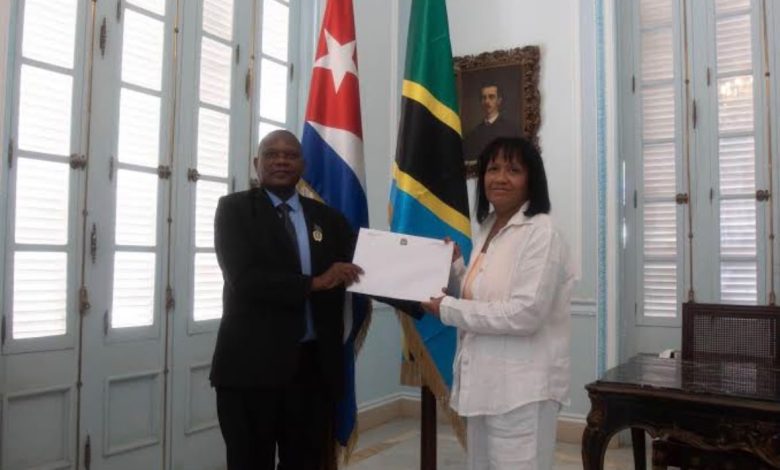
TANZANIA: A PROPOSED hepatitis B vaccine manufacturing plant could mark a new chapter in Tanzania-Cuba relations, shifting decades of cooperation towards scientific innovation, technology transfer and local industrial production.
Still under consideration, the initiative reflects the two countries’ ambition to harness Cuba’s scientific expertise to develop products in Tanzania for domestic and wider African markets.
In the latest Daily News Diplomatic Bench Interview, Tanzania’s Ambassador to Cuba, Lieutenant General Mathew Mkingule, outlines how the historic partnership is opening new opportunities in science, technology and industrial development.
“Tanzania appreciates the Cuban strengths in scientific research, innovation and product development,” he says, explaining that the long-term objective is to introduce innovative Cuban products into Tanzania and develop the capacity to process and manufacture them locally.
“In the medium term, the plan is to have these innovative products processed in Tanzania to serve the wider Tanzanian and African markets,” he says.
The proposed vaccine initiative represents a new stage in a relationship whose development cooperation has evolved over several decades, from educational and agricultural assistance to medical services, biotechnology and university-based research.
Although Tanzania and Cuba established diplomatic relations in 1962, their practical cooperation gradually developed through initiatives intended to strengthen skills, education and productive capacity. One of the early areas of engagement was education infrastructure.
During the 1970s, the Cuban Government constructed and donated three secondary schools in Tanzania: Ruvu and Kibiti secondary schools in Coast Region and Ifakara Secondary School in Kilosa District. “The schools were mainly for the Agricultural curriculum,” Lt Gen Mkingule says.
The schools were primarily established with an agricultural education focus, reflecting the importance both countries attached to developing skills that could support productive sectors.
Cuba also supported livestock development through the construction and donation of an artificial insemination centre in Butiama. In 1979, it delivered 42 bulls to support livestock breeding.
These initiatives represented an early practical dimension of the relationship, extending cooperation beyond diplomatic exchanges to education infrastructure and agricultural development.
They also established a pattern of technical engagement in which Cuban experience and resources were applied to areas of Tanzania’s development priorities.
According to Amb Mkingule, healthcare subsequently emerged as one of the most visible areas of Tanzania– Cuba cooperation. In 1990, the two governments signed a memorandum of understanding on medical cooperation, providing a framework for the deployment of Cuban doctors, specialists and nurses to serve communities in Tanzania Mainland and Zanzibar.
“More than 860 Cuban health professionals had provided services to the Tanzanian population by 2022. The arrangement enabled Tanzania to benefit from specialised medical expertise while creating opportunities for professional exchanges between the two countries,” says Amb Mkingule.
Over time, the relationship began to extend beyond the deployment of medical personnel towards institutional and regulatory cooperation. In January 2024, the Tanzania Medicines and Medical Devices Authority (TMDA) and Cuba’s Centre for State Control of Medicines and Medical Devices (CECMED) signed a memorandum of understanding covering cooperation in the regulation of medicinal products and medical devices.
“The agreement created a framework for the two regulatory institutions to exchange expertise and strengthen their engagement in overseeing medicines and medical devices,” he says, revealing that the medical cooperation memorandum is also under review, with proposed areas of expansion including research and development, professional training and technology transfer.
He believes such an expansion could provide opportunities for Tanzanian institutions and professionals to benefit from Cuba’s experience in medical research, healthcare delivery and technological development.
Another important stage in the evolution of development cooperation came through biotechnology and agricultural production.
“In April 2010, Tanzania and Cuba signed an agreement enabling Cuban company LABIOFAM S.A. to collaborate with Tanzania’s National Development Corporation (NDC) in establishing a biolarvicide manufacturing facility in Kibaha District, Coast Region,” reveals the envoy.
The facility was established to manufacture biological products targeting mosquito larvae as part of efforts to support malaria prevention and control. The project demonstrated how Cuban scientific expertise could be applied to a public health challenge through production within Tanzania.
Its activities have since expanded. According to Lt Gen Mkingule, the facility began producing additional products, including bio-pesticides and bio-fertilisers, from October 2023. There are also plans to manufacture food supplements in the future.
The expansion demonstrates the potential for biotechnology cooperation to extend beyond its initial public health purpose into agriculture and other productive sectors. It also illustrates the gradual shift from technical assistance towards building domestic manufacturing capacity.
“Locally produced biological products could help diversify agricultural inputs while strengthening Tanzania’s ability to apply scientific innovation to development needs,” insists Amb Mkingule.
The Kibaha experience provides an example of how cooperation can progress from an agreement between governments and institutions to an operating production facility, with opportunities for further expansion.
Education has remained a consistent part of the relationship, evolving from the provision of school infrastructure and scholarships towards university partnerships, academic exchanges and specialised training. Lt Gen Mkingule recalls that by 2020, about 295 Tanzanian students had graduated from Cuban universities.
They included 189 medical professionals and 10 sports personnel, alongside graduates in other disciplines. He says the experience of these graduates contributed to the development of professional skills in areas relevant to Tanzania’s national priorities.
More recently, he says, Tanzania and Cuba governments have sought to strengthen cooperation through formal links between higher education institutions.
“In September 2023, we signed two memoranda of understanding covering higher education cooperation between their respective ministries and academic collaboration between the University of Dar es Salaam and the University of Havana,” says Amb.
Mkingule, adding that in January 2024, another agreement was signed between Sokoine University of Agriculture (SUA) and the University of Artemisa Julio Díaz González.
“The agreements seek to promote academic exchanges, strengthen institutional relationships and support cooperation in specialised fields,” he explains.
According to Amb Mkingule, one proposed area of collaboration involves SUA providing technical support to the University of Artemisa in establishing a veterinary school. The Tanzanian institution has submitted a proposed teaching curriculum to its Cuban counterpart for further consideration.
These arrangements, he notes, demonstrate the evolution of education cooperation from the provision of infrastructure and scholarships towards institutional partnerships that could strengthen teaching, research and professional training. Amb Mkingule says the expansion of university cooperation has also created demand for language skills to facilitate academic and institutional engagement.
Lt Gen Mkingule says cooperation in language promotion is another important dimension of the Tanzania-Cuba partnership. He explains that Kiswahili teaching officially commenced at the University of Havana and Casa de Africa in April 2024, giving Cuban students and other interested participants an opportunity to learn Tanzania’s national language.
He traces the initiative to earlier exchanges in the late 1970s and early 1980s, when approximately four Cubans travelled to Tanzania to study Kiswahili. They graduated from the University of Dar es Salaam and later became Kiswahili teachers in Cuba.
He says the two countries have since strengthened the initiative through academic collaboration. The first International Symposium on Kiswahili Language took place in Havana from November 7 to 9, 2024, while the University of Dar es Salaam and the University of Havana jointly produced a KiswahiliSpanish dictionary, launched in Havana on November 8, 2024.
Amb Mkingule adds that, at Tanzania’s request, Cuba deployed two Spanish-language lecturers to Sokoine University of Agriculture (SUA), where Spanish lessons began in September 2025. He says the initiatives are helping to strengthen academic exchanges and cooperation between institutions in the two countries.
Ambassador Mkingule says Cuba’s experience in scientific research and biotechnology offers important lessons for Tanzania as it seeks to strengthen its technological capabilities. He attributes Cuba’s achievements in these areas to sustained government investment in research and development.
“Cuba is highly advanced in scientific research and biotechnology due to the heavy investment into the areas by the government,” he says.
He identifies investment in human capital as one of the most important lessons Tanzania can draw from Cuba’s experience.
“The major lesson Tanzania can learn from Cuba’s experience is investment in its human capital in science, innovation and biotechnology,” he says.
ALSO READ: Cuban envoy vows to strengthen longstanding ties with TZ
Lt Gen Mkingule says investment in human capital is essential to strengthening Tanzania’s scientific and technological capabilities, particularly by developing professionals able to conduct research, adapt technologies and manufacture innovative products.
He identifies Cuba’s experience in scientific research and biotechnology as an important lesson for Tanzania, emphasising the need to build local expertise and ensure technology transfer translates into domestic production.
Against this background, he points to the proposed hepatitis B vaccine manufacturing plant as an opportunity to apply Cuban technology and research capabilities in Tanzania.
The initiative remains under consideration and is separate from existing projects in Kibaha and agreements already signed between regulatory and academic institutions.
He says the proposed initiative could further strengthen Tanzania’s scientific and industrial capacity, while creating opportunities to develop products for domestic and wider African markets. Cuba, meanwhile, stands to apply its scientific and technological expertise in a country with a sizeable domestic market and links to regional markets.
He urges Tanzanian institutions to seize emerging opportunities, particularly as Cuba opens up its economic systems.
“Various Tanzania institutions ought to capitalise on that, especially at a time when the government of Cuba is opening up its economic systems,” he says.
He stresses that translating these opportunities into tangible results will depend on institutions in both countries turning agreements and proposals into sustainable programmes, developing the necessary expertise and mobilising resources for implementation.
More than six decades after Mwalimu Julius Nyerere and Fidel Castro laid the foundations of Tanzania-Cuba relations, the partnership is expectedly entering a new phase, with greater emphasis on scientific research, biotechnology, technology transfer and local manufacturing.