MIF takes clean cooking agenda to COP3
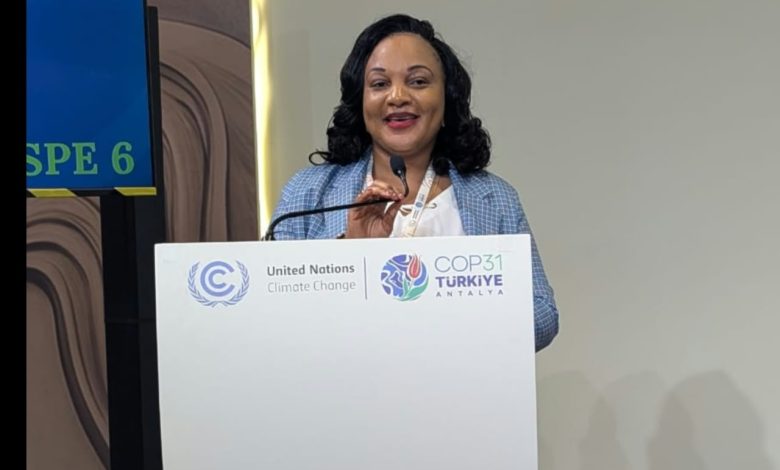
ANTALYA, TÜRKİYE: A Non-Governmental Organisation,Mwanamke Initiatives Foundation (MIF) has called for increased investment in clean cooking solutions, highlighting its experience in Zanzibar as an example of how community-driven initiatives can translate global climate commitments into practical benefits for households, schools and businesses.
The organisation is showcasing its flagship Upishi Salama initiative at the 31st United Nations Climate Change Conference (COP31), emphasising the need to ensure that the transition to clean energy reaches communities that continue to depend on firewood and charcoal for cooking.
MIF Head of Programmes, Alice Mushi, said the clean cooking agenda should go beyond international discussions and deliver solutions that address the daily challenges facing communities.
“Climate commitments must translate into practical solutions that reach households, schools and small businesses. The transition will only be meaningful when people can access affordable, reliable and appropriate clean cooking technologies,” she said.
Ms Mushi said MIF’s experience had demonstrated that successful adoption of clean cooking solutions required community awareness, practical training, affordability and sustained engagement with beneficiaries.
“Providing equipment alone is not enough. Communities need to understand the benefits, know how to use the technologies safely and have reliable access to the fuels required to sustain the transition,” she said.
Through Upishi Salama, MIF has supported 4,000 households to access or adopt clean cooking solutions, with an estimated 24,000 people reached indirectly.
The initiative has also reached approximately 8,000 people through outreach activities and supported 100 women and youth groups.
At the institutional level, three schools and one prison have transitioned to cleaner cooking systems, with project findings indicating an approximately 50 per cent reduction in energy costs following the change.
Ms Mushi said the transition in public institutions demonstrated the potential of clean cooking technologies to reduce operational costs while improving cooking conditions.
She said schools and other institutions could also serve as demonstration centres, encouraging surrounding communities to adopt cleaner cooking practices.
Women are also a key focus of the initiative, given their central role in household cooking and the health, environmental and time-related challenges associated with traditional fuels.
Through women and youth groups, MIF seeks to strengthen community participation while creating opportunities for women and young people to engage in emerging clean energy businesses.
The organisation is further targeting 500 nyama choma vendors and barbecue grill operators for transition to cleaner cooking solutions between 2026 and 2028.
The programme will involve assessing vendors’ needs, conducting awareness campaigns, demonstrating alternative technologies and supporting access to affordable equipment and fuels.
Ms Mushi said small businesses should not be left out of the clean energy transition, noting that they needed alternatives that were both environmentally friendly and economically viable.
“Clean cooking is not just a household issue. Small businesses, including nyama choma vendors, also need affordable alternatives that allow them to maintain their businesses while reducing dependence on charcoal,” she said.
In addition to promoting clean cooking, MIF plans to plant 15,000 trees as part of its broader environmental conservation efforts.
For the 2026–2028 period, the organisation targets reaching 10,000 households, 35 schools, 200 women and youth groups and 500 grilling operators, alongside the tree-planting programme.
The planned expansion requires an estimated investment of 2.7 bn/-
Ms Mushi called for stronger collaboration among governments, development partners, climate finance institutions, the private sector and community-based organisations to accelerate the adoption of clean cooking solutions.
She said increased investment was necessary to address affordability challenges, strengthen supply chains and ensure that climate financing reached communities that needed it most.