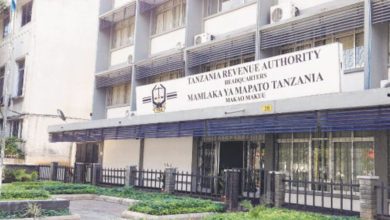
TRA moves to implement 234 tax reform proposals
DAR ES SALAAM: THE Tanzania Revenue Authority (TRA) has stepped up efforts to implement recommendations from the Presidential Commission on Tax Reforms by launching the second phase of its public innovation initiative.
The programme aims to create a more predictable, simple and businessfriendly tax system, while addressing longstanding challenges in the business environment.
The initiative also aligns with findings from a recent Commission of Inquiry into the October 29 incidents, which highlighted concerns such as an unfriendly tax system and multiple taxation by various government institutions.
The second phase was officially launched yesterday in Dar es Salaam, bringing together innovators, business leaders, academics and TRA officials.
Speaking at the event, TRA Commissioner General, Mr Yusuph Juma Mwenda, said the 2026 innovation drive comes at a critical time, following the issuance of 234 reform recommendations by the Presidential Commission on Tax Reforms.
He noted that many of the recommendations are administrative in nature and require practical, creative solutions, making public participation essential to their implementation.
Mr Mwenda identified expansion of the tax base as a key priority, calling for ideas that will help formalise businesses and bring more economic activities into the tax net.
He emphasised the need to reduce reliance on cash transactions and instead, promote voluntary compliance through incentives rather than punitive measures.
“We want people to see the benefits of formalising their businesses, not punishment. Tell us how to do it, what tools to use and how best to implement them,” he said.
He also urged innovators to propose safeguards for tax relief measures, such as start-up exemptions, warning that some individuals may attempt to exploit such incentives by repeatedly closing and reopening businesses to avoid taxes.
Mr Mwenda said TRA’s broader goal is to build a tax system that minimises complexity, reduces physical interactions with tax offices, lowers administrative costs and curbs corruption risks.
With more than eight million registered taxpayers in Tanzania and only a fraction actively engaged in business, he called for solutions to boost compliance and increase voluntary tax payments.
He further encouraged proposals on simplified tax models, including less frequent payment options while maintaining accountability.
The use of emerging technologies such as artificial intelligence, big data and blockchain was also highlighted as key to modernising tax administration.
Reducing tax disputes was identified as another major focus area, with Mr Mwenda calling for ideas that can prevent conflicts or ensure faster and fair resolutions.
ALSO READ: Non-tax revenue: The road to 1.8 tri/ target
“These are real challenges affecting both taxpayers and the authority. We need solutions that will either eliminate disputes or ensure they are resolved quickly and fairly,” he said.
TRA Director of Planning and Research, Dr Ephraim Mdee, said the initiative builds on lessons from the first phase, which attracted 5,681 submissions from the public and TRA staff.
Of these, 106 ideas advanced to detailed evaluation, with nine ultimately selected as the most innovative based on feasibility, revenue potential, service improvement and creativity.
Dr Mdee acknowledged that while public participation was strong, the first phase exposed weaknesses, including concerns over transparency and independence in the evaluation process.
To address these challenges, TRA has introduced a new electronic system that allows participants to track their submissions in real time.
An independent evaluation committee, drawn from various sectors and operating separately from TRA, has also been established to enhance fairness and credibility.
The second phase will prioritise ideas in key areas, including expanding the tax base, particularly in the informal sector, simplifying tax processes for small businesses, enhancing digital services, improving dispute resolution and increasing the use of technology in tax administration.
Dr Mdee emphasised that submissions must clearly identify real problems, propose practical solutions and demonstrate measurable impact.
Under the secondphase innovation drive, TRA has significantly increased cash incentives and introduced a more inclusive reward structure to attract wider participation.
Participants whose ideas qualify for evaluation will each receive 100,000/-.
Meanwhile, the number of top winners has been expanded from nine in the first phase to 20 in the current round.