Tanzania’s maritime edge in the Indo-Pacific
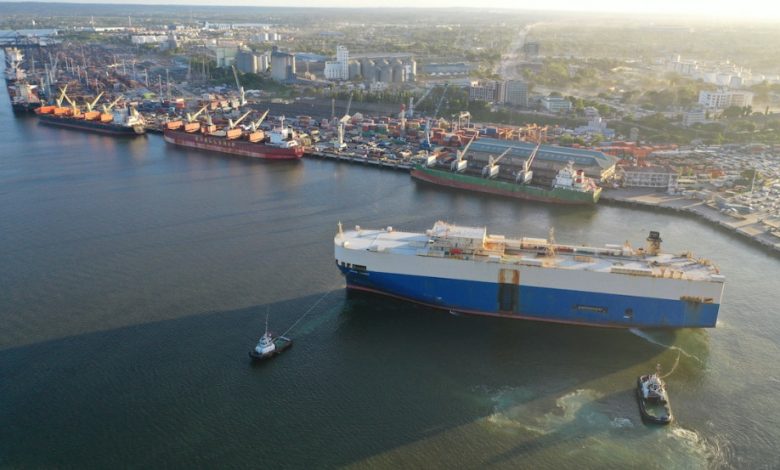
MOZAMBIQUE: FOR much of Tanzania’s modern history, our position on the western shores of the Indian Ocean has been understood mainly in terms of trade, ports, tourism and regional connectivity.
That perspective remains valid, but it is no longer sufficient. The changing global geopolitical and economic environment is giving the Western Indian Ocean a much greater strategic significance.
Disruptions around major maritime chokepoints have demonstrated how events in one part of the world can rapidly affect energy supplies, shipping costs, food security, manufacturing and supply chains thousands of kilometres away.
This is producing an important strategic lesson: The prosperity and stability of the Indo-Pacific are increasingly connected to the prosperity and stability of Eastern Africa and the Western Indian Ocean.
For Tanzania, this is not simply a matter of international affairs. It is an opportunity to rethink how we understand our own geography. Geography is increasingly becoming strategy. The Indian Ocean, for instance, is one of the principal arteries of the global economy.
Energy, manufactured goods, agricultural commodities, minerals and other products move between Africa, the Middle East and Asia through its waters.
At the same time, Asian economies are increasingly important sources of investment, technology and markets for African countries.
This creates a relationship of mutual dependence. Asia needs secure access to resources and markets. Eastern Africa needs reliable access to international trade, investment, technology and finance. The Western Indian Ocean sits at the intersection of these interests.
Tanzania therefore should not regard itself as being at the geographical edge of the Indo-Pacific. Economically and strategically, Tanzania is part of the wider Indian Ocean system that connects Africa with Asia.
The strategic question is whether we simply occupy this geography or deliberately convert it into national economic advantage. Recent disruptions around the Strait of Hormuz and the Red Sea have demonstrated the vulnerability of global supply chains.
When a major maritime chokepoint becomes insecure, shipping routes can be diverted, journeys become longer, insurance costs rise and energy markets react. The consequences eventually reach businesses and consumers far from the original conflict.
This has particular relevance for Tanzania. Recent international reporting indicates that the disruption of energy flows through the Strait of Hormuz has increased the strategic attractiveness of Tanzania’s long-discussed Liquefied Natural Gas (NLG) project.
Equinor has said that Tanzania’s gas resources could provide an alternative source of LNG for Asian customers because production would be outside the geopolitical risks affecting the Gulf.
This is an important shift in perspective. Tanzania’s natural gas should not be viewed only as an extractive resource. It can also become part of a wider Africa– Asia energy-security relationship. The opportunity should therefore be reflected in our energy and economic diplomacy.
Why the Mozambique Channel matters
One geographical feature deserves greater attention in Tanzania’s strategic thinking: The Mozambique Channel.
The Channel is more than a waterway separating Madagascar from mainland Africa.
It forms part of a wider maritime system connecting Eastern Africa with international shipping, energy markets and the Indian Ocean economy.
It is also surrounded by countries with substantial interests in energy, fisheries, tourism, shipping and the blue economy.
The Western Indian Ocean faces multiple maritime security challenges, including trafficking, illegal fishing, piracy and other forms of maritime crime.
But maritime security should no longer be understood only as a defence concern.
Maritime security is economic security. A port that is insecure cannot attract investment at its full potential. A vulnerable shipping route increases the cost of trade. An unprotected offshore energy facility creates a national economic risk.
Illegal fishing undermines both government revenue and coastal livelihoods.
Damage to undersea telecommunications infrastructure can affect the digital economy. The security of the ocean is therefore directly connected to the prosperity of the nation.
Dar es Salaam, Tanga and Mtwara ports
This is where Tanzania’s ports and transport corridors acquire strategic importance.
Dar es Salaam, Tanga and Mtwara ports should not be viewed only as infrastructure serving Tanzania’s domestic economy.
They can also function as gateways connecting the Indian Ocean with the economies of Eastern, Central and Southern Africa.
The Dar es Salaam Maritime Gateway Programme is explicitly designed to improve the port’s efficiency and support the economic development of Tanzania and land-linked countries.
Dar es Salaam is also the country’s principal port and a major gateway for Malawi, Zambia, the Democratic Republic of Congo (DRC), Rwanda, Burundi and Uganda.
The Mtwara Corridor is similarly developing its regional role, including links to markets in DRC, Zambia and Malawi.
These developments should be understood as more than transport projects. They are components of regional economic resilience.
As global trade becomes more vulnerable to geopolitical disruptions, alternative corridors become increasingly valuable.
The strategic value of a port should therefore not be measured only by how much cargo it handles. It should also be measured by its ability to provide reliable connectivity when other routes are disrupted.
Energy security and Tanzania’s LNG opportunity
The same principle applies to energy. Tanzania has discovered substantial natural gas resources, estimated by Tanzania Petroleum Development Corporation (TPDC) at approximately 57.54 trillion cubic feet from offshore and onshore discoveries.
The proposed LNG project, valued at approximately 42 billion US dollars, is expected to be one of the country’s major energy investments, involving the government through TPDC and international energy companies including Shell and Equinor.
But the strategic objective should go beyond exporting gas. The greater opportunity is to use natural gas to support industrialisation, domestic energy security, employment, skills development and regional economic integration.
Tanzania’s energy diplomacy should therefore ask a broader question:
How can our energy resources contribute to long-term national transformation while also strengthening Tanzania’s position in global energy markets?
Asian partners are particularly important in this regard. India, Japan, the Republic of Korea and other Asian economies have substantial energy requirements, capital, technology and industrial capabilities.
A strategic partnership should therefore encompass not only the purchase of LNG, but also infrastructure, technology transfer, skills, shipping, downstream industries and investment.
The Indo-Pacific must be viewed from both sides
The term “Indo-Pacific” is often discussed primarily from an Asian perspective. The debate naturally focuses on the South China Sea, Taiwan, the Strait of Malacca and the Pacific.
These are undoubtedly important. But the western side of the Indian Ocean should receive equal attention. The economies of Asia depend on secure maritime access to energy and international markets.
At the same time, African economies increasingly depend on Asian investment, technology and markets.
This means that the relationship is not one-way. Africa needs Asia, but Asia also needs a stable and prosperous Africa.
Tanzania can use this mutual interest to deepen its engagement with India, Japan, the Republic of Korea, the United States, Europe and other partners.
The objective should not be to turn Tanzania into an arena for geopolitical rivalry. The objective should be to make Tanzania a reliable partner of choice.
Strategic autonomy is an advantage
Tanzania has an important diplomatic tradition: Maintaining constructive relations with different centres of global power.
This is an asset in today’s increasingly competitive international environment.
China remains an important economic partner. India has deep historical, commercial and maritime links with Tanzania. Japan and the Republic of Korea offer important opportunities in technology, infrastructure, investment and industrial development.
Meanwhile, the United States and European partners remain important in trade, investment, technology and development cooperation.
Tanzania does not need to choose between these relationships. Instead, it should pursue cooperation based on national interest. This is the practical meaning of strategic autonomy.
We should welcome investment without surrendering strategic interests, embrace technology without creating unnecessary dependency and expand markets without becoming captive to one market.
And we should cooperate on maritime security without allowing Tanzania to become part of geopolitical bloc politics.
The relationship between Tanzania and Mozambique deserves particular attention within this emerging Western Indian Ocean architecture.
The two countries share a land border, adjoining maritime spaces and complementary interests in energy, trade, transport and security.
The northern Mozambique– southern Tanzania space is increasingly important because of energy developments, cross-border trade, migration, fisheries and security.
The wider Rovuma region is becoming increasingly important to Africa’s energy future.
This makes cooperation between Tanzania and Mozambique strategically important not only for the two countries, but for the stability and prosperity of the wider Western Indian Ocean.
Cooperation should therefore extend beyond traditional bilateral diplomacy.
It should include maritime security, intelligence sharing, energy infrastructure, transport connectivity, fisheries, tourism, border management and regional value chains.
A secure Tanzania–Mozambique maritime space would create benefits extending far beyond the two countries.
There is another dimension that should not be overlooked: The blue economy.
A secure ocean creates opportunities in fisheries, tourism, shipping, marine services, renewable energy, biotechnology and other emerging sectors.
Tanzania therefore needs an integrated approach in which maritime security and economic development reinforce one another.
This requires better maritime domain awareness, modern surveillance capabilities, stronger inter-agency coordination and more effective regional information sharing.
Tanzania already operates within regional and Indian Ocean frameworks where maritime safety and security, blue economy and disaster-risk management are recognised as important areas of cooperation.
The Indian Ocean Rim Association, for example, has dedicated working groups for maritime safety and security and the blue economy.
The goal should not simply be a secure ocean. It should be a productive and prosperous ocean.
A new agenda for economic diplomacy
This changing environment calls for a broader conception of economic diplomacy.
Our diplomats should not ask only, “How do we attract more investment?” They should also ask, “How can Tanzania become strategically important to regional connectivity, energy security and resilient supply chains?”
That means looking at our ports, railways, LNG and maritime security differently.
It also means looking at our relationships with Asian economies differently.
A Japanese investment in logistics can strengthen regional connectivity.
An Indian partnership in maritime technology can strengthen both security and trade.
A Korean investment in infrastructure can improve supplychain resilience.
An LNG partnership with Asian markets can strengthen Tanzania’s position in global energy security.
A stronger Tanzania–Mozambique partnership can contribute to a more secure Western Indian Ocean.
These are not separate agendas. They are parts of the same strategic picture.
Turning geography into strategic power
Tanzania already possesses many of the ingredients required to become an important economic and maritime partner in the Western Indian Ocean.
We have geography. We have natural resources. We have ports and transport corridors. And we have access to a large African market.
We have longstanding diplomatic relationships across Africa, Asia and the wider international community. What we need is strategic coordination.
Tanzania should develop a long-term approach connecting maritime security, energy security, infrastructure, logistics, blue economy and economic diplomacy.
This would allow the country to transform geographical location into sustainable national advantage.
The future of the Indo-Pacific will not be determined only in the Pacific or in Asia.
It will also be shaped in the Indian Ocean and along the eastern coast of Africa.
ALSO READ: Tanzania turns economic diplomacy into business opportunities at FACIM 2026
For Tanzania, this is more than a geopolitical observation.
It is an economic opportunity, a security responsibility and a diplomatic opportunity.
Our geography is a fact. Turning it into strategic power is a policy choice.