Tanzania turns economic diplomacy into business opportunities at FACIM 2026
DAR ES SALAAM: IN today’s rapidly changing global economy, diplomacy is increasingly being judged not only by the strength of political relations between countries, but also by its ability to create tangible economic opportunities for citizens.
Trade, investment, employment, technology, market access and business partnerships have become important measures of the effectiveness of international engagement. It is against this backdrop that Tanzania’s participation in the 61st Maputo International Trade Fair (FACIM 2026) assumes particular significance.
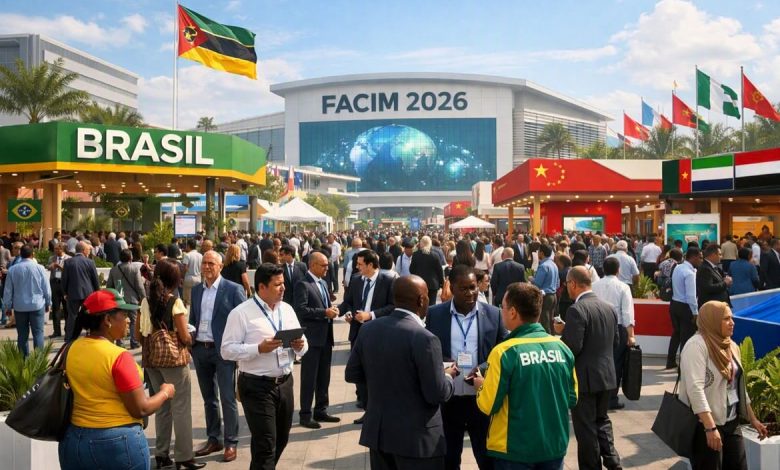
The fair, which opened on Monday and runs until September 6th this year at the Ricatla International Trade Fairgrounds in Marracuene, Maputo, brings together governments, businesses, investors, entrepreneurs and innovators from Mozambique, the Southern African region and beyond.
For Tanzania, however, FACIM is much more than an exhibition where products and services are displayed. It is an opportunity to turn economic diplomacy into practical business opportunities by expanding market access, connecting Tanzanian enterprises with investors and potential partners and strengthening the country’s economic engagement with Mozambique and the wider Southern African Development Community (SADC).
The official objectives of FACIM include promoting exports, attracting investment, supporting innovation and creating access to the regional SADC market.
From displaying products to creating business
Traditionally, trade fairs have often been viewed primarily as platforms for companies to showcase their products and services. But in an increasingly competitive global marketplace, simply putting products on display is no longer enough. The more important question is what happens after visitors leave the pavilion.
Does a visitor become a customer? Does an exhibitor secure a distributor? Does an investor identify a viable opportunity? Does a Tanzanian company find a Mozambican business partner? Do discussions between institutions develop into long-term cooperation? These are the questions that give real meaning to Tanzania’s participation in FACIM.
ALSO READ: Ubongo puts early years at heart of Vision 2050 debate
The objective is to transform the exhibition from a platform for visibility into a bridge connecting products with markets, businesses with partners and investors with opportunities. This is where economic diplomacy becomes measurable.
Tanzania’s participation brings together public institutions, private-sector companies and entrepreneurs, including Tanzania Trade Development Authority (Tantrade), the Tanzania Revenue Authority (TRA), the Tanzania Tea Board, Farmers Centre Ltd, Farmbase Ltd, SWAENERGY, Cutoff Recycle and The Line Group.
Their participation covers areas including agriculture and agro-processing, tea and coffee, livestock-related technologies, digital solutions, energy, circular economy initiatives and other products and solutions developed by Tanzanian enterprises.
Promoting the “Made in Tanzania” message
At the heart of Tanzania’s presence at FACIM is the promotion of the “Made in Tanzania” brand. The message goes beyond simply presenting Tanzanian products to international visitors.
It is about demonstrating the country’s growing capacity in production, value addition, innovation, technology and entrepreneurship. For years, African economies have faced the challenge of exporting largely unprocessed commodities while importing finished products.
Tanzania’s presence at FACIM provides an opportunity to communicate a different and increasingly important story: that the country is building the capacity to add value, develop competitive enterprises, embrace technology and create products capable of accessing regional and international markets.
This is particularly relevant as African countries seek to increase intra-African trade, strengthen regional value chains and reduce dependence on the export of raw materials. The “Made in Tanzania” message should therefore be understood not simply as a branding exercise, but as a statement of competitiveness. Tanzania and Mozambique enjoy longstanding historical and political relations. Mozambique is not a distant market for Tanzania.
The two countries are neighbours, regional partners and members of a broader Southern African community with deep historical ties. The opportunity now is to translate that strong relationship into deeper and more mutually beneficial economic partnerships.
Potential areas of cooperation include agriculture, crossborder trade, tourism, energy, transport and logistics, manufacturing, technology and other sectors of mutual interest. The objective is therefore not simply for Tanzania to sell products to Mozambique. It is to develop sustainable business relationships.
A Mozambican company could become a distributor of a Tanzanian product. A Tanzanian company could establish a joint venture with a Mozambican partner. An investor could identify an opportunity to establish production facilities in Tanzania and use the country as a platform to access the wider SADC market. Such outcomes give practical meaning to economic diplomacy.
Within this evolving approach, the role of the Tanzanian High Commission in Maputo extends beyond traditional diplomatic representation. The High Commission can serve as a connector between government institutions, businesses, investors, markets and strategic partners.
This does not mean that the diplomatic mission conducts business on behalf of private companies. Rather, its role is to help open doors, facilitate contacts, provide relevant market information, connect stakeholders and use diplomatic networks to support an environment in which trade and investment can flourish.
This approach demonstrates how foreign policy can be translated into economic opportunity. It also reflects the changing nature of diplomacy, in which diplomatic missions increasingly have a role in supporting national economic interests while maintaining their core responsibilities of representation and international relations.
Tanzania Day: turning visibility into engagement
A major feature of Tanzania’s participation will be Tanzania Day, scheduled for September 2 at the Tanzania Pavilion. The occasion should be viewed as more than a national celebration. It is designed as a platform bringing together trade, investment, tourism, technology, innovation and culture.
The programme will include presentations on trade and investment opportunities, participation by Tanzanian companies, cultural activities and a special “Taste of Tanzania” experience featuring selected Tanzanian products, including coffee, tea and cashews.
More importantly, Tanzania Day will provide opportunities for business-to-business (B2B), business-to-government (B2G) and governmentto-business (G2B) engagements. These interactions can enable Tanzanian companies and institutions to engage directly with potential investors, buyers, partners and other stakeholders from Mozambique and beyond.
The success of Tanzania Day should therefore not be judged simply by the number of people attending or the visibility generated by the event. The more important questions are: Which businesses met? Which investment opportunities emerged? Which partnerships were initiated? Which investors expressed interest? And, crucially, who will follow up after FACIM? These are the indicators that can turn an exhibition into measurable economic results.
Tanzania’s participation at FACIM also highlights the need for a different approach to measuring the success of trade fairs. Impressive exhibition stands, large visitor numbers and attractive photographs may generate visibility, but they do not necessarily translate into economic value.
The real indicators should include business leads, investment enquiries, B2B meetings, potential buyers, new distributors, institutional partnerships, technology partnerships and, where appropriate, commercial agreements and investment commitments.
Most importantly, opportunities identified during the exhibition must be followed up. Business is not concluded within the seven days of a trade fair. The exhibition opens the door; follow-up turns the opportunity into business.
Looking beyond Mozambique to SADC
FACIM also provides Tanzania with an opportunity to look beyond the Mozambican market. Mozambique’s position within Southern African Development Community (SADC) offers an additional platform for Tanzania to understand and engage the wider Southern African market.
The strategic question should therefore not only be what Tanzania can sell to Mozambique, but what networks of markets, investments and partnerships Tanzania can build through its engagement across the SADC region. This broader perspective makes FACIM more than a seven-day exhibition. It becomes part of a longerterm strategy aimed at export diversification, value addition, market access and regional economic integration.
Tanzania’s participation in FACIM 2026 reflects a broader evolution in the way diplomacy can be used to advance national economic interests. Economic diplomacy is not merely a policy statement. It is a process of identifying opportunities, building relationships, connecting the right people, facilitating trade, attracting investment and ensuring that opportunities identified today are not lost tomorrow.
FACIM therefore offers an important lesson: economic diplomacy begins where diplomacy meets economic opportunity. Tanzania has products, resources, businesses, entrepreneurs, technology and people with ideas and ambition. The role of economic diplomacy is to ensure that these capabilities are visible, connected to markets and ultimately translated into tangible opportunities for Tanzanians.
Tanzania’s participation in FACIM 2026 consequently sends a clear message to businesses, investors and regional partners: Tanzania is ready to trade. Tanzania is ready to invest. Tanzania is ready to partner.
Above all, Tanzania is ready to transform its strong diplomatic relationships into stronger economic partnerships that create shared value for the people of Tanzania, Mozambique and the wider SADC region. That is the essence of economic diplomacy and that is the message Tanzania is taking to Maputo through FACIM 2026.
CP Hamad Khamis Hamad is the High Commissioner of the United Republic of Tanzania to the Republic of Mozambique.